A tattoo pattern style is the visual system that locks an image into skin for decades, and the wrong choice for your design collapses faster than most people expect.
Every style carries a built-in tradeoff: American Traditional’s heavy outlines last but limit color range, while watercolor’s bleeding edges need touch-ups by year five.
The 30% lightening of healed grey wash in black and grey work shows why artists must plan darker than the final piece should read.
1. American Traditional Tattoo Style
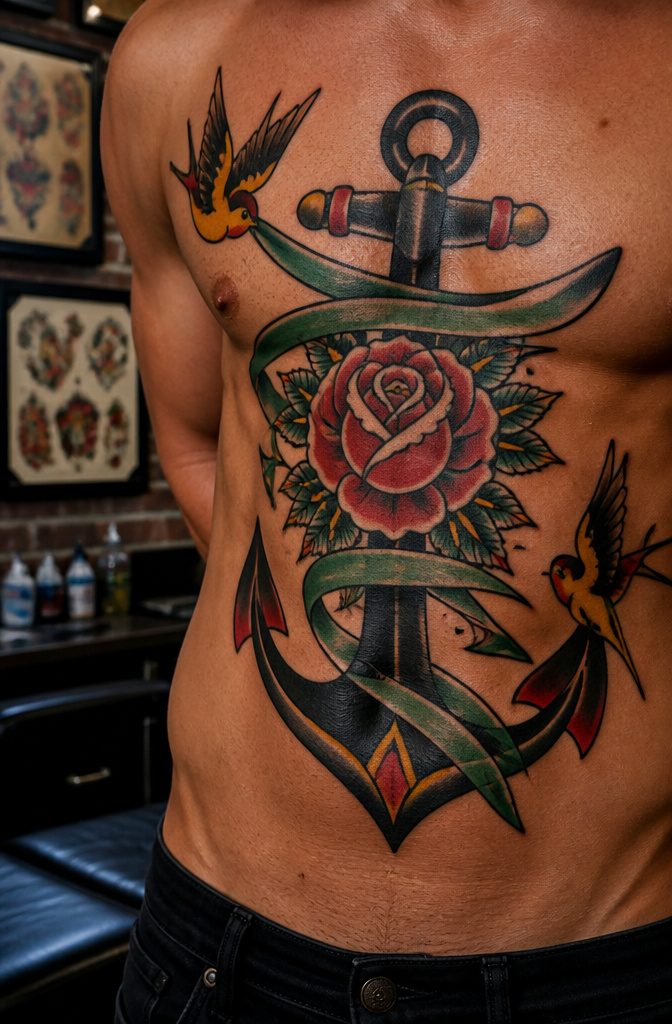
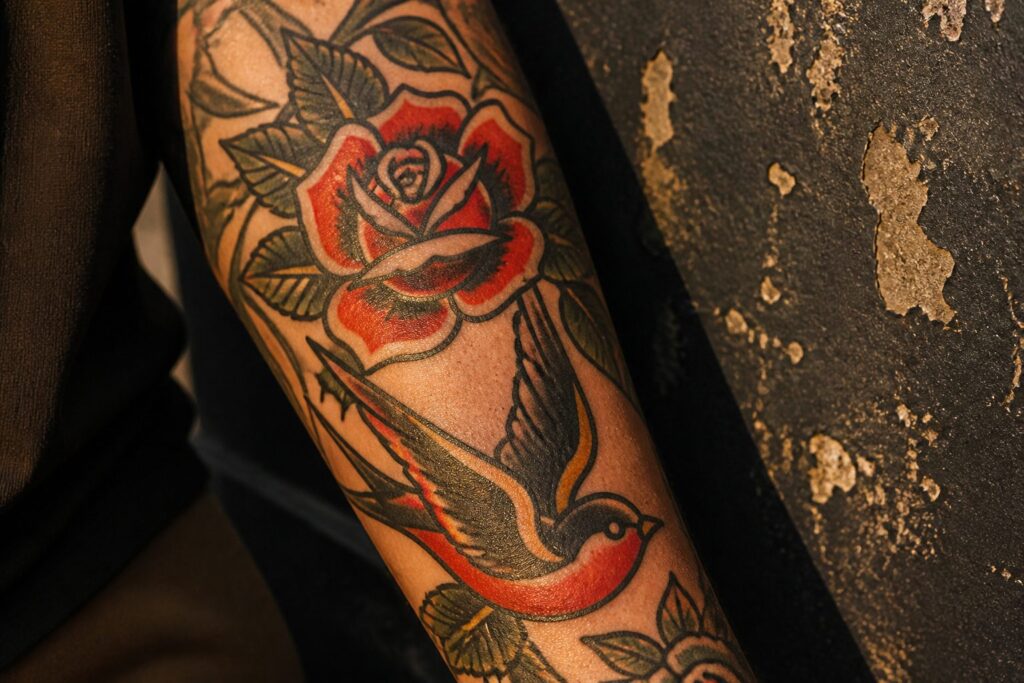
Bold black outlines thick enough to read across a room carry the whole structure of American Traditional work.
The style limits itself to three or four flat primary colors, usually yellow, red, and green against black, with almost no shading behind them.
Anchors, roses, swallows, and skulls have been the standard motif set since the early twentieth century, when artists like Sailor Jerry built the flash sheets that still hang in shops today.
That single line weight throughout is not a limitation; it is what lets the tattoo hold its shape for decades. The heavy saturation and uniform outline are why this style tends to last longer than almost any other.
Where finer work blurs or fades, the old school image stays legible because it was designed to be read from a distance from the start.
The flash system means you can pick a classic design in the shop rather than waiting on a custom commission, and that accessibility has kept it among the most popular choices for a century.


TRADITIONAL FLAIR: Get ready to unleash your inner rebel with Savvi's American Traditional Flash Temporary Tattoo Pouch. Have fun on a wild ride of traditional American flash art with 18 tattoos to choose from.
2. Neo Traditional Tattoo Style
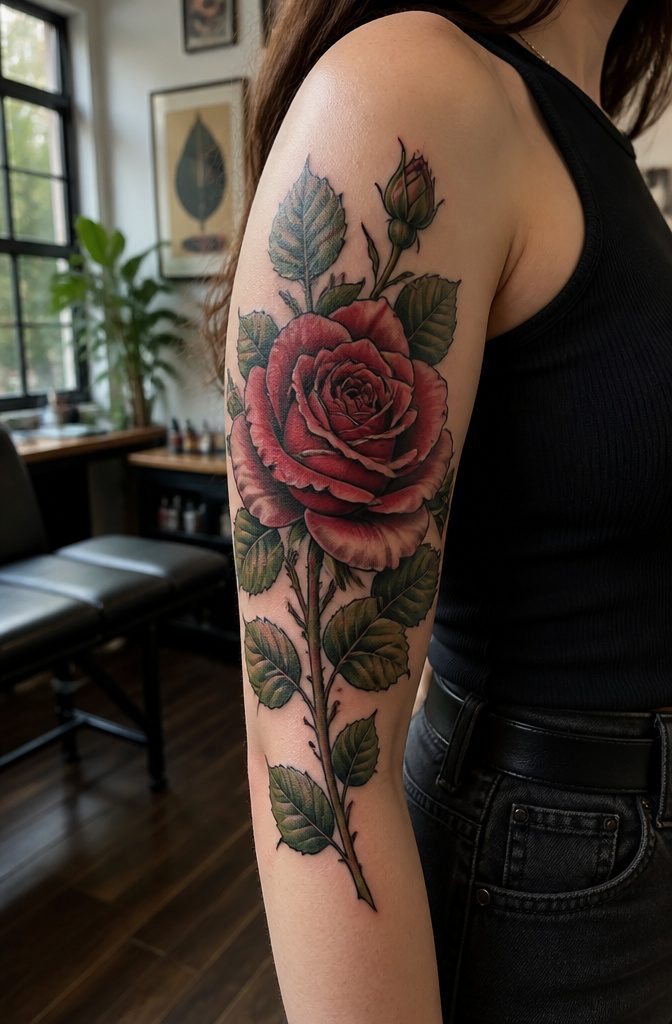
Neo traditional tattoo style keeps the bold, readable skeleton of American Traditional but updates almost everything layered on top of it.
The outline still locks the image in place for decades, yet the line weight shifts within a single piece, thin inside the petals, heavy where the stem meets the skin, so a flat rose suddenly carries depth without sacrificing the clarity that holds up at distance.
Color enters the frame more gradually too. Where classic Traditional lays down flat, saturated blocks, neo traditional builds ultra-smooth blends across a muted palette with 2–3 line weights doing different jobs.
The thinner lines handle filigree and texture; the bold ones shoulder the outline and the main structural elements.
That discipline matters because the style borrows heavily from Art Nouveau curves and Art Deco geometry, details that collapse if they are not weighted to a plan.
Imagery stretches beyond the sailor vocabulary into animals, flowers, birds, and portraits, though proportions stay realistic rather than stylized. A good neo traditional piece reads as illustration first, tattoo second, yet never loses the tattoo part.
Expect a custom drawing stage before the needle touches skin; the varying weights are planned, not improvised, and the result sits in that steady middle ground between old-school toughness and the painterly turn that came after it.

Perfect for All Skill Levels: Designed for both professionals and beginners, the practice skins help artists refine techniques, build muscle memory and gain confidence. Whether you’re an apprentice or a seasoned artist, you’ll appreciate a versatile tool that grows with your skills. Now available in two distinct skin variations to match your training preference. Choose the Normal variant for a firmer feel, or select the Extra Soft Variation if you prefer a softer, more elastic surface.
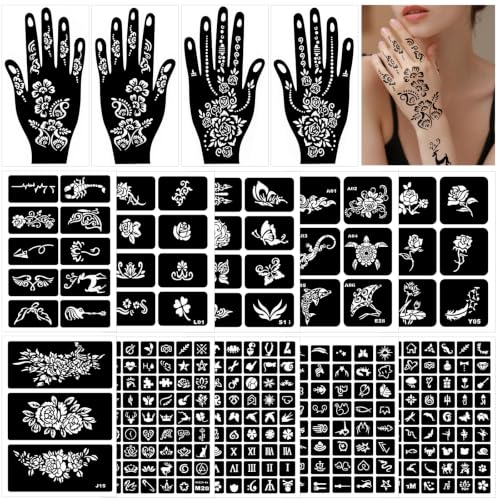
Set Combinations: Ncludes 4 hand tatouage (width 4.33 and length 8.22 inches), 243 pieces of tattoo stencils in 6 sizes there are small tattoo designs, medium tattoo designs and large tattoo designs. Meet your different possibilities! Temporary tattoo kit stencils for tattoo beginners.

COMPLETE KIT: Set includes 18 sheets of self-adhesive henna stencils featuring traditional Indian Mehndi designs for hands and body art
3. New School Tattoo Style
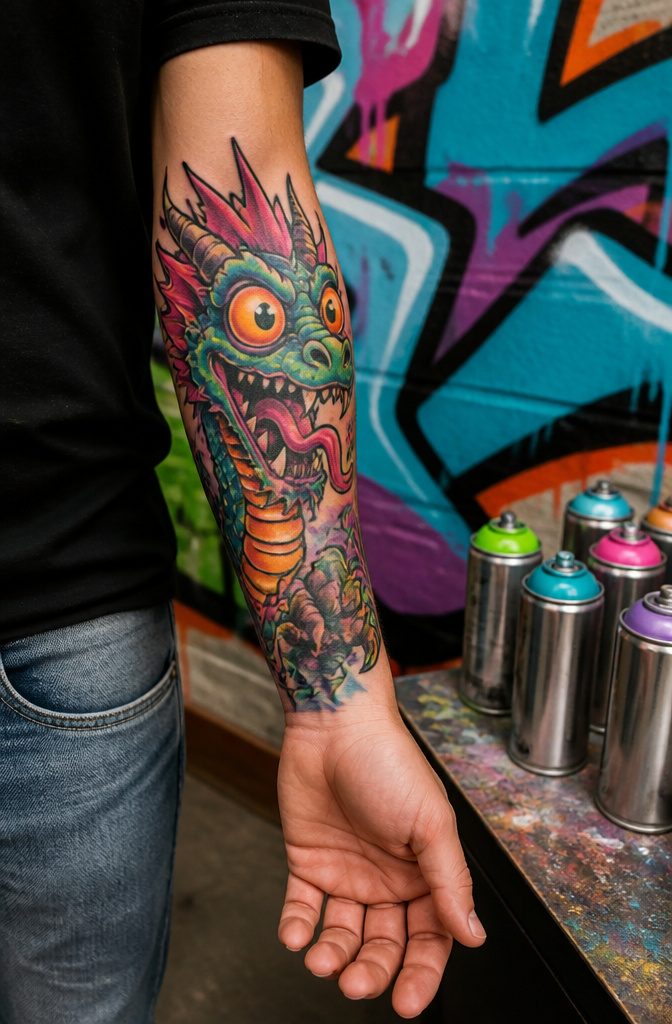
New School tattoos take every rule about proportion and throw it out.
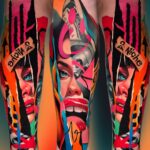
The style grew out of graffiti and cartoon art in the late 1980s and 1990s, and that lineage still shows in bubble letters, cast shadows, and colors bright enough to read three-dimensional without any actual 3-D work.
Heavy black outlines hold the shapes together while the content inside gets pushed past believability: eyes too big, teeth too large, noses warped into caricature.
Animals, skulls, food, cartoon characters, pop-culture figures, anything at all can land in New School because the style is basically a catch-all for ideas that do not fit anywhere else.
The artist distorts whatever subject you bring rather than reproducing it faithfully. Anime keeps a character’s drawn proportions intact; New School exaggerates them until the same figure would look wrong in any other approach.
That freedom is the draw and the risk.
A design this loud and this deliberately cartoonish has to commit fully. Halfway distortion just looks like a mistake.
Go big on the features, go heavy on the saturation, and let the humor show. The style works when the wearer is in on the joke, not when they are trying to sneak it past as something subtler.

High Quality ❤️ Hair edges tattoo sticker are hand designed and sized to look completely realistic and designed to fit naturally. It can modify your face shape, make your face look smaller and make you more beautiful.

Innovative Skin-Sync Technology: We don't just sit on the skin; we interact with it. By reacting organically with naturally occurring proteins in your skin's outermost layer (stratum corneum), our plant-based formula magically transforms from a transparent guide into a rich, ultra-realistic navy-black. It looks exactly like a healed, permanent tattoo—without the needles or depth.
4. Black and Grey Tattoo Style
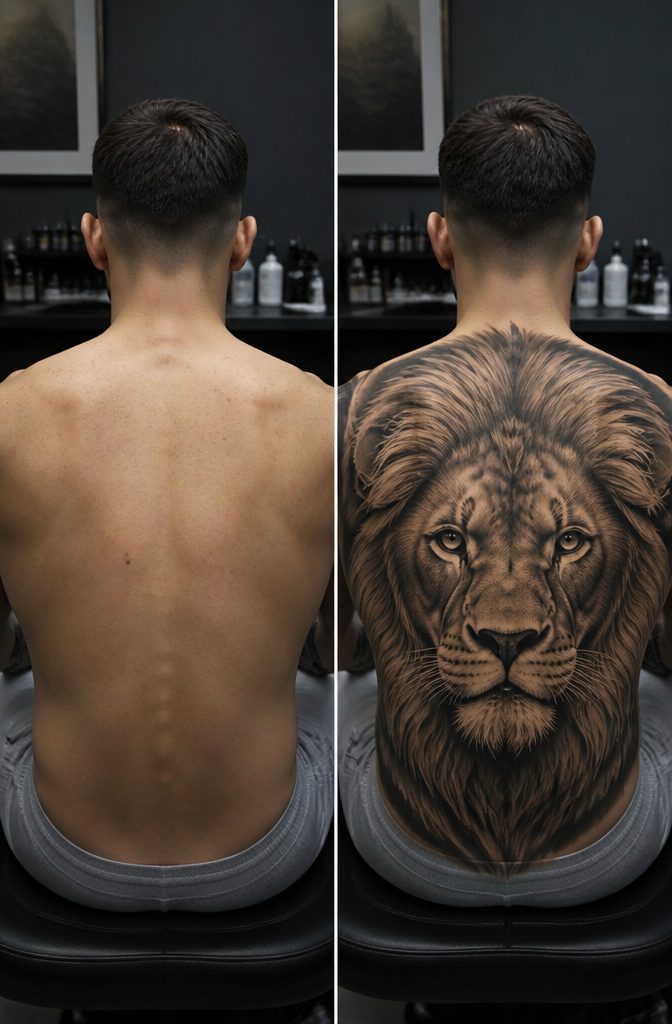
Black and grey tattoos work with one pigment diluted into washes that span from near-black to near-skin, and grey wash heals roughly 30% lighter than it looks fresh.
That number matters more than most people realize when they sit down for the first session. An artist has to build contrast darker than the final piece should read, gambling on how those tones will settle six weeks out.
The technique started in Chicano prison art during the 1970s and 1980s, when color ink simply was not available.
Artists learned to stretch a single bottle of black into a full range by cutting it with distilled water, layering passes until the gradient held smooth.
Holding that even tone across a large area still takes multiple sittings, especially when the subject needs photographic depth without any color to hide uneven spots.
A black and grey piece can borrow structure from realism, Japanese work, or dotwork, but the palette stays strictly monochrome.
Some shops sell pre-mixed grey wash sets to keep dilution consistent between sessions, which helps when a back piece gets worked across three or four appointments.
The healed result should carry the same tonal range the artist planned, not the washed-out version that happens when someone tattoos to what they see in the mirror instead of what the skin will keep.

3 Shade greywash tattoo ink set 1oz

Fall Silk Screen Stencils: Our Chalk silk screen transfer set are featuring with various theme, such as Skull,candle,black flame,pumpkin,witchy,fall leaves,maple leaf,restaurant other patterns, you can DIY decorating your home door or wall by different color chalk paste/ink.

Package contains 1 piece Cow Flower Stencil, 12x12 Inch.
5. Realism Tattoo Style
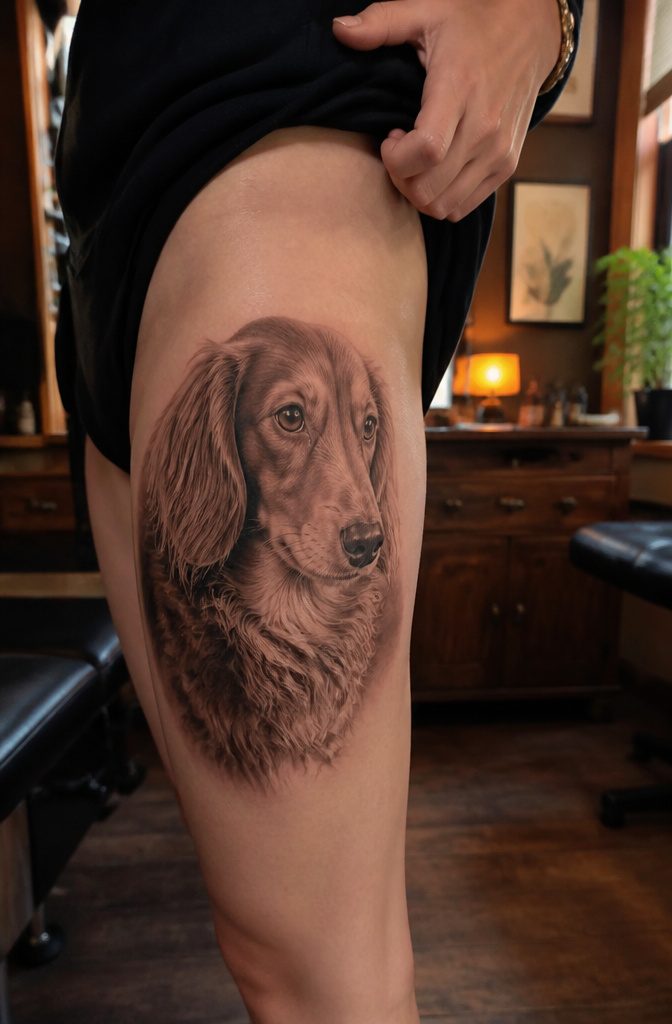
Realism tattoos recreate photographs on skin, and the gap between a flat image and a convincing one is where most artists either earn the style or wash out completely.
A portrait that reads true from five feet away demands no hard outlines anywhere; edges stop by curving into shadow, not by a drawn boundary.
That means the artist maps every gradient of value before the needle touches you, usually on a digital stencil built in layers so the reference stays pinned underneath.
The technical load sits heavy.
Curved magnum needles, not flats, handle the smooth shading because their arc tracks with the skin instead of dragging against it. Less trauma, softer gradations, longer sessions.
A bold traditional piece might fly through in two hours while a realism portrait of the same size takes double that, sometimes triple, as the artist builds tone in passes thin enough to correct if they drift.
The demand for this work has stayed high since the 1950s, and the chair time plus the skill threshold push realism toward the most expensive end of the style spectrum.
If your artist suggests starting on fake skin for practice, that is not an insult to their craft; it is realism asking for apprenticeship before skin.

PRECISE OUTLINE WORK: Stencil pen refills are made for clear, controlled outline placement before a session, helping create visibility for detailed design planning. The fine, accurate positioning for eyebrow microblading, piercing preparation, and cosmetic mapping makes each refill useful for experienced artists as well as first-time users

Precision Tattoo Marking:Get precise and clean lines with our tattoo stencil pen featuring fine point tips, ideal for outlining designs before tattooing or piercing. These aluminum alloy purple tattoo pen refills are methanal-free for safe skin use. Each pack includes 20pcs of tattoo markers and one pen shell

Product Set: You will receive a temporary tattoo kit containing 10 temporary tattoo markers, 72 tattoo stencils. Create eye-catching tattoo art with the Pen, with a variety of patterns to choose from, making it easy to create your own personalised temporary tattoos!
6. Japanese Tattoo Style
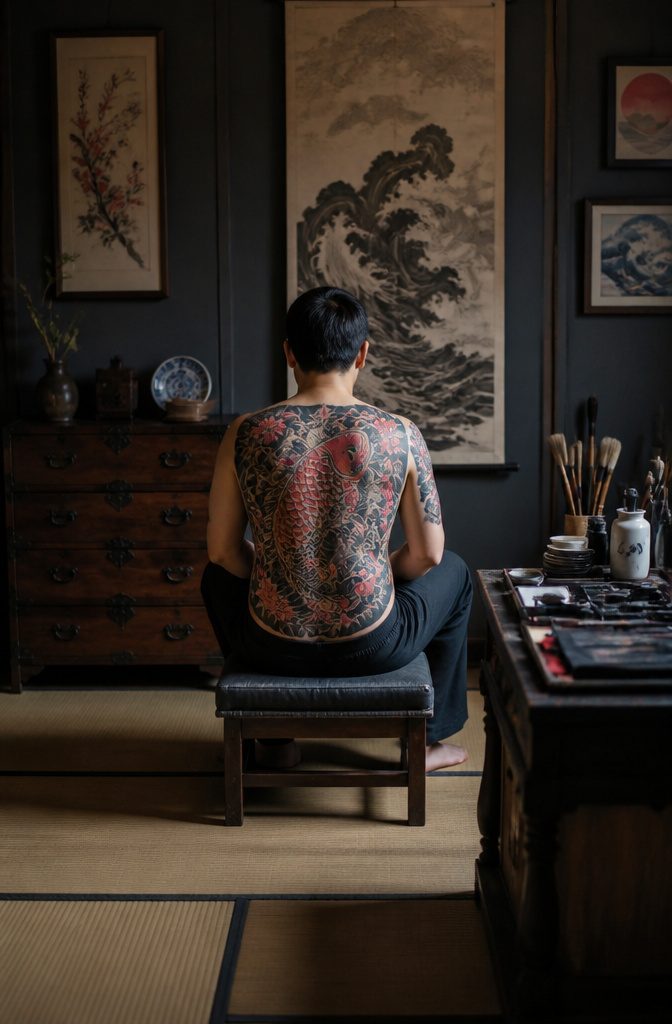
The bold outlines and saturated color you see in a finished back piece come from a tradition that reaches back to Japan’s Edo period, 1603 to 1868, when ukiyo-e woodblock prints first put these images into wide circulation.
Dragons, koi fish, tigers, and cherry blossoms each carry fixed meaning: koi for struggle and inspiration, dragons for wisdom and wealth, the wind bars behind them for impermanence and change.
A full sleeve or back piece is planned as one flowing composition from the first session, not assembled from separate tattoos later.
The waves, clouds, and wind bars that fill the background are structural; they get mapped before any single element is drawn, and the negative space between images is placed as deliberately as the ink itself, which is what keeps a design this large readable over decades.
Traditional tebori work was done entirely by hand without machines, though most studios today use coils or rotaries for the same visual result.
The color palette stays consistent: bold red, green, yellow, and brown against heavy black backgrounds that push the brighter tones forward.
A wearer chooses motifs for the story they tell, not for autobiography; the Japanese tattoo style traditionally connects the person to a larger cultural narrative rather than recording their own specific history.
Full-body coverage is not uncommon, and the scale serves the storytelling. A single dragon coiled across a back needs room to turn; a koi fighting upstream reads as struggle only when you see the current pushing back against it.
These pieces work well for cover-ups because the dense black backgrounds and layered composition can swallow older ink underneath.

Best Gift Ever: Stand out from the crowd and give the gift that will last a lifetime. Your friends and family will appreciate you for the quality they see in the blanket. This is a Woven Heirloom.

𝗜𝗡𝗖𝗟𝗨𝗗𝗘𝗗: You will get 48 little custom tattoo sheets filled with american traditional style tats. This hand tattoo set is perfect for any old school traditional tattoo and blackwork lovers. Our high quality semi permanent tattoo ink is long lasting, providing you the real looking tattoos that you can reply on for several days. Beautiful designed faux tats come in a variety of sizes and designs.

7. Tribal Tattoo Style
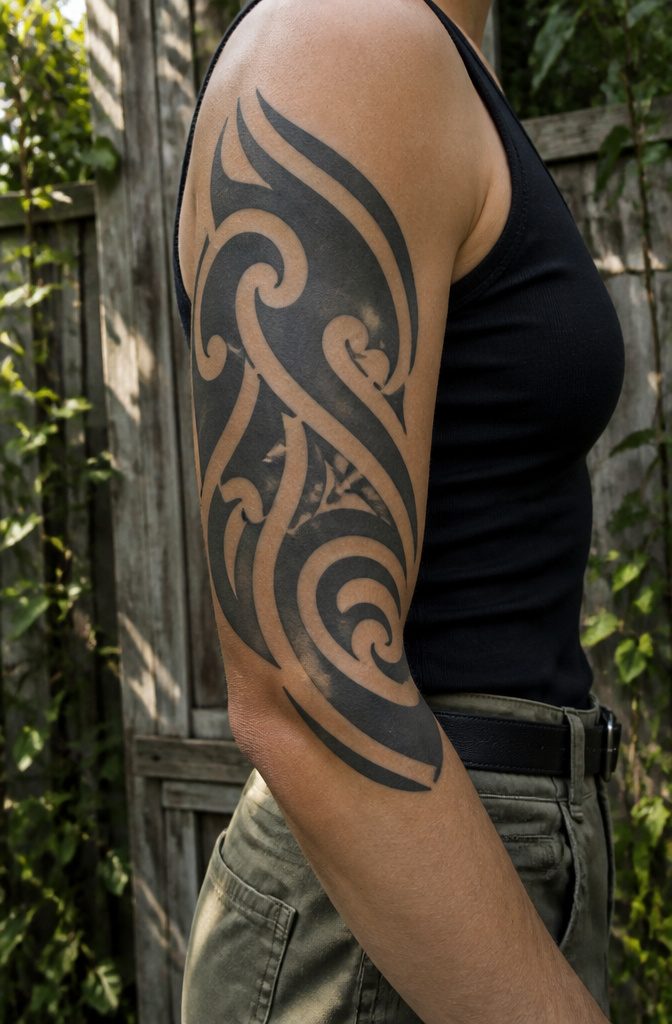
Tribal tattoos are solid black bands and sweeping curves that follow the muscle underneath them. The effect comes entirely from dense black ink against strips of untouched skin, with no gradient at all.
This practice appeared independently in the Pacific, Southeast Asia, and northern Europe, where a pattern marked rank and lineage rather than serving as mere decoration.
The name "tribal" now covers both those indigenous traditions and the modern decorative work drawn in that same visual vocabulary.
A traditional piece reads as one continuous shape fitted to your own muscle shape, drawn onto the body freehand so it moves with you rather than sitting on top of you.
Modern tribal-style work borrows the bold geometry and nature-inspired motifs, shark’s teeth or sea turtles or arrowheads, but strips away the specific meaning those symbols held in their original cultures.
Solid black holds its shape for decades where finer detail would blur or fade.
Blackwork builds an image from blocks of undiluted pigment rather than from steps between tones, so what you read as shape is often the bare skin left inside the pattern.
The fill is dense, the linework thick, and the approach scales without losing anything. That density comes at a cost: the ink cannot be lightened later, so size and edge are settled before the first pass begins.

【Safe 】: Our tattoo transfer gel meets strict safety and non-toxic material standards, non-irritating to skin, vegan and skin-friendly, and allows clear, clean tattoo transfer.

【 575+ Fun Assorted Tattoo Stencils 】-The ChurlChurl tattoo stencils collection includes 575 high quality stencils with multiple themes. enjoy cute trendy tattoo stencil designs like butterflies, words, flowers, symbols, totem, Egypt style patterns and more.

8. Watercolor Tattoo Style
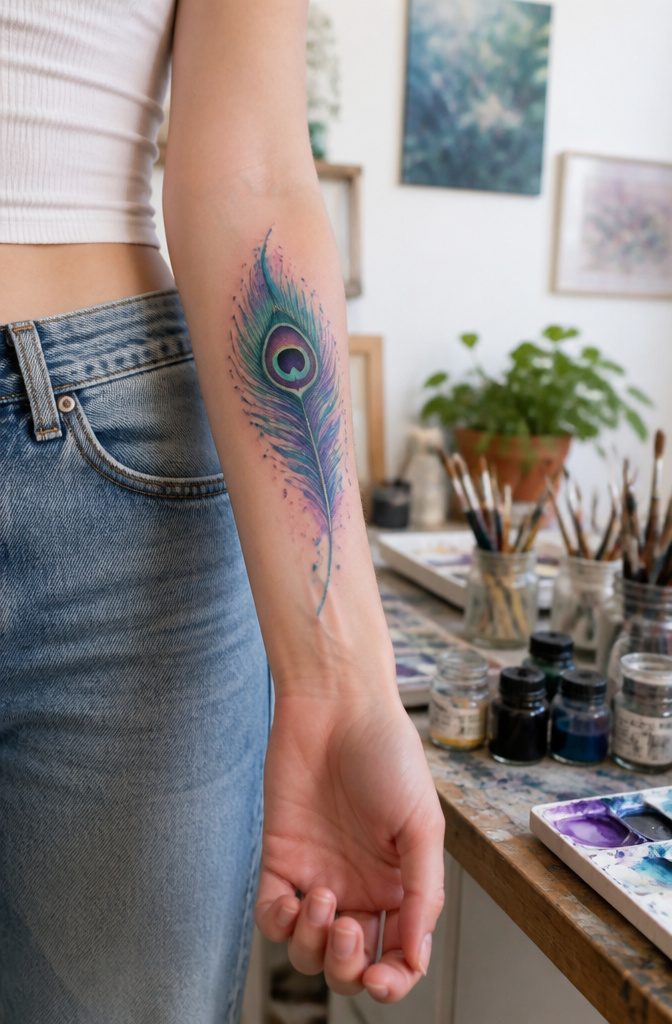
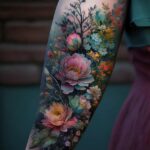
Watercolor tattoos bleed and soften at the edges the way paint does on wet paper, with little or no outline to contain the color.
The color runs past where an outline would have been, which is the effect the style is named for.
Artists build those torn edges with whip and pendulum shading, then layer thin washes over each other until the piece reads as painting rather than as tattooing.
That softness draws people who want ink that does not announce itself, but the same lack of border makes it harder to keep the design legible over time.
Nothing holds the color in place, so any linework has to be decided before the stencil goes on, not added afterward. With no dark border to hold an edge, a watercolor piece reads soft sooner than a bordered tattoo does.
To keep the color from looking washed out, some artists mix their ink with something like Foundation Flesh (by Fusion Ink) or a similar tone to the client’s skin to fade the color without killing it.
Even so, the style demands more touch-up visits than traditional work.
The absence of black outlines means there is no safety net when pigment spreads or settles unevenly, and the pastel washes that make watercolor distinctive are the first to disappear as the skin ages.
Plan the budget and the patience for that maintenance before committing, or the piece you loved at month three may read as a faded bruise at year five.
9. Geometric Tattoo Style
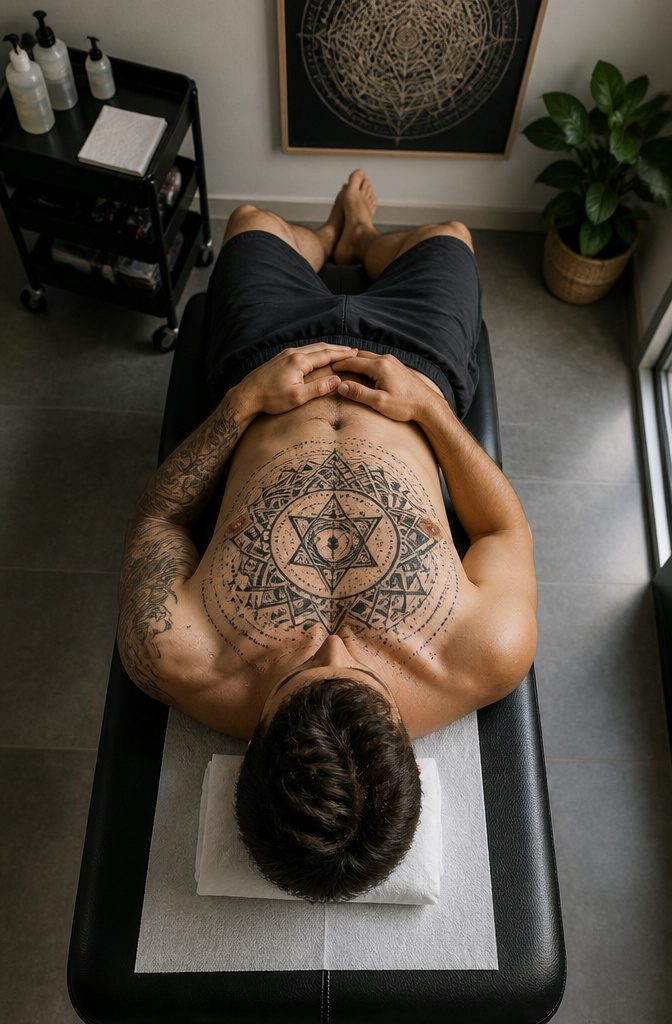
Clean lines and precise shapes are the entire point of a geometric piece, not just the frame around something else.
The style builds the image from straight lines, circles, and polygons arranged in symmetry, either as pure pattern or by breaking a subject into flat planes that catch light.
Animals built from diamonds and triangles, abstract forms, and symmetrical structures are common, and nothing here is traced from a photograph.
Sacred geometry shows up in the influence, historically tied to religious or spiritual meaning, though modern pieces often read as balancing and harmonious without carrying any specific ritual weight.
Mandalas are the most recognizable branch, building outward from a center point in repeating rings, usually worked in dotwork or fine line with a narrow tolerance for error.
The sternum sits on the body’s centerline, which is why most mandalas land there; the symmetry gets measured against the limb itself, so stencil placement takes longer than the finished piece suggests.
Placement decides whether the lines stay straight as skin moves and ages. Geometric tattoos overlap with other styles, from minimalist to blackwork, but the clean line does the structure while dots or gradients do the interior.
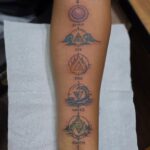
The studio line this belongs to took its present shape this century, and the precision means the artist is working against the body, not just on it.

REUSABLE WALL STENCIL for painting your walls, ceilings and floors. Try stencils instead of wallpaper and save hundreds on room makeover! Easy to use even for beginners. We...
10. Script and Lettering Tattoo Style
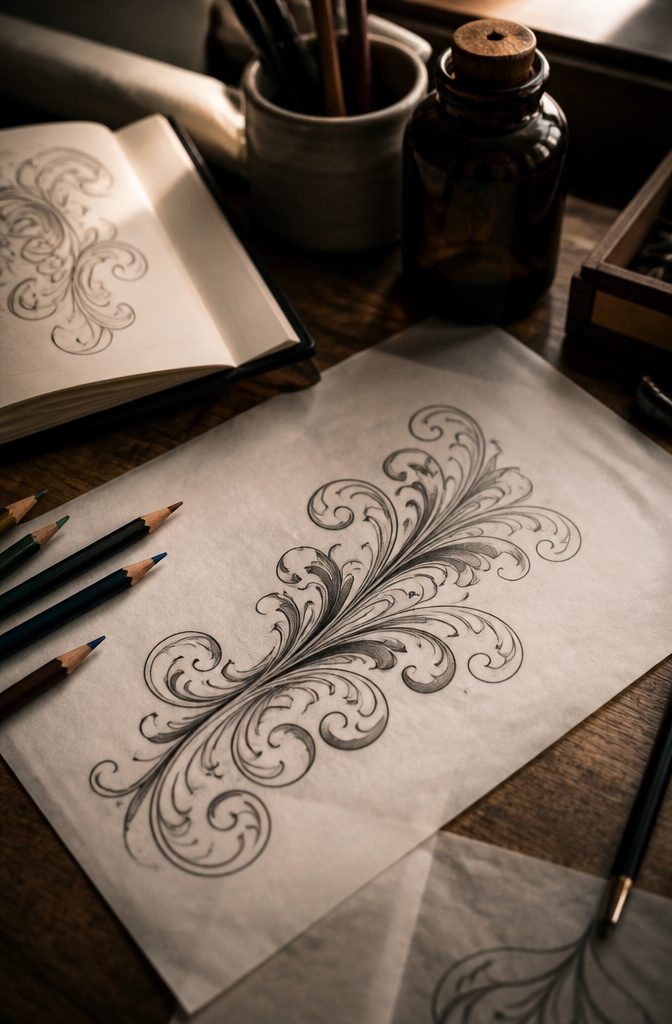
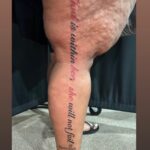
Script and lettering tattoos let the words carry the whole piece, with no image backing them up.
The alphabet itself becomes the art, and that shifts every decision that follows. A thin cursive line needs breathing room between letters that a blackletter stem would collapse into.
An old English t and a handwritten t are two different shapes solving two different spacing problems, and the body placement has to account for that before the needle starts.
This style sits at the oldest layer of modern tattooing, born from sailors’ record marks. Today the range runs from clean typeface through heavy calligraphy to bubble letter fonts, arranged horizontally, vertically, or diagonally depending on the spot.
Bring the exact wording and spelling to the consultation, because changing one word afterward means a complete redraw.
The final text sets the spacing, and spacing is the whole design. Small script or long phrases blur fastest as skin ages, so the amount of text dictates the minimum size.
An image with a weak line can be shaded or surrounded into something else; a misspelled word or cramped letterform has nowhere to hide.
Lettering is harder to fix than imagery if the artist gets it wrong, and many learn that after the second reading of what should have been a name.

Temporary Tattoos Adult: This tattoo kit includes 10 tattoo markers + 160 tattoo stencils + 72 glitter nail stickers. With a wealth of tattoo materials, you can create eye-catching body art.

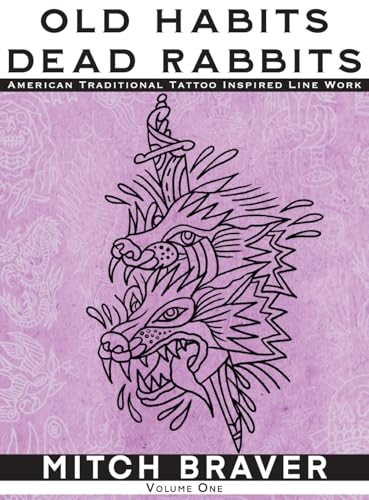
For fans of vintage American tattoo art, patriotic Americana, and traditional flash-style skull imagery. Suits collectors of old-school tattoo designs and engraved etching illustration styles.

Convenient Tattoo Pen Set: This tattoo pen set includes a sturdy pen holder and refillable ink cores, making it an essential tool for tattoo artists and enthusiasts alike
11. Dotwork Tattoo Style
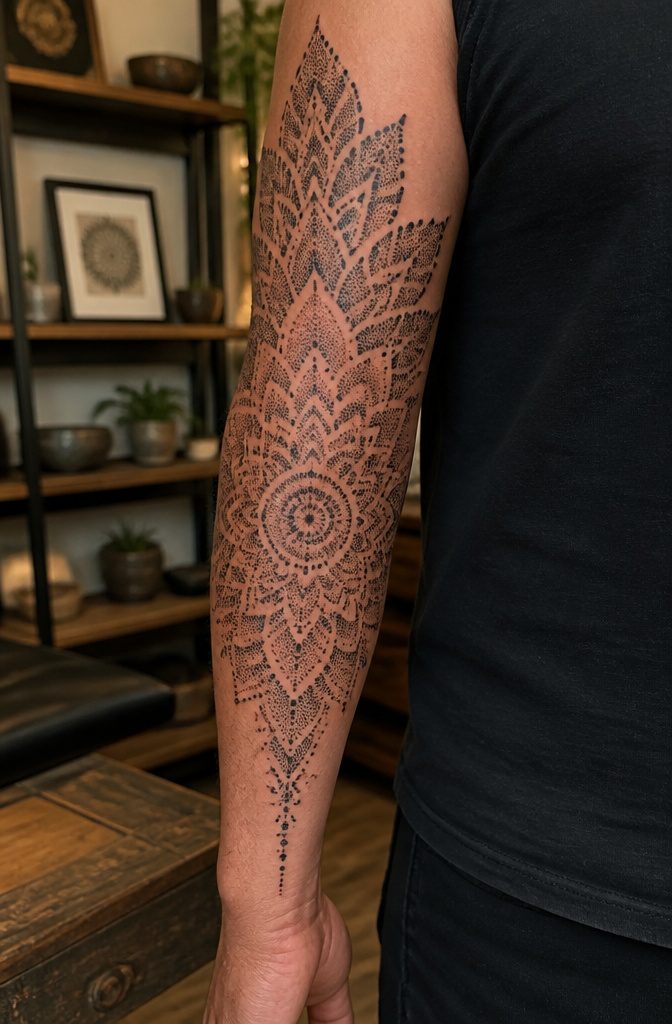
Dotwork builds every tone and contour from stippled dots alone, with no solid fill anywhere.
The spacing between those dots does what shading does in other styles; pack them tight and you get darkness, spread them out and light returns. This is pointillism translated to skin, and the technique is as unforgiving as it sounds.
Sessions run longer than conventional work because each dot is placed individually, and the needle returns to the same patch of skin more times than in a solid-fill piece.
The result is a softer, more artful surface than hard linework, but you pay for it with more time on the table and a sting that accumulates rather than hits once and fades.
Most dotwork is done in black and grey, though some artists work in dark blue; bright color almost never appears in this style.
The subjects that recur make sense of the method. Mandalas, sacred geometry, and symmetrical patterns all depend on measured repetition, and dotwork rewards that patience with a meditative quality that reads as spiritual even without explicit religious imagery.
The style has held cultural meaning across Asian and European traditions, though the current wave owes more to its visual calm than to any inherited symbolism.
Pick an artist who specializes here; a slip in dot spacing is not a detail you can hide.
12. Fine Line Tattoo Style
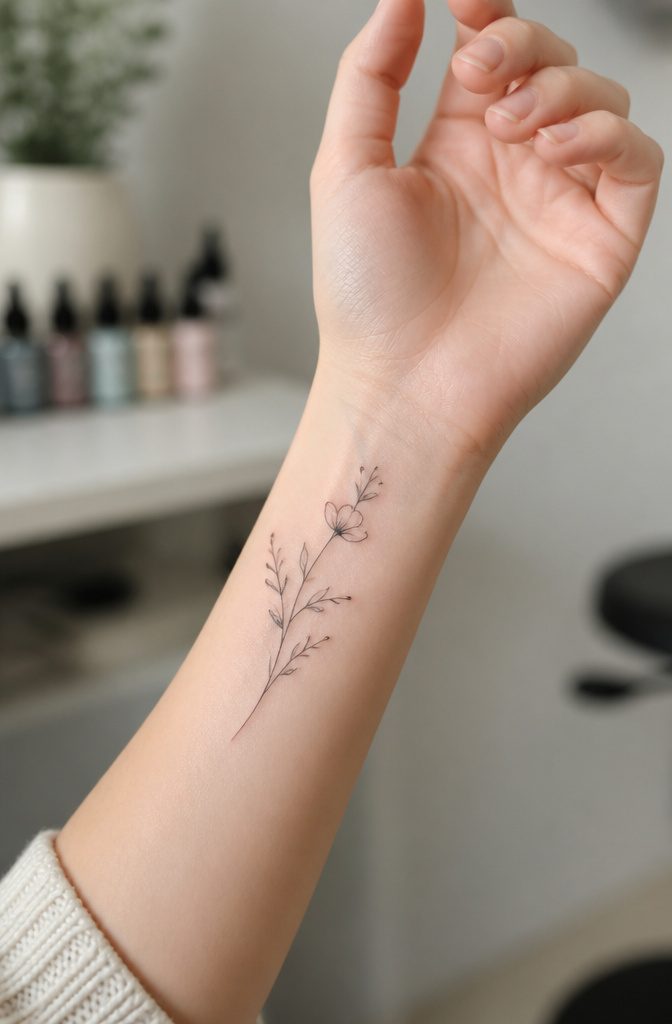
Fine line work lives or dies on the needle.
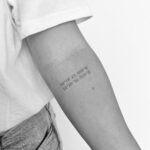
The style rose to prominence in the 2010s on single-needle setups that lay down a hairline stroke without backup from heavy fill or solid shading. Stipple might appear, but it stays light.
The line itself is the entire image, drawn as one unbroken stroke in many pieces, and that spareness is what lets it sit on the wrist, the ribs, or the inner arm where thicker tattoos would read as clutter.
Line width has a floor.
Detail that falls below it gets opened up or dropped before the stencil ever touches skin. The artist decides in the drawing phase what survives, because the needle cannot go finer than the skin and the ink will hold.
A bouquet carried on one consistent width reads like a pencil sketch because nothing is filled behind it, and that negative space is the style’s signature.
Aging is not kind to thin work. The same minimal pigment that makes fine line discreet also leaves it vulnerable to spread and fade.
Where a bold traditional piece blurs and still reads, a fine line tattoo can lose its shape entirely. Placement matters here more than in most styles.
Areas that see sun, friction, or frequent stretching will accelerate the softening. The technique has to be perfect from the first pass, because there is no surrounding weight to hide a wobble or a blowout.
13. Illustrative Tattoo Style
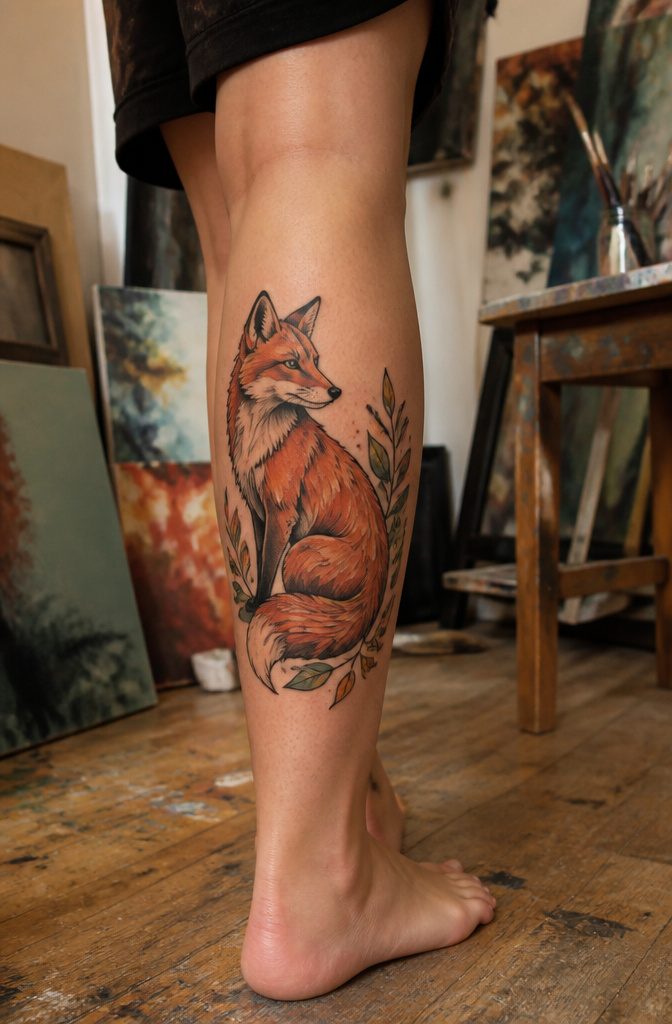
An illustrative tattoo sits in the space where a portrait might be too literal and a fine-art piece might lose the subject entirely.
The style borrows from classical book illustration: a defining black line carries the shape at every edge, while the interior shading stays selective and never complete, letting the line do the structural work.
This differs from strict realism because the artist is free to interpret.
An illustrative wolf might carry the right proportions and recognizable musculature, but the fur can be stylized into directional strokes, the eyes given more human weight than biology allows, the background flattened to a single narrative tone.
The viewer still knows it is a wolf, but they also know a person drew this, not a camera.
Fine art tattoos push further into abstraction or German Expressionist distortion, sometimes to the point where the subject needs explanation.
Illustrative work stops short of that. It keeps the subject readable while adding personal or stylized elements, the same way a storybook image lets you follow the plot without wondering what you are looking at.
Painters inside the tattoo world often cross into this style because it gives them room to move.
The linework provides discipline; the selective shading and color provide voice. Nature scenes, animals, and mythological creatures dominate the subject matter, largely because those forms already live in illustrated traditions readers trust.
14. Surrealism Tattoo Style
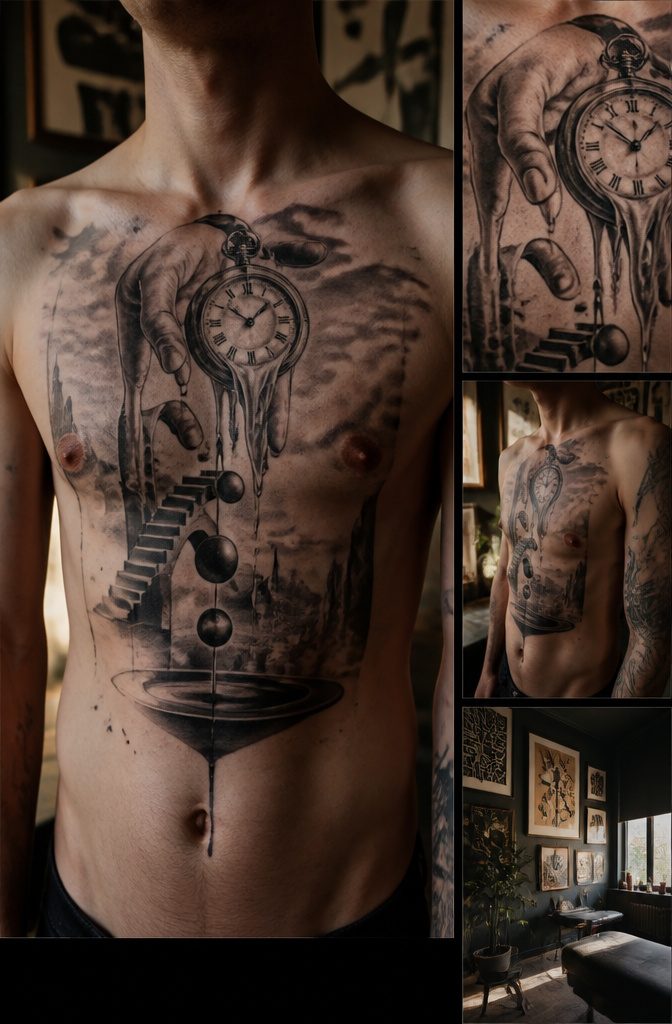
A surrealism tattoo takes real objects and makes them lie.
The hand is rendered at full realism grade, but it melts; the clock reads 3:15, yet it hangs from a tree branch that grows out of a fish. That impossible pairing is exactly what makes the style work.
Most of these pieces stay in black or grey ink, which keeps the focus on the distorted logic rather than color distraction.
Colored ink still shows up, though, when the dream itself demands it. The technique underneath is ordinary realism; only the composition breaks the rules.
Planning one takes more chair time than a straightforward portrait.
Every element must read independently, which means the artist needs reference-grade skill on each piece, plus the imagination to make the assembly feel like a single scene rather than a collage.
What you get is freedom for personal symbolism that would look nonsensical in any other style: your childhood house balanced on a keyhole, your dog’s face where the moon should be.
Things that cannot happen sometimes say exactly what you mean.
15. Minimalist Tattoo Style
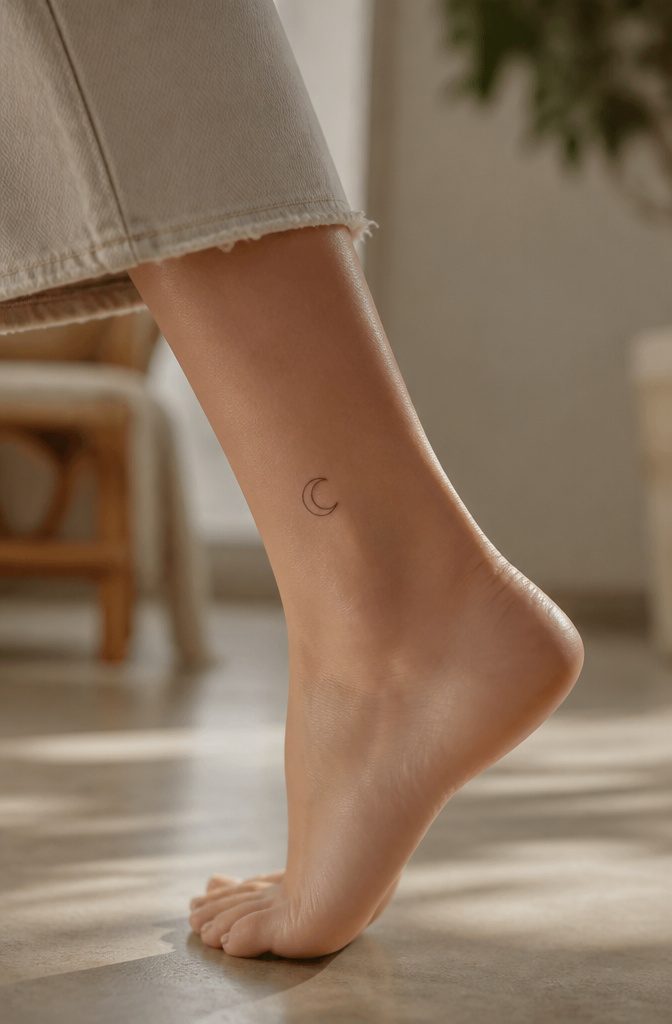
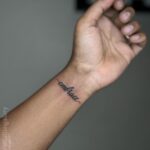
The wrist on my left arm carries a single needle line, a crescent no wider than a fingernail, done in maybe twenty minutes.
That is the whole trick of minimalist tattoo pattern style: the least ink required so the shape still reads.
Single needle work traces hair-thin strokes with a rotary running one needle instead of the standard three, and the restraint is harder than it looks.
A wavering line has nowhere to hide; without shading or color to distract, every millimeter of the path shows.
Small scale placement on wrists, ankles, or behind the ear turns the body into a frame. These spots move and stretch, so the design must hold at a distance of inches.
Fine line describes the tool; minimalist describes how little settles on the skin. Most pieces lean entirely on black ink and negative space, leaving most of the skin bare.
The tradeoff sits in the healing. Lower ink concentration means faster fading than bolder styles, and a piece that looked crisp at twenty can soften to a whisper by thirty.
Some artists add white ink or limited color for durability, though that edges toward a different conversation.
A minimalist tattoo announces itself quietly, which is the point. The work borrows from mid-century Minimalism: a few clean marks, a borrowed symbol, the subject stripped to its bones.
Celestial shapes, zodiac marks, single florals. The discipline is in what gets left out.
Newer Styles Worth Knowing
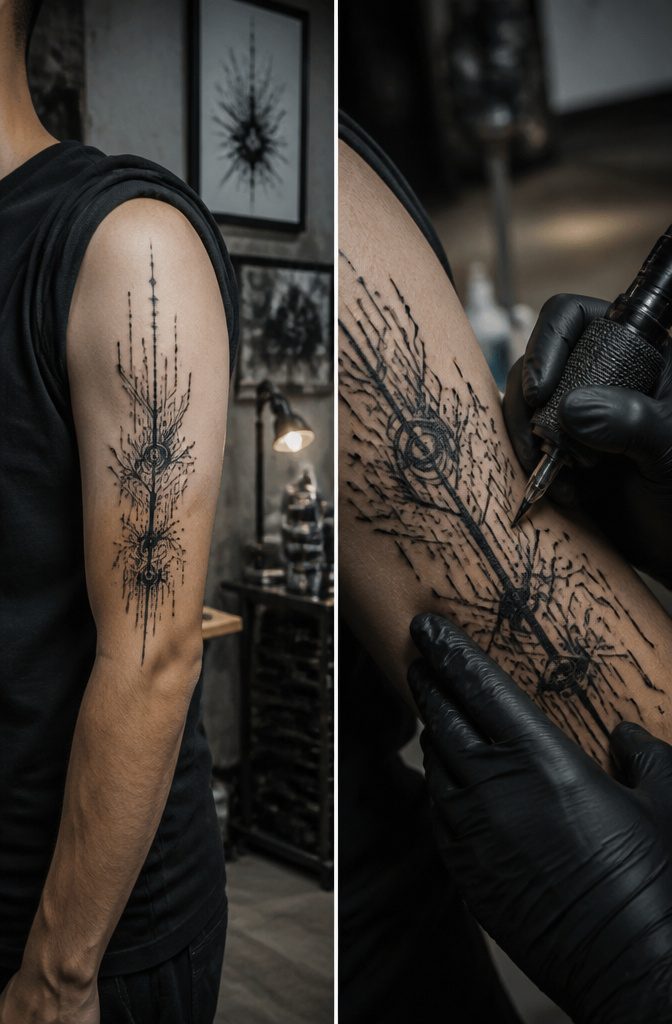
Cybersigilism arrived in my feed about two years ago, thin black lines branching into sharp digital spikes that look halfway between circuit boards and bone.
The style pulls from Y2K and gothic visuals, no color and no fill, just tapering points that merge tribal structure with screen-era anxiety.
Early pieces often aged poorly because the linework is so fine, so placement on flatter, less mobile skin matters more than usual if you want the geometry to hold.
Patchwork is the opposite impulse, a body treated like a sticker album rather than a canvas for one grand design.
Pieces sit separate, framed by bare skin, often in traditional or blackwork styles mixed without blending. What separates good patchwork from a scattered look is spacing discipline, letting each tattoo breathe while the overall placement still follows the body’s flow.
The freedom is real: you can add a new style in five years without rewriting anything. The risk is living with gaps that never resolve, half a torso of mismatched moments that stop feeling intentional as styles shift across decades.
Pain and Placement by Style
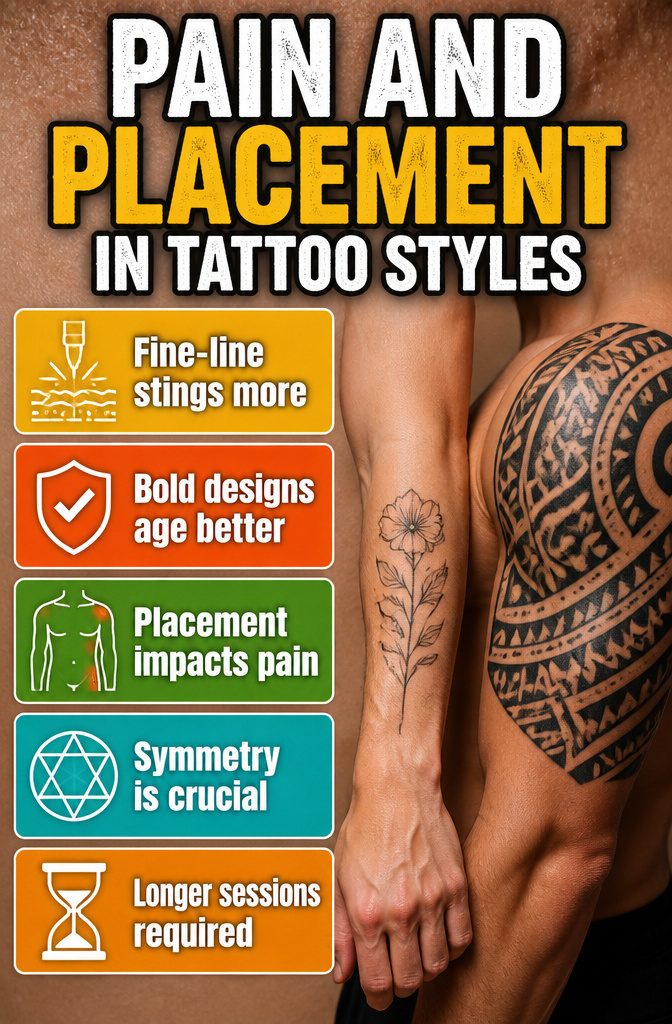
Pain hits skin, not ink. A fine-line wrist piece stings worse than a thick bold shoulder piece because the needle grazes bone and the hand twitches under pressure.
Japanese sleeves demand longer sessions, so the question becomes how long you can sit still, not how brave you are.
Some styles arrive with placement already decided. Polynesian and Maori pattern work is sized to the body part before the design is drawn, each black unit scaling to muscle and curve.
Geometric symmetry gets measured against the exact limb it will live on, and a stencil that looks perfect on paper may shift two degrees and ruin the whole effect. The time spent positioning the transfer often beats the tattooing itself.
A moving canvas punishes detail. Geometric straight lines or fine dotwork on ribs or calves means the artist fights breath and twitch with every pass.
Styles built from solid shapes tolerate that motion better. If you are choosing between a delicate pattern and a bold one for a spot that flexes, the bold one wins on pain and on how it ages.
Picking a Style That Lasts
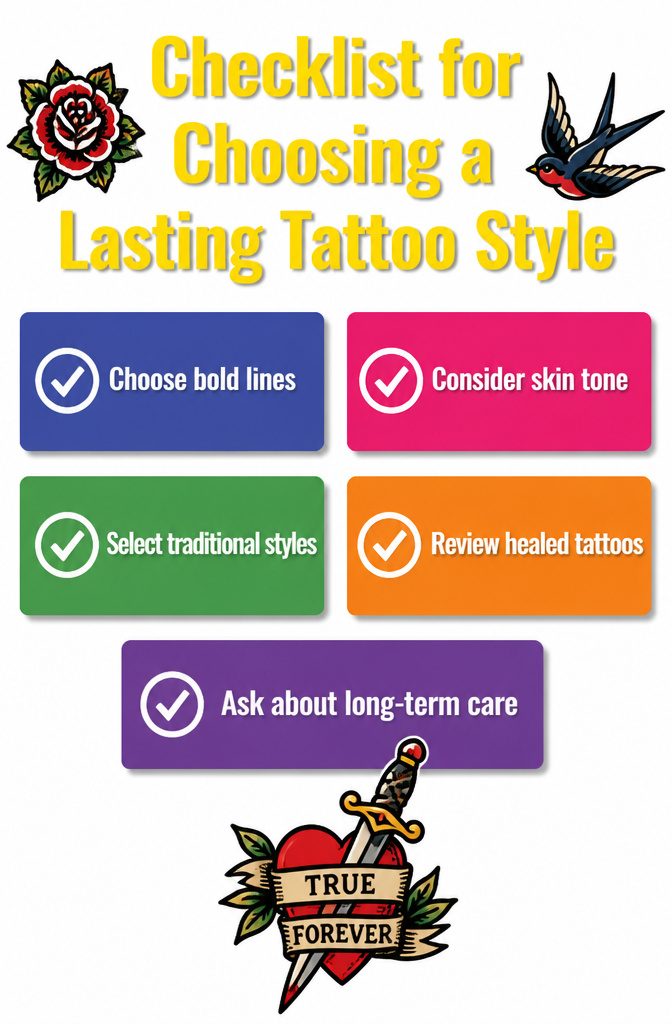
Bold lines and heavy saturation are what keep a tattoo readable ten years down the line.
I learned this the hard way with a fine-line piece on my forearm that now looks more like a faint pencil sketch than the crisp geometry I walked out with.
Traditional work, with its thick black outlines and generous color fill, holds up because the ink sits deep and uniform enough to survive the slow blur of aging skin.
That 2-dimensional, almost cartoonish quality from Norman Collins’s era ages better than delicate shading that can muddy into gray soup.
Skin tone matters for visibility in ways books rarely admit. Heavily saturated palettes read clearly on darker complexions where subtle gradations might disappear, which is part of why those bold Traditional palettes became the standard.
Paler skin shows finer work, but at the cost of faster sun damage to the pigment.
What actually happens in a good consultation: the artist presses on your ideas until something has to give.
Bring reference images, sure, but ask where your chosen pattern style will live as your skin changes. Ask to see healed photos of their work from two or three years back, not just fresh, swollen, perfect pieces.
Ask whether they would tattoo their own version of your idea on themselves, and where. The answer tells you whether they believe in it.
Frequently Asked Questions
What are the different tattoo styles?
Each uses different techniques, palettes, and line weights to create its own visual language.
What is the most popular tattoo style?
American Traditional ranks among the most enduringly popular choices. Its heavy saturation, uniform outline, and flash-sheet accessibility have kept it a shop staple for roughly a century.
How do I choose a tattoo style?
Match the style to your priorities: bold longevity favors American Traditional, photographic detail calls for Realism, and subtle placement needs point toward Fine Line or Minimalist.
Consult an artist who specializes in the style you are drawn to, since not every artist works across all approaches.
What tattoo styles last the longest?
American Traditional lasts longer than almost any other style because its heavy black outlines and saturated flat colors were designed to stay legible from a distance for decades. Tribal and other solid blackwork also hold shape well over time.
Do certain tattoo styles hurt more?
Pain depends more on placement and session length than on style itself.
Realism and Dotwork both demand longer sessions than bolder styles, which increases total discomfort. Dotwork specifically accumulates sting because the needle returns to the same patch of skin repeatedly.
What are the different types of tattoo patterns?
Tattoo pattern styles range from representational to abstract: illustrative and realism depict recognizable subjects, while geometric and tribal build images from shapes and solid black forms.
Japanese and Traditional rely on established motif vocabularies, whereas Watercolor and Surrealism break conventional boundaries.
What is the 1/3 rule tattoo?
In general tattoo planning, artists often advise that design, placement, and aftercare each contribute to a piece’s success, but no single formula is addressed here.
What are 10 popular tattoo styles?
Ten of the most widely recognized tattoo pattern styles are American Traditional, Neo Traditional, New School, Black and Grey, Realism, Japanese, Tribal, Watercolor, Geometric, and Script and Lettering. Fine Line, Dotwork, Illustrative, Surrealism, and Minimalist round out the full 15 covered.
What is the Gen Z tattoo style called?
New School’s cartoon exaggeration and Surrealism’s dream imagery also attract contemporary audiences.