Leg work ranges from a single fine-line session to years of patchwork collection, and the deciding factor is how much motion your chosen spot sees daily.
The inner thigh and calf hold delicate linework steady, while the knee and shin demand bolder, denser designs that can survive constant flex and swelling.
A Flower of Life geometric piece alone takes multiple sessions, and the deposit you forfeit by tapping out early on an inner-thigh sit makes planning around your pain tolerance a financial issue, not just a comfort one.
1. Geometric Patterns with Flower of Life Motifs
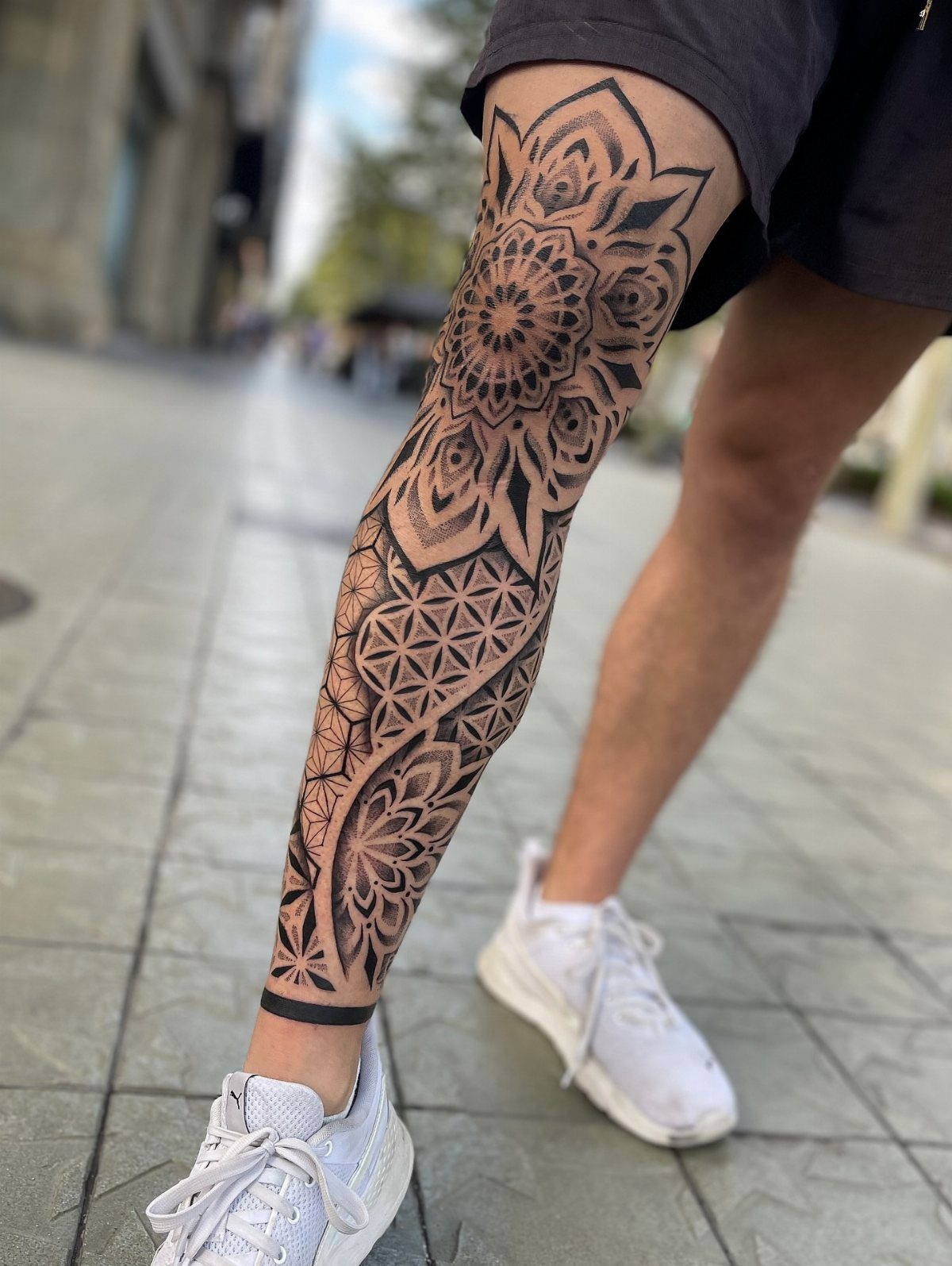
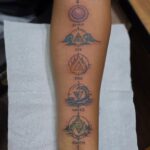
Geometric leg work builds outward from a center point, usually the knee, with the Flower of Life as the anchor. Interlocking triangles and fine-line mandalas repeat in black ink until they fill the space without crowding it.
The knee is one of the harder spots to sit through, and the skin there moves constantly. A design this dense takes multiple sessions, and the artist needs steady hands for the linework to hold its precision as it heals.
I would ask to see healed photos before booking; fresh geometric work always looks sharper than it stays.

Dragonhawk Tattoo Needles: High-quality tattoo needles, manufactured under the trusted Dragonhawk brand, are perfect for all-purpose work. With a polished, long taper design, these needles ensure reliable performance and excellent control.

TATELF 1001RL cartridge needles feature #10 0.3mm ultra fine single round liner, tight round configuration delivers consistent ink flow with minimal skin trauma. Ideal for ultra-thin lines unavailable with 1005RL & 1203RL cartridges.

Versatile: BIOMASER tattoo needle cartridges are suitable for shading, lining, and rotary tattooing.It can not only use on body art tattoo,but also permanent makeup eyebrow,liner,lip etc.
2. Large Floral Designs
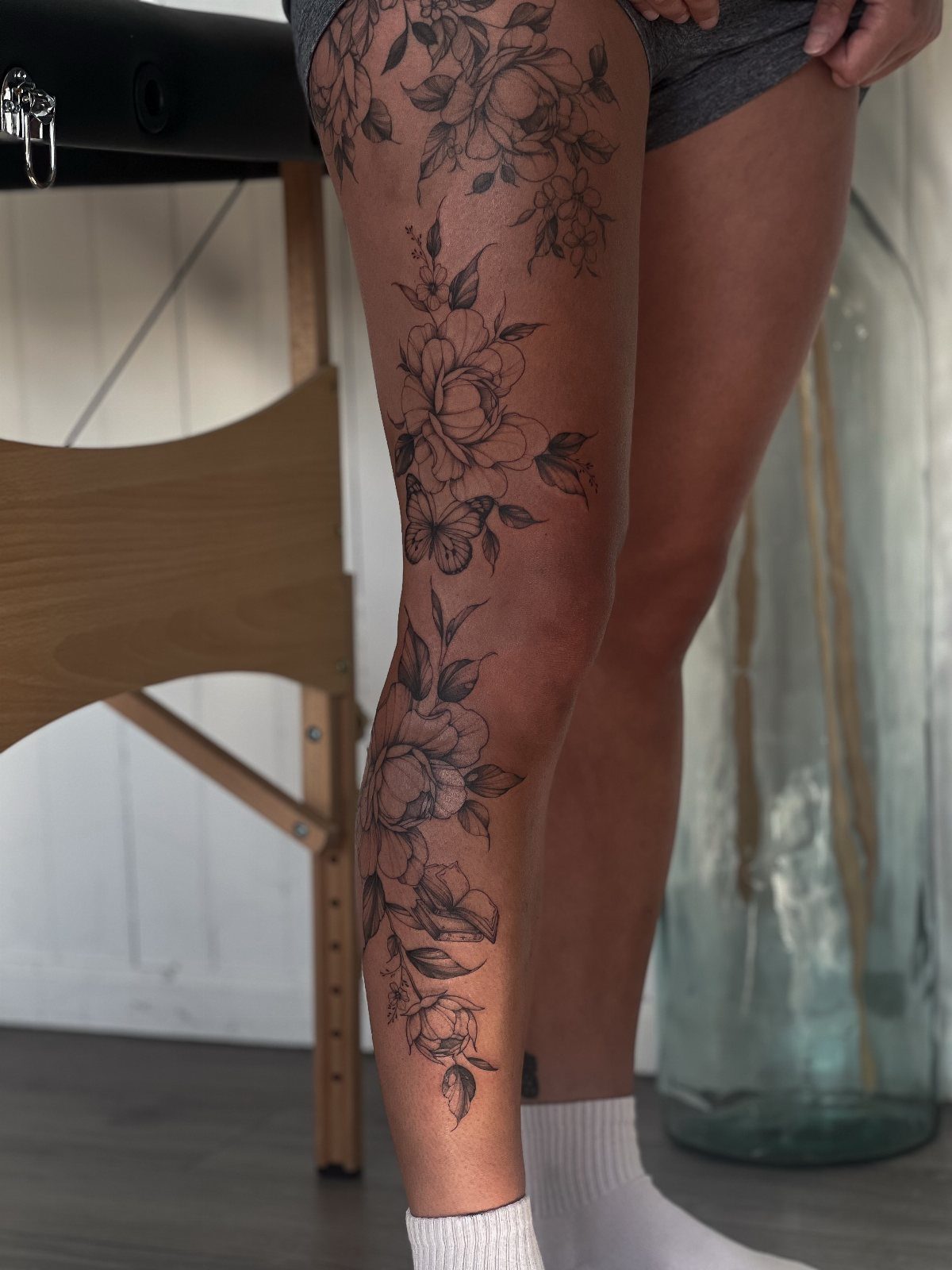
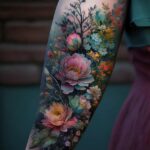
A full-leg floral piece runs from thigh to ankle with the same flower family repeated at different scales. Peonies in black and grey work in color too if you want the ink to read from farther away.
Large flowers need room to open. Compression from socks or tight pants will fade the lower shin faster than the thigh, so the design has to be planned with that in mind.
I like when the artist lets some skin breathe between blooms; solid black everywhere ages into a blur.

【Style and Elements】 30 sheets of Yoga style temporary tattoos in different size including lotus, OM, Sanskrit, Tibetan, lycoris, mandala, flower, elephant, moon, peacock feather, meditation, fearless, golden sun and more.

LARGE SCALE DESIGNS: This pack contains 8 sheets extra large tribal full arm temporary tattoos featuring intricate mandala, floral, and geometric patterns, 10 sheets half arm tattoos and 30 sheets small tattoo stickers.

Unique Design Mandala Tattoos: Yazhiji Mandala tattoos are a beautiful blend of artistry, spirituality, and self-expression. They offer a way to wear a design that is not only visually stunning but also rich in meaning and symbolism. Whether you’re drawn to the traditional aspects of mandalas or prefer a modern interpretation, our mandala tattoo can be a deeply personal and reflective choice alowing you to embrace the harmony and beauty of these captivating symbols.
3. Fine Line Leg Tattoo Designs
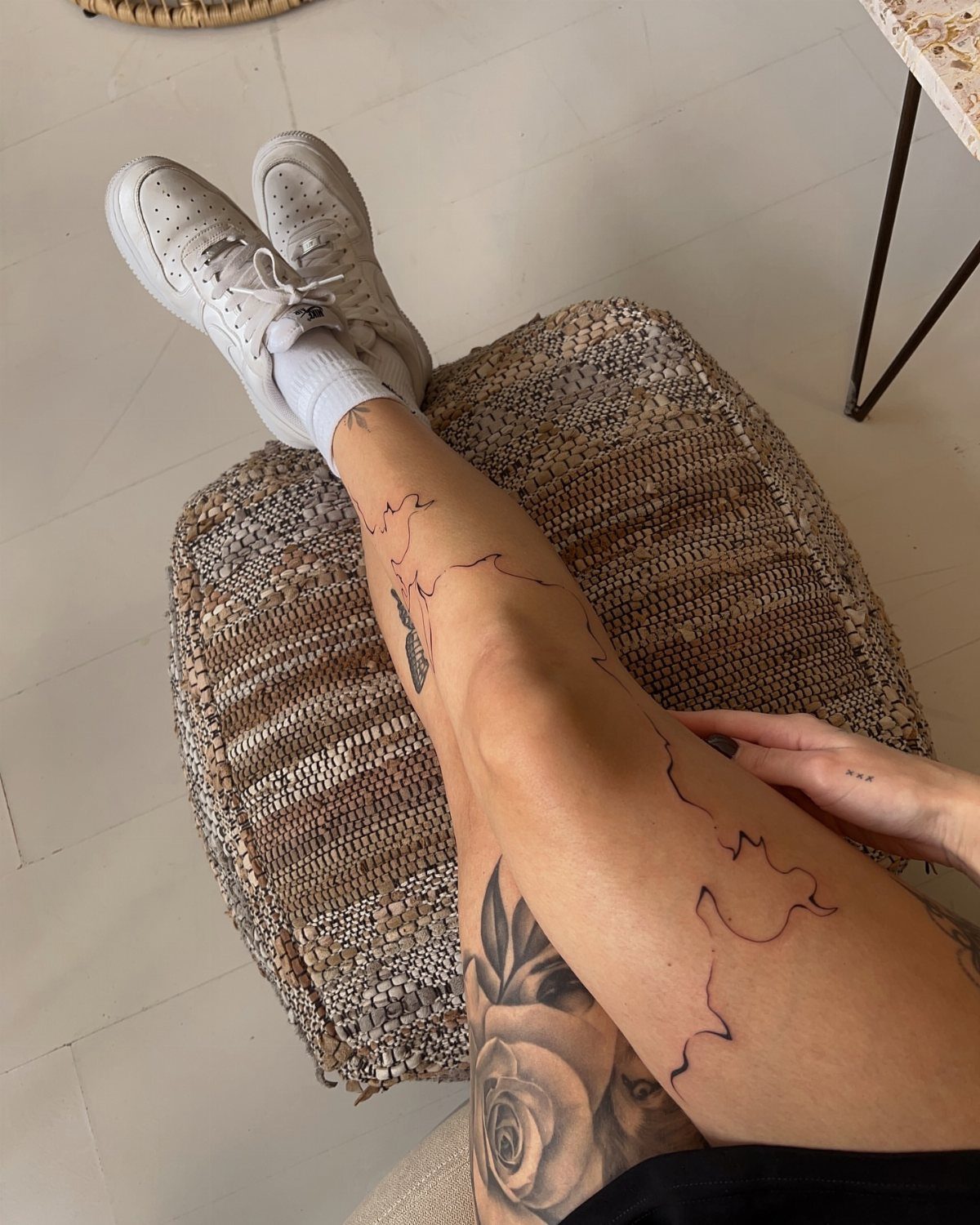
Fine line work on the leg lives or dies by placement. The inner thigh and calf carry less motion than the knee or ankle, so a single-needle abstract line keeps its weight there.
Continuous, unshaded line work means any blowout or waver stays visible.
The artist should be someone whose healed work you have seen in person, not just fresh posts. I would also budget for touch-ups; fine pigment settles differently on legs than on forearms or ribs.

🐙2 Sheets Creative Large Flower Temporary Tattoo Sleeve:🐠 There Are 2 Sheets Full Arm Temporary Tattoos For Women Full Sleeve Temporary Tattoos For Adults Including Popular Unique Designs Black 3D Rose Peony Flowers Tattoos Watercolor Butterfly Flamingo Floral Tattoos Full Sleeve Thigh Leg Tattoo Sticker.
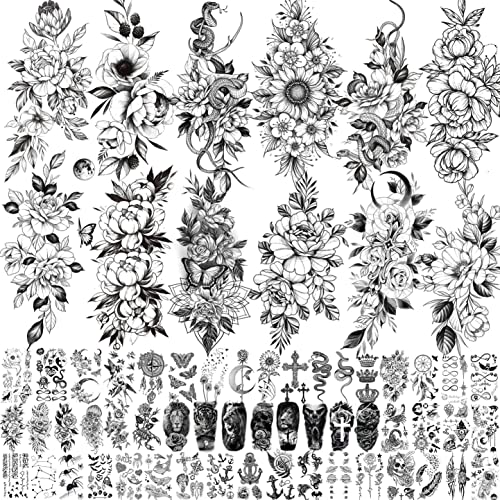
💕【61 Sheets】--VANTATY 3D Flowers Temporary Tattoos For Women Girls Kids Adults Body Art Stickers Look Real! 【click Our Store/brand Name To See More Fashion Designs】

🎡【Package Includes:】 71 Sheets Watercolor Temporary Tattoos For Women Men Adults Including 12 Sheets Half Arm Sleeve Tattoo Stickers and 59 Sheets Tiny Cute Small Fake Tattoos For Kids Boys Girls, 3D Gothic Tatoos Universe Planets Star Moon Spider Web Cross Birds Scorpion Bat Ghost Elephant Flower Floral Pirate Compass Anchor Butterfly Skull Skeleton Maori Totem Wolf Tiger Lion Dragon Eagle Owl Bear Crown Mountain Sea Wave Snake Tree infinity Letter Words Clock Quotes Abstract ECG Feather Gangster Minimalism Coyote Feather Astronaut Whale Lotus Dreamcatcher.
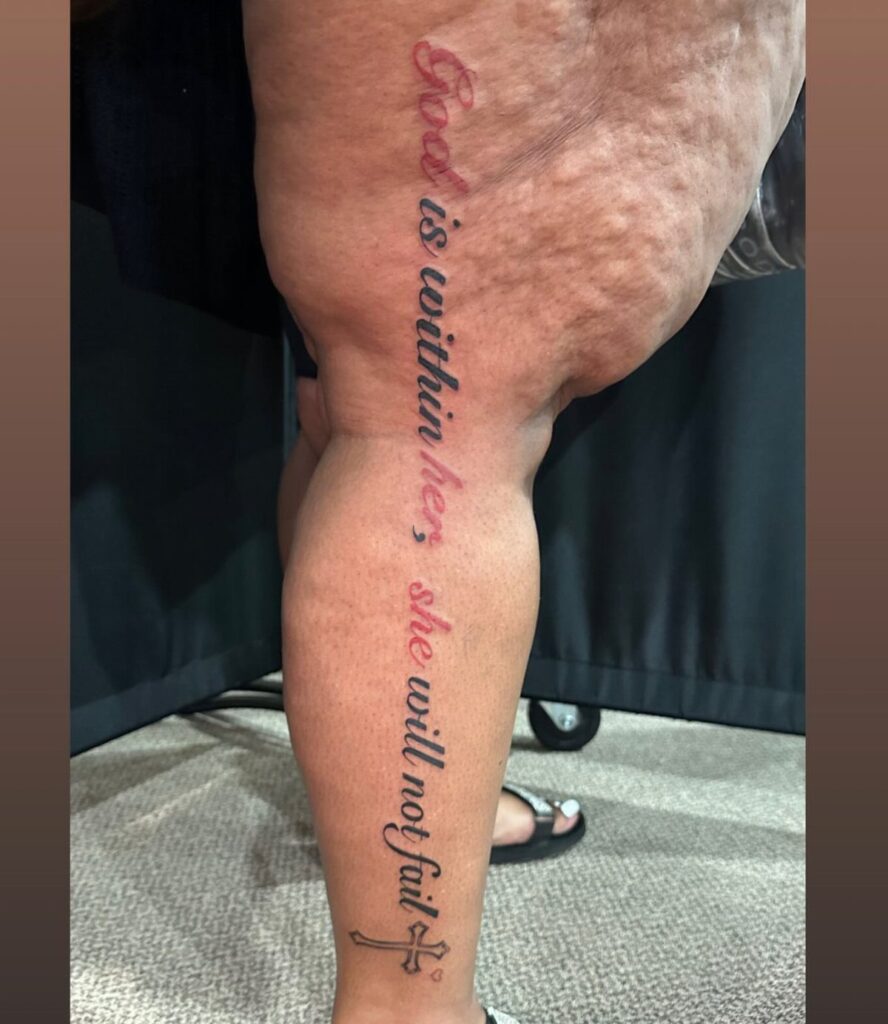
4. Script Leg Tattoos with Meaningful Quotes
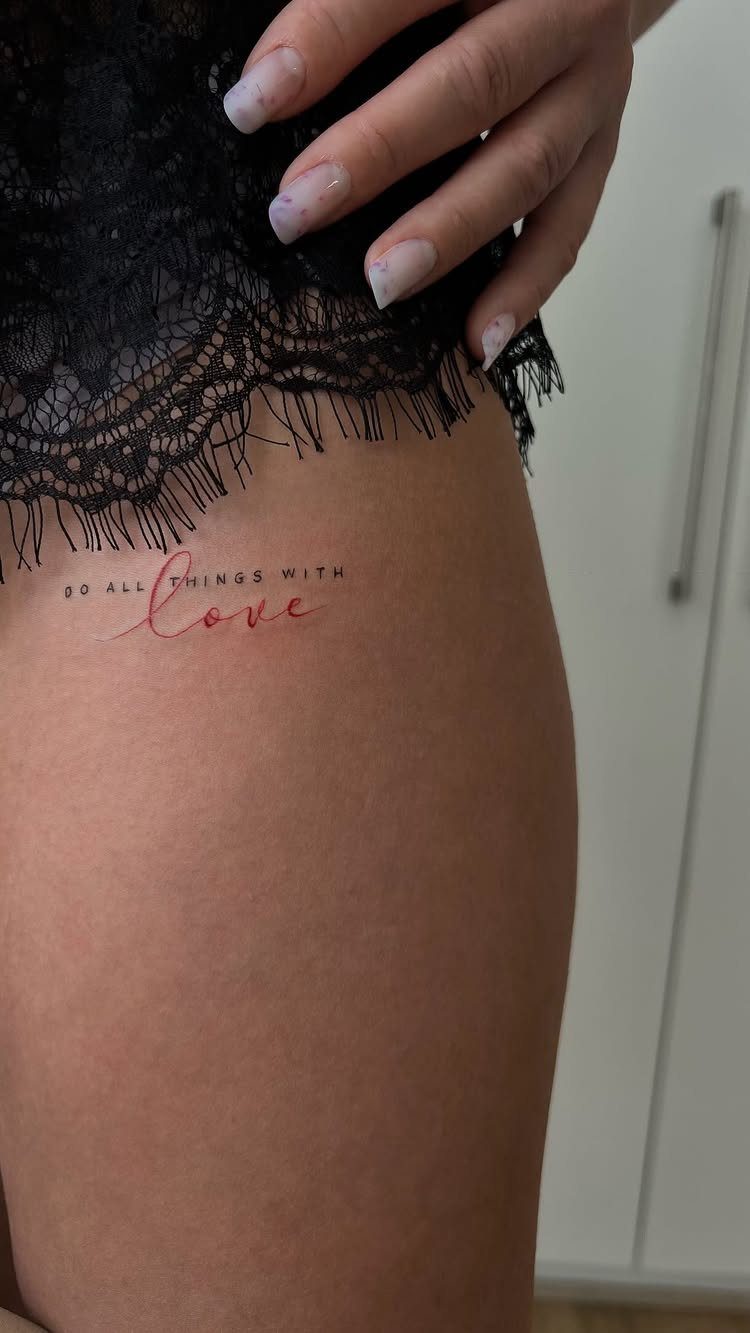
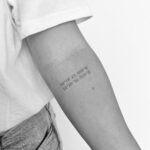
Script on the leg reads differently than on the ribs or collarbone; the thigh stays mostly still, but the skin stretches with every step if you place it above the knee.
A longer quote needs a straight stretch of muscle to sit flat, or the letters drift.
Red ink costs more sessions; black settles in one pass and holds its contrast.
I would pick a font with consistent stroke weight, not something that thins to a hairline, because leg skin thickens and those details are the first to go.

Clean, Flawless Transfers: Your artwork will look so clean once transferred to the skin with the Stencil Stuff gel! Gentle on the skin, Stencil Stuff transfer solution helps you achieve clear and sharp tattoo stencil transfers every time!

24PCS Unique Henna Stencil Pack – This complete henna tattoo kit accessory set includes 24 sheets of reusable mehndi stencils (6.89" x 3.34"). Featuring exclusive designs like long arm bands, moon motifs, vine flowers, and large floral templates, it is ideal for creating DIY temporary skin art on wrists, arms, back, and full body.

【Safe 】: Our tattoo transfer gel meets strict safety and non-toxic material standards, non-irritating to skin, vegan and skin-friendly, and allows clear, clean tattoo transfer.
5. Patchwork Leg Tattoos
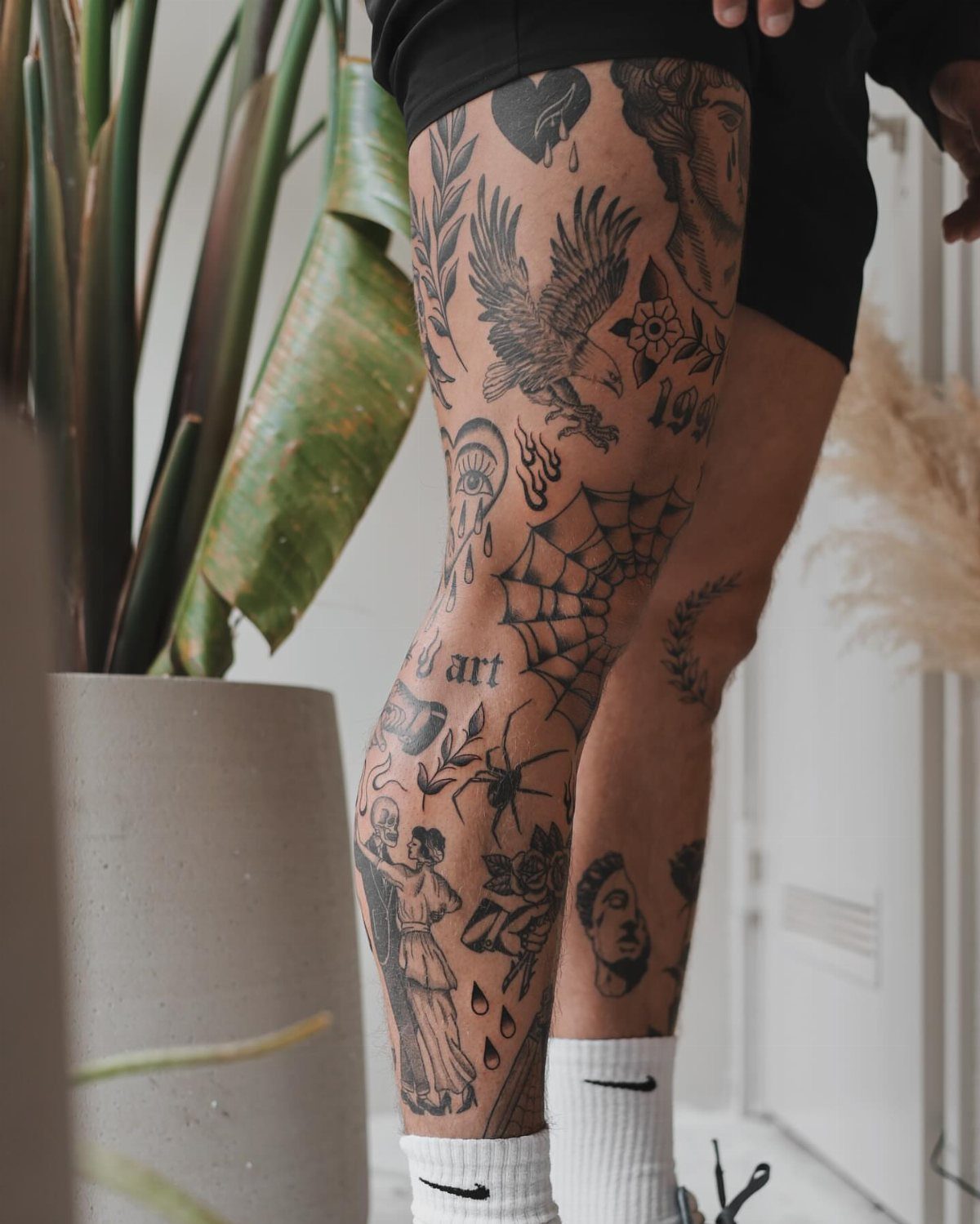
Patchwork is the collector’s approach: individual pieces collected over years, leaving skin between them until the leg reads as a whole. The eagle, spiderweb, and text each came from a different session, maybe a different artist.
The gaps matter as much as the tattoos. Too tight and the leg turns to grey mush; too loose and it looks accidental.
I would decide early whether to keep a consistent scale or let some pieces dominate, because mixing sizes without intention reads as chaos. Black ink unifies everything; color patchwork needs a tighter plan.

Sexy Phrase Thigh Tattoo Design: This semi-permanent tattoo set highlights a handwritten-style phrase “Heaven Sent” designed for bold and expressive placement. The flowing script creates a natural, body-contouring effect that enhances curves, especially on thigh, hip, or waist. Perfect for women who love confident, sexy, and statement tattoos that express personality and attitude with a clean yet eye-catching style.

✿【Inspirational Quotes Tattoo】: 10 Sheets in total of fake temporary tattoo stickers, including 10 sheets of inspirational and motivational quotes and scripts,words, retro typewriter style sayinging, Enough for friends party gatherings to enjoy together or choose different pattern to match your everyday mood.

✿【Inspirational Quotes Tattoo】: 9 Sheets in total of fake temporary tattoo stickers, including 9 sheets of inspirational and motivational quotes and scripts,words, retro typewriter style sayinging, Enough for friends party gatherings to enjoy together or choose different pattern to match your everyday mood.
6. Nature Landscape Tattoos
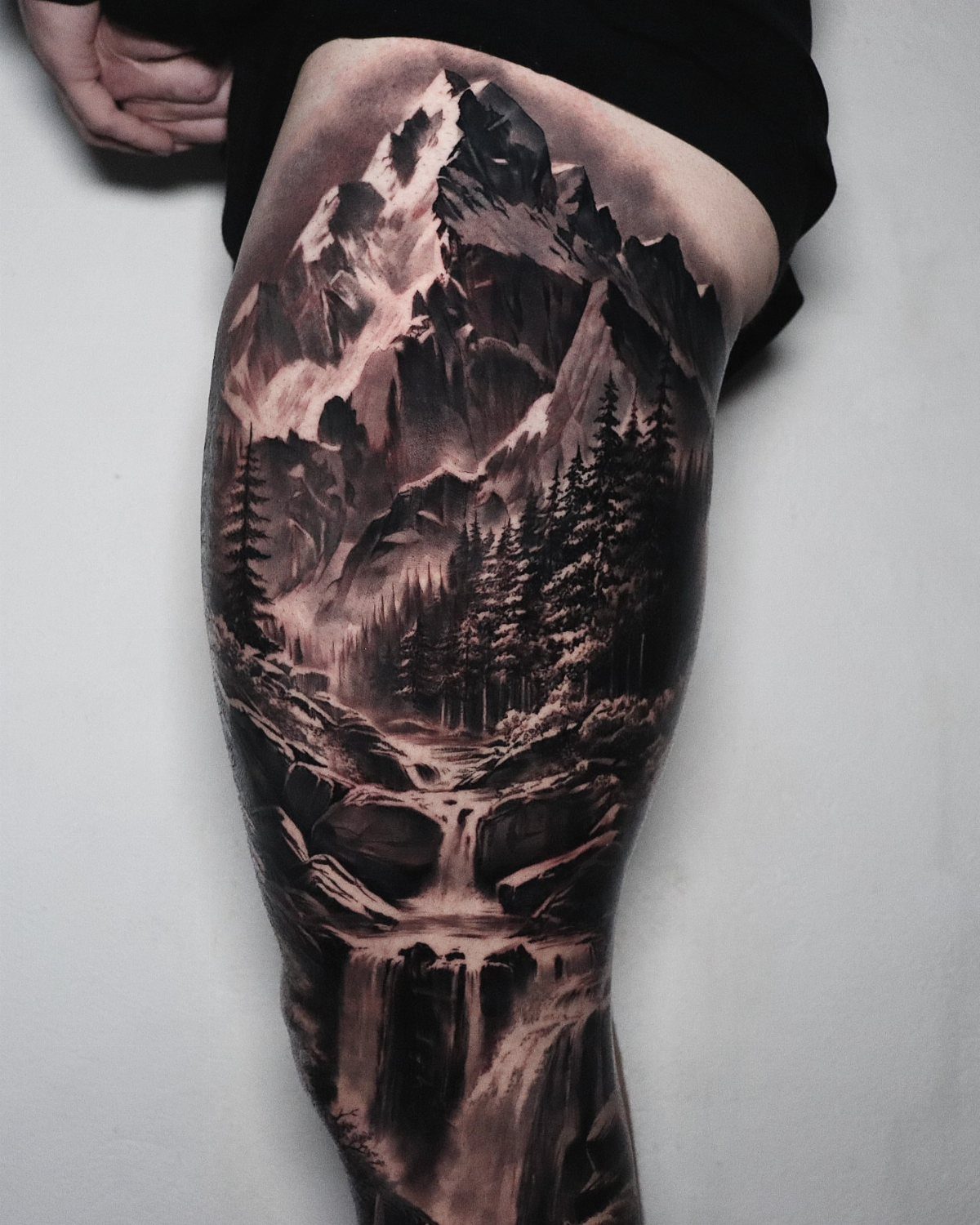
Mountain scenery on the thigh uses the natural curve of the muscle to give the peaks depth.
Black and grey realism works here because the large area lets the artist build atmosphere with fog and water without running out of room.
The knee interrupts a continuous landscape, so most designs either stop above it or turn the kneecap into a sun or moon.
Pine trees and waterfalls are forgiving subjects; they do not need perfect proportion to read as nature. I would ask the artist to keep the darkest blacks in the foreground so the tattoo keeps its layers as it ages.

1003RL FINE LINER CONFIGURATION – #10 0.30mm 3RL tattoo cartridges combine three Round Liner needles for fine outlines, small lettering, detailed contours and precision linework.

【High‑Quality Premium Materials】 Crafted with sharp 316L stainless steel bugpin needles for long‑lasting durability. Premium plastic housing and flexible silicone ensure stable smooth operation. Single‑use disposable design keeps tattoo practice clean for artists and beginners.
【20PCS 1RL Tattoo Cartridge Needles】 Includes 20 cartridges in one consistent 1001RL configuration. This dedicated pack of 1001RL tattoo cartridges is a practical choice for artists searching for single needle tattoo cartridges or related options for 1RL tattoo needles, without the need to sort mixed configurations
7. Dagger and Skull Leg Tattoos
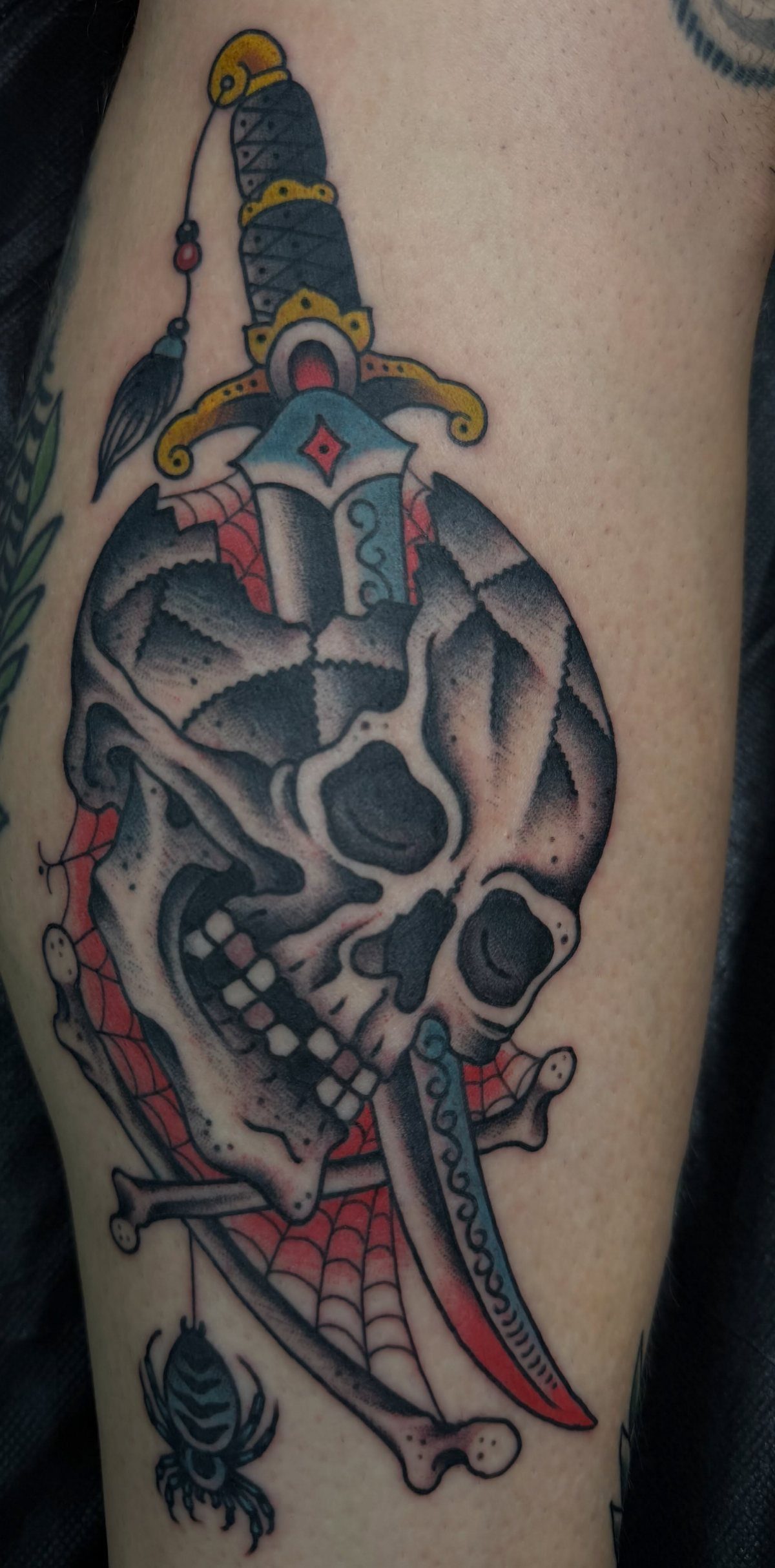
Dagger and skull work carries the weight of American traditional history without needing color to read. The composition relies on black ink, bold outlines, and enough negative space so the spiderweb behind the skull still shows skin years out.
The lower leg suits this well; the calf gives a flat canvas for vertical pieces, and the shin bone sits close to the surface for crisp line work.
A dagger piercing a skull with spiderwebs and crossbones reads as classic flash, though the fine lines in the webbing take a steady hand and a longer sit than the bold bones underneath.
Pain runs higher over the shin than the calf, and the knee ditch will swell.
I would keep the darkest blacks in the dagger handle and skull sockets; those areas hold ink, while grey-wash in the web can fall out and need rebuilding later.

Mandala, Mandala Lover, Mandala Tattoo, Sacred Geometry, Flower of Life, Spirituality, geometric tattoo

Mandala, Mandala Lover, Mandala Tattoo, Sacred Geometry, Flower of Life, Spirituality, geometric tattoo

SACRED LOTUS MANDALA ART: Features a breathtaking vertical alignment of blooming lotus flowers, a celestial crescent moon, and intricate unalome geometric mandala detailing. This elegant spiritual design is crafted using a digital hand-drawn fine line tattoo ensures crisp lines and flawless gradient shading to maintain absolute geometric symmetry, rich linework contrast, and clean dotted stippling effects.
Pain and Healing Considerations
The outer thigh fools people. The thigh looks fleshy and forgiving, so people book a long session and then hit the inner thigh or the back of the knee halfway through.
Those spots rank among the most painful on the body. I have watched clients tap out at 45 minutes on an inner-thigh piece, unprepared for the intensity.
Tapping out costs more than pride; you often forfeit your deposit and pay a fresh setup fee to resume, so two short sessions run steeper than one planned sit.
Gravity pulls fluid downward into the lower limbs, a effect called dependent edema. A shin piece followed by a hike the next day can balloon until the skin feels ready to split, and that pressure can push ink out.
Budget 48 hours of elevation, leg propped on three pillows minimum. Skip it and you risk infection or blowout, where ink drifts into the fat layer and leaves a blue halo.

【Long Lasting Temporary Tattoos】There are 6 sheets large black temporary tattoos in one package, These came in a nice elegant envelope,size is 4.72*7.48 inch, include Flowers Rose butterfly Leaves Tattoo,look sexy and mysterious.

92 Sheets Black Tattoos: Realistic temporary tattoos Includes 17 large flower temporary tattoos and 75 small sexy tattoos – featuring rich designs such as roses, leaves, and butterflies, mixed and matched to create your own unique flower arrangement on your body.

🐤【24 Sheets Temporary Tattoos For Men Women Kids】Brand FANRUI Distinctive Design Black Realistic Temporary Tattoos For Women Men Adults Lady Lovers Female Child DIY 3D Custom Tattoo Cover Up Makeup Tips Styling Tools.
Design Longevity
Skin texture decides which styles survive. On aging or sun-damaged legs, watercolor work without black outlines turns to a blur inside 2 years.
Lighter pigments need a black outline to act as a wall; without one, they drift. I have had to redirect clients toward Neo-traditional pieces with bold outlines and saturated color instead, because that structure stays readable as skin changes.
A good artist asks about your skin’s integrity and how your tone takes specific pigments. If they skip that conversation, they are selling, not advising.

183PCS Different Styles Tattoos Stencil: Our temporary tattoo stencils forkids comes with 183 temporary tattoo stencils painting set design such as flowers, cats, hearts, skulls, dinosaurs, fruits, deer, scorpions, Hannah, unicorns, whales, cars, rainbows, telescopes, ships, too fast, astronauts, pirates, letters, stars and more Style in 12 sheets A5 size. Perfect for festivals, parties, or daily fashion.

【 575+ Fun Assorted Tattoo Stencils 】-The ChurlChurl tattoo stencils collection includes 575 high quality stencils with multiple themes. enjoy cute trendy tattoo stencil designs like butterflies, words, flowers, symbols, totem, Egypt style patterns and more.

390 PCS Different Styles Tattoos Stencil: Our temporary tattoo stencils sheet comes with 390 different design such as flowers, cats, hearts, skulls, dinosaurs, fruits, deer, scorpions, Hannah, unicorns, whales, cars, rainbows, telescopes, ships, too fast, astronauts, pirates, letters, stars and more Style in 28 sheets A5 size. Perfect for festivals, parties, or daily fashion.
Tattoo Maintenance
Color leg work carries a maintenance price tag most people do not factor in. You will need SPF 50 on hand and a habit of reapplying every 2 hours outdoors.
Skip that commitment and color fades fast; even black and grey lines blur under sun exposure over time. The sun acts as an eraser, steady and patient.
If you will not carry sunblock or set phone reminders to reapply, stick to high-contrast black and grey. It still ages, but slower, and without the color loss that turns a bright piece muddy.

Inspirational Quotes Words Party Supplies for women - 4.7*2.6 inches 10 sheets 90 Pcs temporary tattoos

Massive Quantity: 60 Sheets in total of fake temporary tattoo stickers, including 30 sheets of inspirational and motivational quotes and scripts, cursive words, retro typewriter style sayinging, 30 sheets of simple branch flower tattoos. Enough for friends party gatherings to enjoy together or choose different pattern to match your everyday mood.

CUSTOM TEMPORARY TEXT TATTOOS - Create personalized temporary tattoos with your own name, word, quote, phrase, or meaningful text. Choose your favorite font, color, and size to design a custom fake tattoo that's uniquely yours.
Frequently Asked Questions
How painful is a leg tattoo?
The outer thigh carries enough padding that most people handle it fine, but move toward the inner thigh or the back of the knee and the nerves sit right under the skin.
Inner-thigh work has a reputation for a reason; the skin is thin, the nerves are dense, and the muscle underneath does not cushion the way you might expect.
Gravity also pulls fluid into the lower limbs, called dependent edema, which means a shin tattoo followed by walking the next day can swell enough to push ink out; plan 48 hours with your leg elevated on three pillows.
What is the best leg tattoo idea?
The best idea depends on your skin, your pain tolerance, and how much maintenance you will actually do.
Large floral designs or black-and-grey realism on the thigh age well because the area stays mostly still and the muscle gives the art natural depth.
Black and grey holds up better against sun damage than color, which is worth factoring in if you spend time outside and know you will not keep up with sunscreen.
I would also avoid hyper-detailed micro-realism on the ankle or shin, where thin skin and poorer circulation cause tiny lines to bleed together within a few years.