A traditional dragon tattoo can run from a single-needle line art piece that heals in days to a full back composition needing multiple sessions and months of healing, with the deciding factor being how much room you are willing to give it.
The Japanese full sleeve became classic because the dragon’s body follows the arm’s length naturally, head at shoulder, tail curling toward wrist, while a Western dragon on a calf or forearm needs that wingspan to open without turning comic.
1. Western Dragon Tattoo
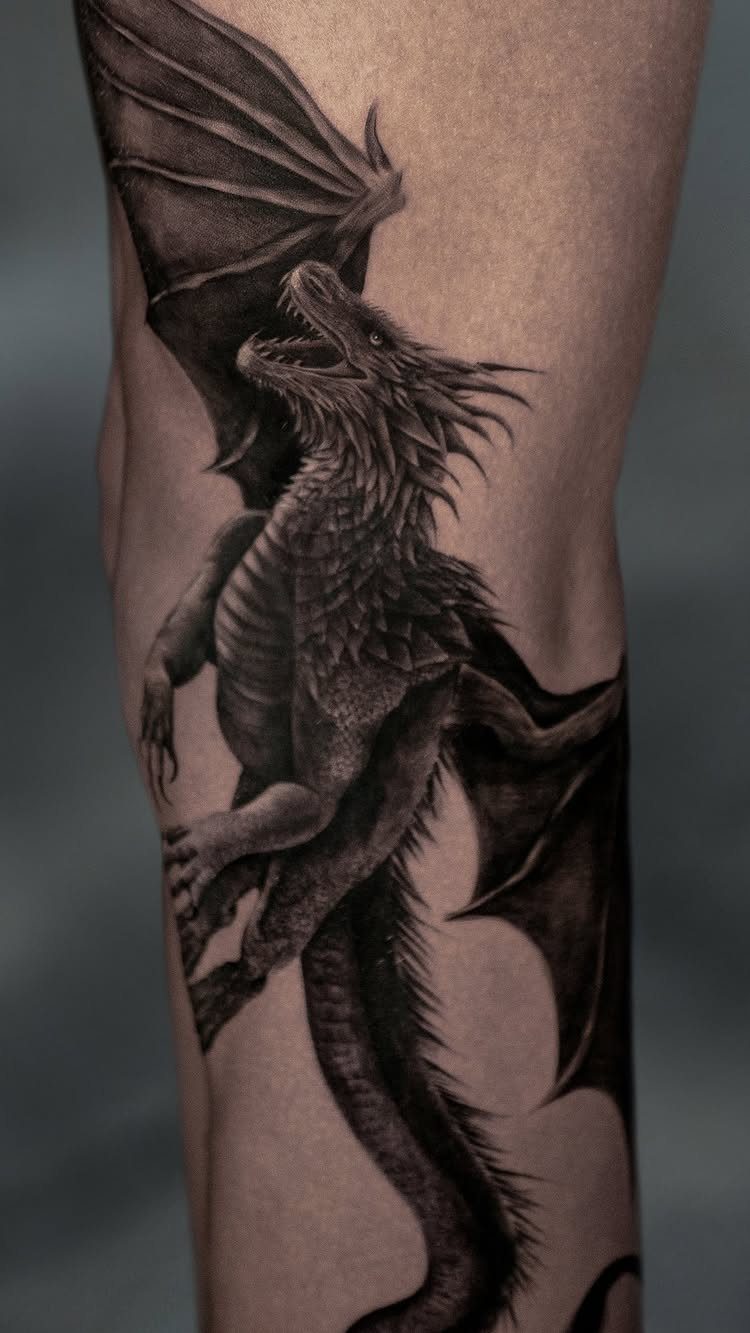
A Western dragon spreads wings and rears back, fire on its breath, built for confrontation rather than flow. This is the dragon that guards gold, tests heroes, and refuses to be tamed.
That adversarial stance is what draws people to it. Strength reads as independence here, and the design marks someone who fought through something and kept the fire.
The limbs work best: a calf or forearm gives the wingspan room to open, and the black-and-grey rendering keeps the medieval weight without turning comic.
The style asks for heavy shading in the wings and chest plates.
Ask your artist how they handle the scales; too tight and they blur as the ink settles, too loose and the creature looks armored in plates rather than skin.

Package: Paint stencils for painting on wood include 10 pieces 6 x 6 inches stencils and 10 pieces 6 x 5 inches stencils

32 Bold Animal Tribal Patterns – 4 large A4 sheets featuring Dragons, Wolves, Scorpions, Lions, and more, for a strong, edgy look with professional-quality stencils.

2. Japanese Dragons
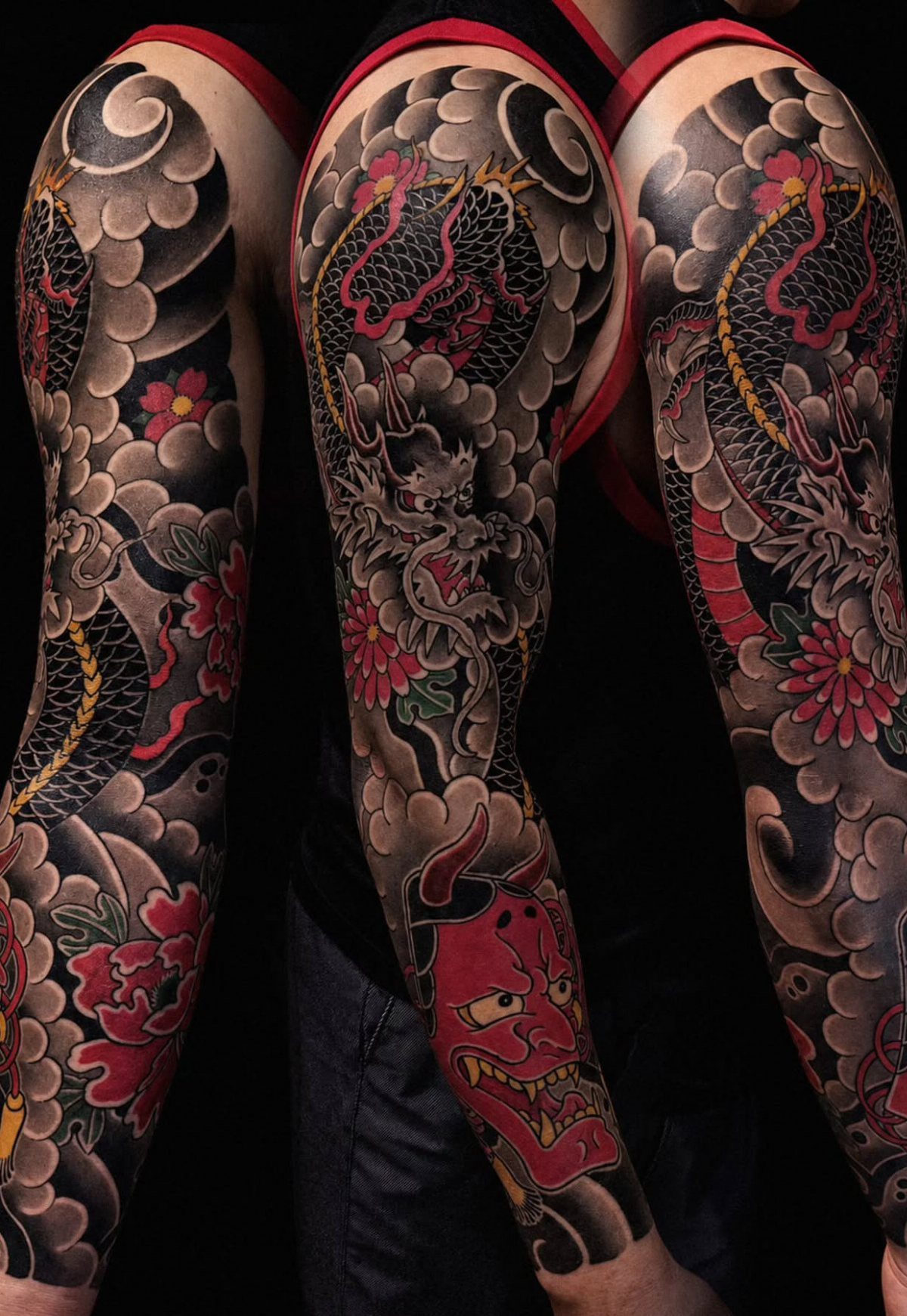
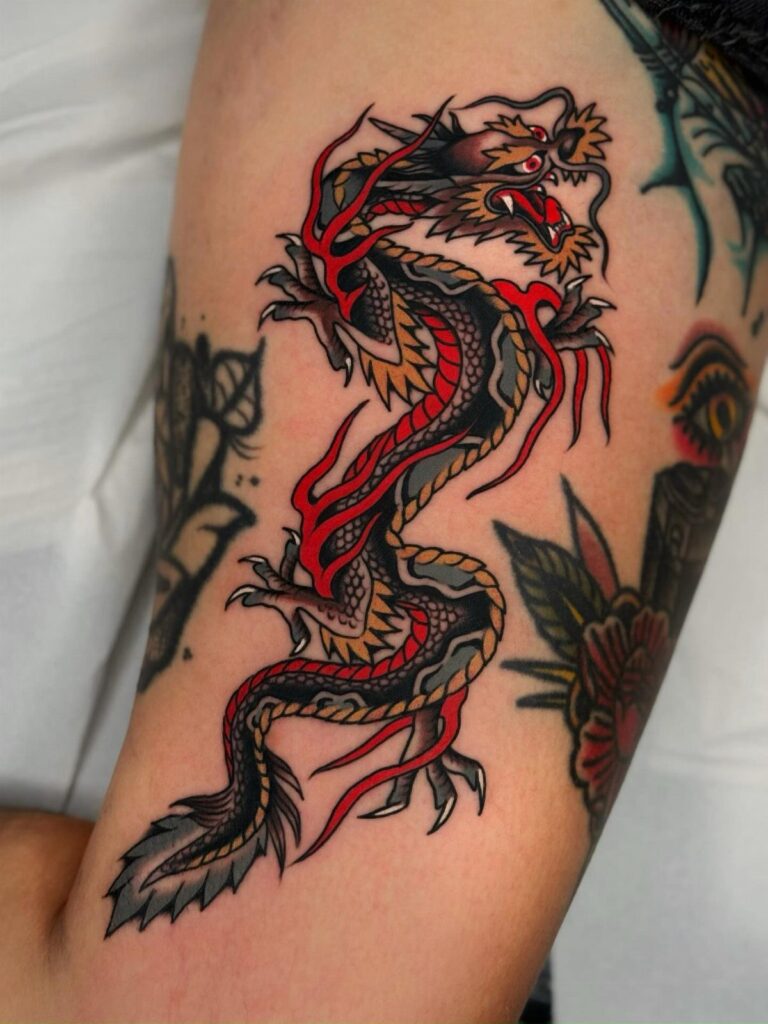
The Japanese dragon moves differently, body threading through clouds and water with 3 claws extended, more serpent than beast. Red blossoms and wind bars often ride alongside, filling the sleeve around it.
This version carries benevolence rather than threat: wisdom, protection, good fortune. The flowing form follows the arm’s length naturally, head at shoulder, tail curling toward wrist, which is why the full sleeve became the classic placement.
Color holds up here, especially the reds and blacks against skin, though fine-line interpretations now honor the tradition with less weight.
A mask or complementary element, like the oni face, anchors the composition and gives the eye rest between coils. Plan for multiple sessions; the layering builds slowly.
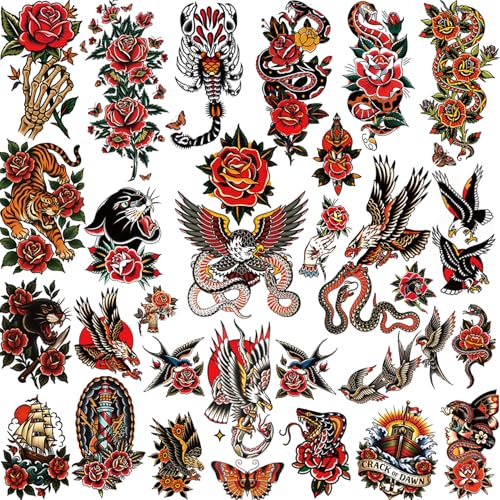
Large American Traditional Colorful Tattoo Stickers: 12 sheets of super large classic adult temporary tattoo stickers, old-fashioned traditional tattoo stickers are designed for adults. These retro traditional American elemental tattoos are creatively designed by our artists and are 4.72*9.06 inches in size. These waterproof fake tattoos look very realistic, artistic, eye-catching, and make you shine like a star. Enjoy expressing yourself with these American old tattoos


⚓ AMERICAN TRADITIONAL STYLE FOR TATTOO LOVERS: Inspired by classic old school tattoos art, these retro fake tattoos feature roses, skulls, anchors, hearts and vintage flowers. Perfect for adults who love traditional tattoos.
3. Bold and Thick Outlines
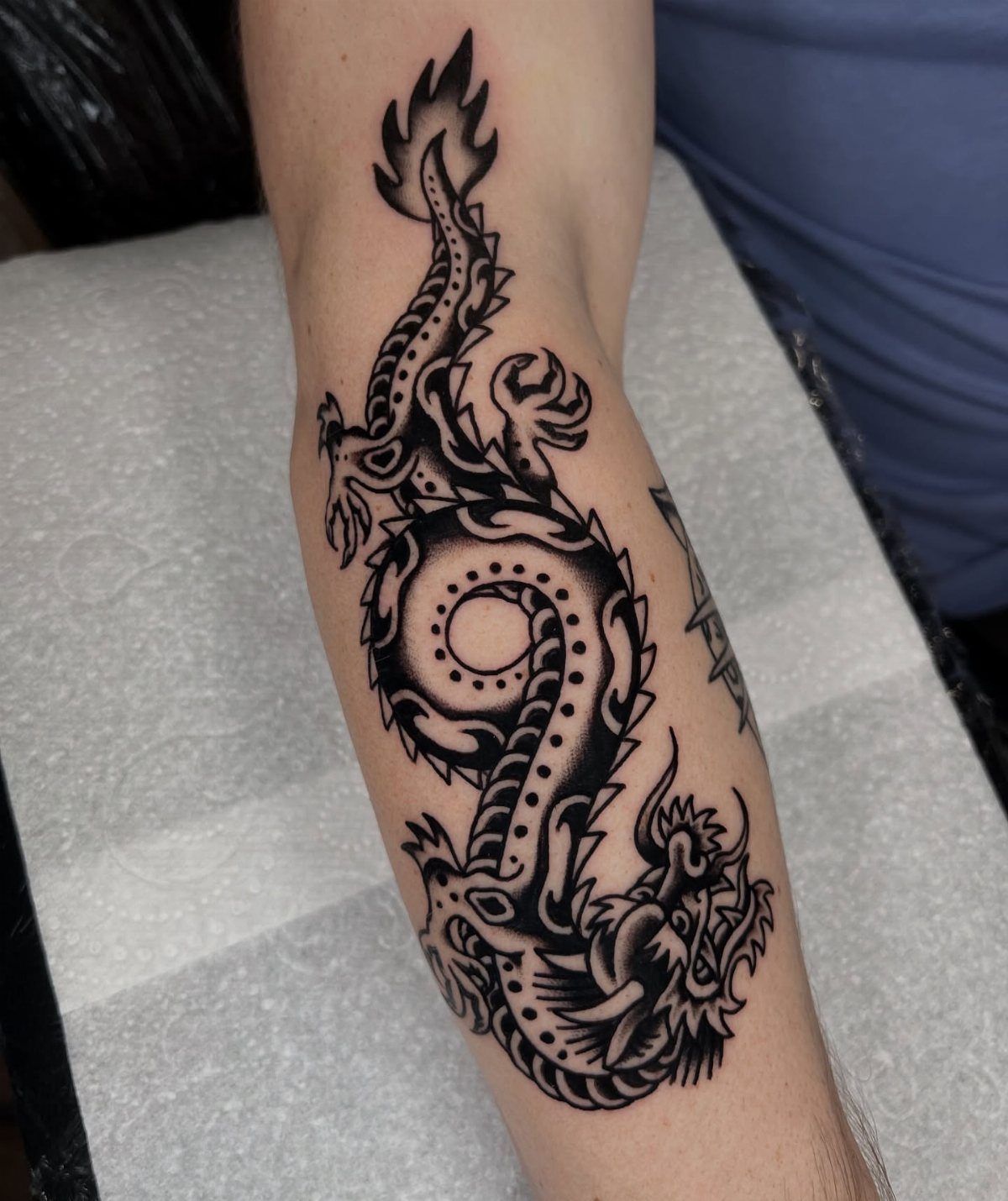
American Traditional lives or dies by its outline.
Whip shading fills the body instead of smooth gradation. The technique reads as texture from across a room, and it ages better than greywash that sinks or blurs.
Bold outline, limited interior detail: the formula sounds simple until you watch an artist balance the weight so the dragon coils rather than sits flat.
This approach trades realism for longevity.
If you want scales you can count, look elsewhere. If you want a dragon that still looks like one without constant touchup, the thick line is the honest choice.

Package Includes: 12 sheets sleeve tattoos measuring 19 x 6.7 inches (48 x 17cm), carefully selected styles each can be called a classic, allowing you to try a variety of different styles and make you the center of attention

6 Japanese Style Design Sheets – Traditional dragon, koi fish, phoenix, and samurai artwork gives you an authentic full-arm sleeve look in one easy application.

🐳[8 Sheets Black Dragon Tattoos in One Package!] - Original Brand of TASROI 3D imperial loong Tribal Dragon Temporary Tattoos For Women Men and Adults. Tattoos Temporary Contains 8 Large Sheets Water Transfer Animals Dragon Floral Flower Rose Moon Serpent Totem Armband Etc.
4. Dragon Back Tattoo
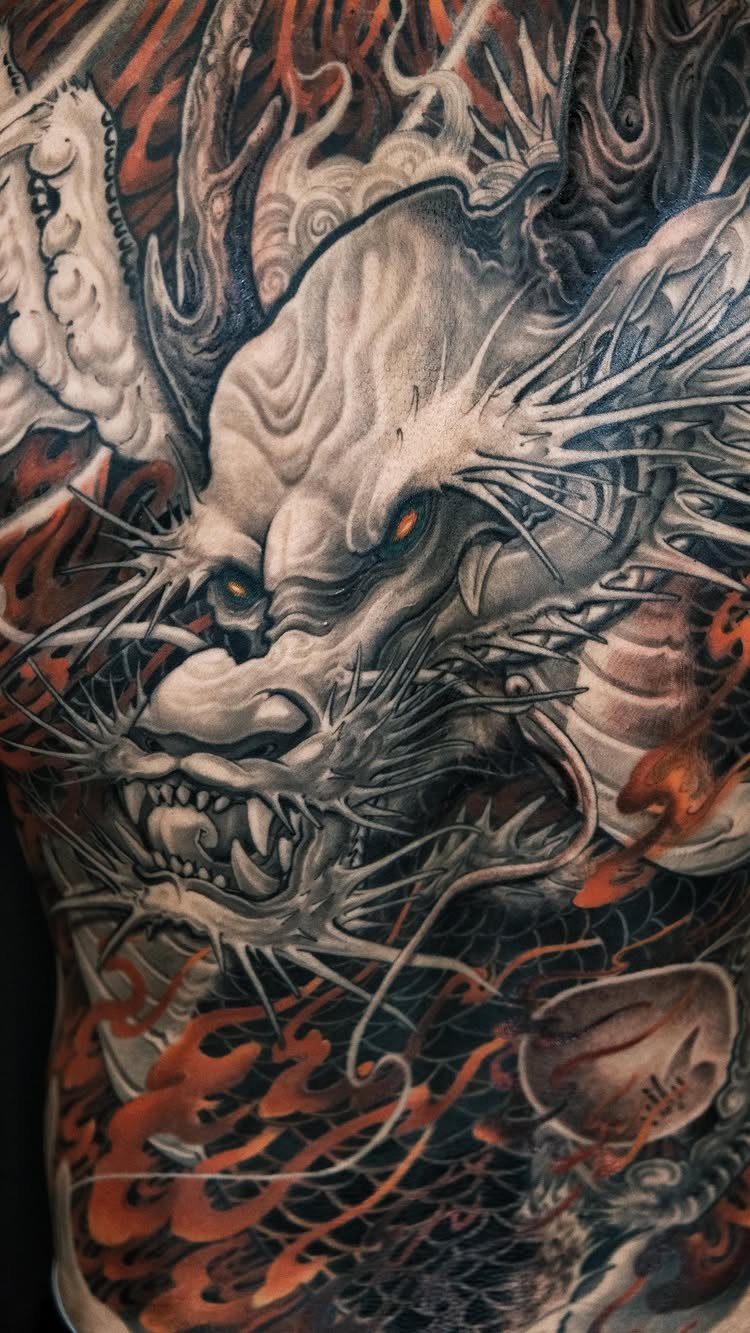
Nothing else matches the back for sheer room. A dragon can coil full-length here, head at one shoulder blade, tail curling to the opposite hip, with enough space for clouds, flames, and the detail that collapses on smaller placements.
The commitment is real: multiple sessions, healing between each, and a design phase that takes real collaboration with your artist.
Japanese compositions dominate this scale for good reason; the tradition built its grammar for exactly this canvas. A Western dragon at this size risks looking illustrated rather than tattooed unless the artist understands how black holds at scale.
Start with the head placement. Everything else flows from where the eyes sit.

BOLD BODY ART is at your fingertips with hawink Skin Markers. Create vibrant temporary tattoos to complement cosplay outfits, Halloween costumes. Includes easy-to-use stencils. TEMPORARY TATTOO KIT includes 10 skin-safe body art pens and 56 large temporary tattoo stencils. Create eye-catching body art with a rainbow of tattoo marker pens that are skin-friendly.

Bold tip marker makes clear stencil lines for tattoos

QUALITY TATTOO MARKERS FOR SKIN: Our tattoo markers are designed for precision, offering bold, clear lines on the skin. Ideal for sketching, freehand drawing, or tattooing, they serve as reliable skin markers for tattoos, ensuring quality results every time.
5. Dragon Chest Tattoo
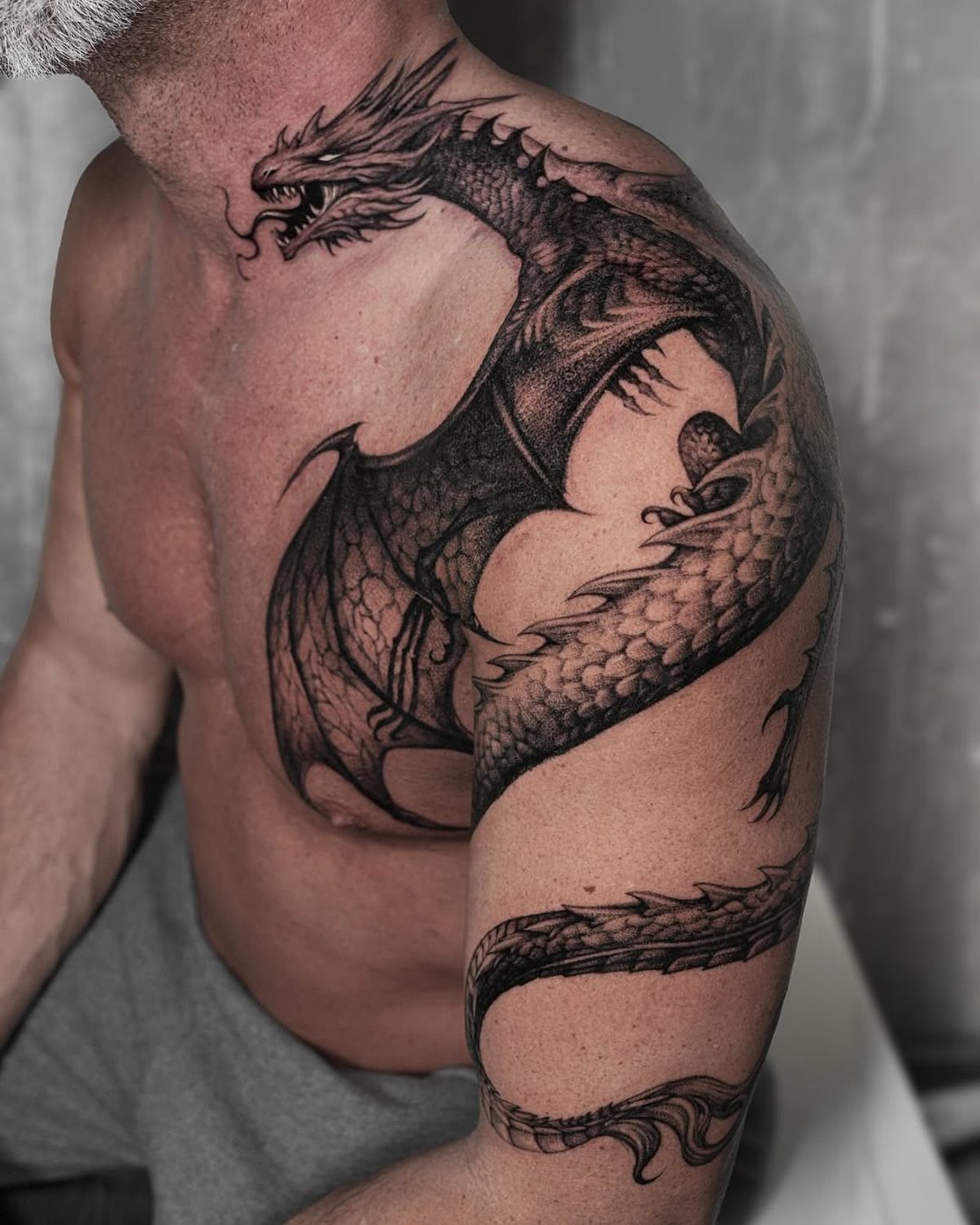
The chest spreads a dragon wing to wing, the sternum becoming the spine, collarbones framing the head. This placement demands presence; there is no hiding a chest piece at a family dinner.
Dragons work here because the elongated body follows the torso’s natural lines, neck to ribs, shoulder to shoulder. Plan for that possibility from the start, or the later additions read as afterthoughts.
Thin skin over the sternum hurts more than surrounding areas. Budget time for shorter sessions if this is your first large piece.

Poseidon cartridge adopt a one-time joint design hygienic standard The material is stainless steel and easy to color,and has better ink flow

Cartridge Needles Sizes: 20 pcs tattoo cartridge needles include 3RL 5RL 5RM 7RM, each size has 5pcs. Those tattoo needles can be used for lining and shading, which can assist you with the entire tattoo work

【50PCS Mixed Tattoo Cartridge Needles Set】Includes 50 individually packaged tattoo cartridge needles in popular configurations: 1203RL, 1205RL, 1207RL tattoo cartridges, 1209RL, 1205RS, 1207RS, 1207M1, 1215M1, 1209RM, 1215RM (5pcs each). Suitable for both lining and shading needles for tattooing.
6. Traditional Red Dragon Tattoo
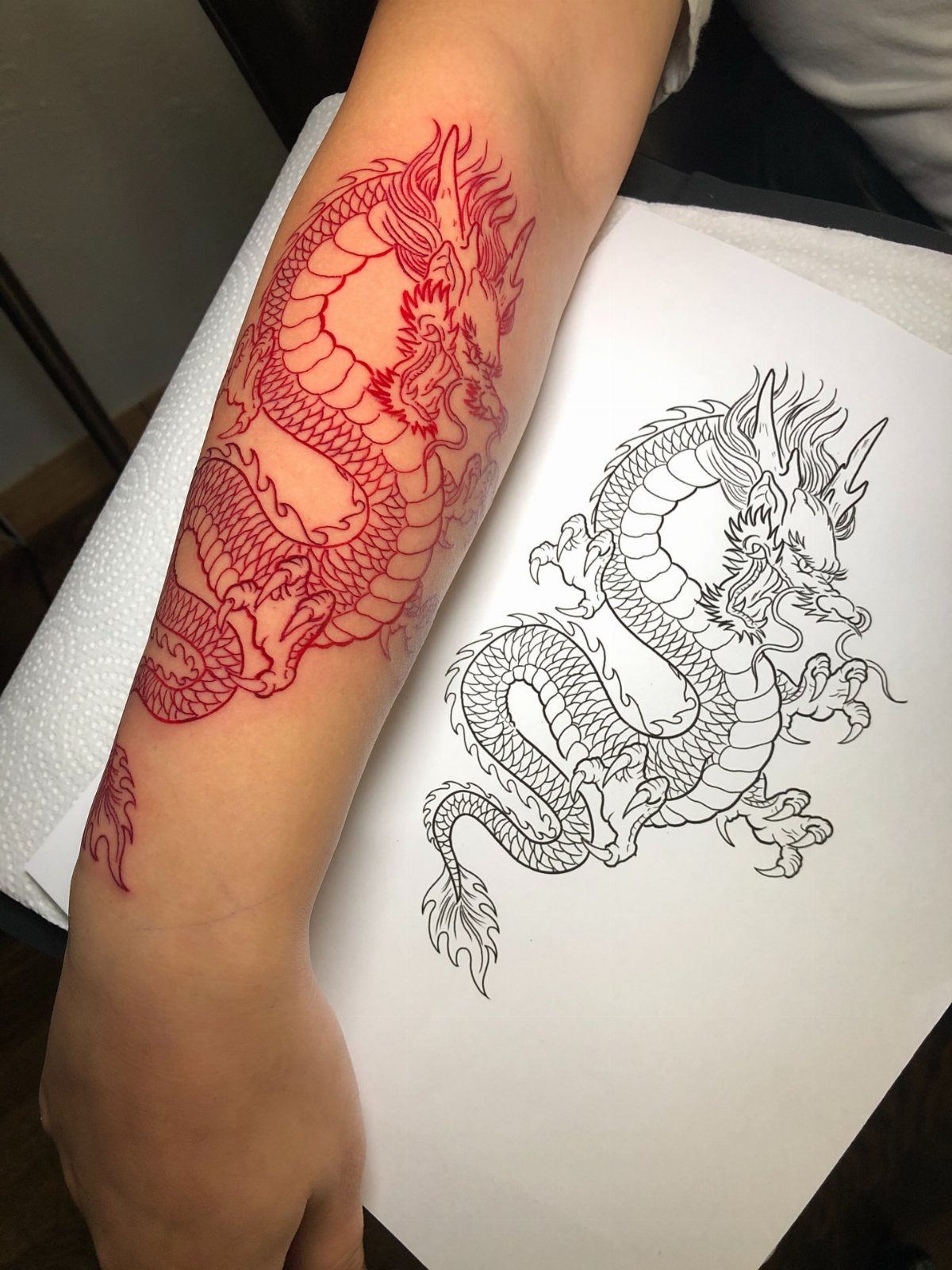
Red in dragon tradition means strength, passion, courage: the active virtues rather than the contemplative ones. The line-only execution visible here keeps the color pure, unshaded, almost drawn rather than tattooed.
This is a newer take on an old subject. Traditional American palettes limited red to accents; running it as the single hue shifts the dragon toward Japanese influence without adopting the full sleeve vocabulary.
The result reads clean, immediate, and holds an clarity that packed color sometimes loses to time.
Pair the red with a careful choice of line weight.
Too thin and it ages pink; too heavy and the dragon turns graphic rather than organic. The stencil beside the finished piece shows the planning stage: always worth seeing before the needle starts.

The original face painting stencils - Made in the USA

Stampers Anonymous-Brett Weldele Stencil Collection

【Great Value Set】You will receive 8 different designs of dragon stencils, with ample quantities and rich designs to meet your daily DIY crafts making needs, or you can share them with your family for a fun decorating time together.
7. Blue Dragon Arm Tattoo
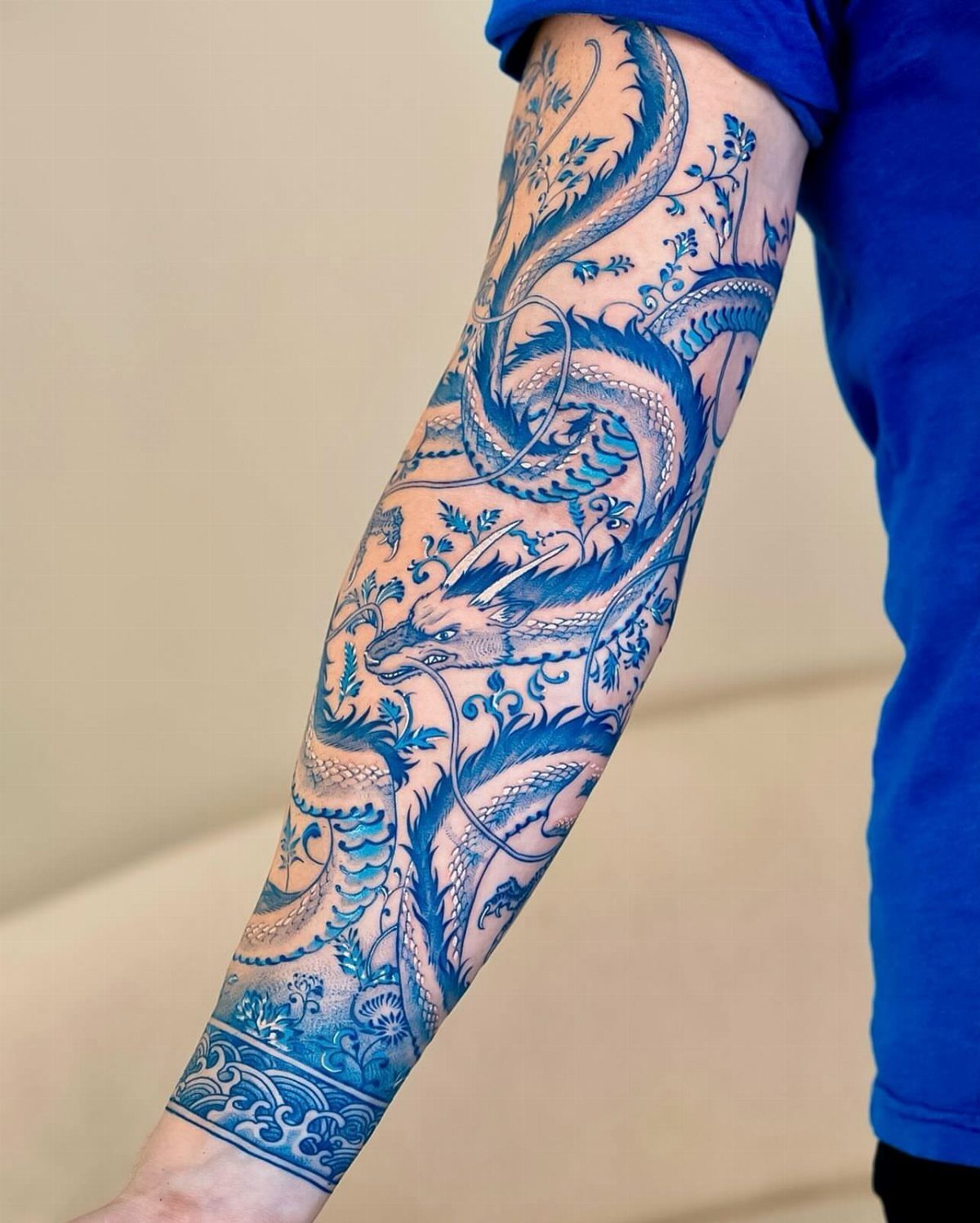
Blue carries water and sky associations in dragon lore: calm depth rather than fire aggression. The wraparound placement here lets the body thread through botanicals and wave borders, turning the arm into a sleeve-length landscape.
A single-color dragon this detailed lives or dies by saturation.
Ask your artist about their blue ink brand; some formulations shift green as they heal, others hold true. The scale pattern visible here needs steady hand speed: too slow and the dots blur, too fast and the line weight varies.
Botanical fillers age faster than the dragon itself. Plan for a touchup pass on the surrounding leaves once the scales still read clean but the leaves start to soften.

77 sheets american traditional temporary tattoos,17pieces 7.48*3.74 and 60pieces 3.85*2.28,including sailor,anchor,snake,eagle,sailboat,sailor, pentagram,lighthouse,heart,swallow,flower,vintage roses,swallows,demon,butterflies,sword,skull,eagle,scorpion

⚡Unique Black Vintage American Tattoo Designs – Featuring a stylish collection of classic style tattoos(skulls, roses, anchors, eagles,heart..). These tattoos are perfect for various body placements, including face, legs, arms, and neck. Share them with family and friends for endless fun!

8. Dragon and Lotus Leg Tattoo
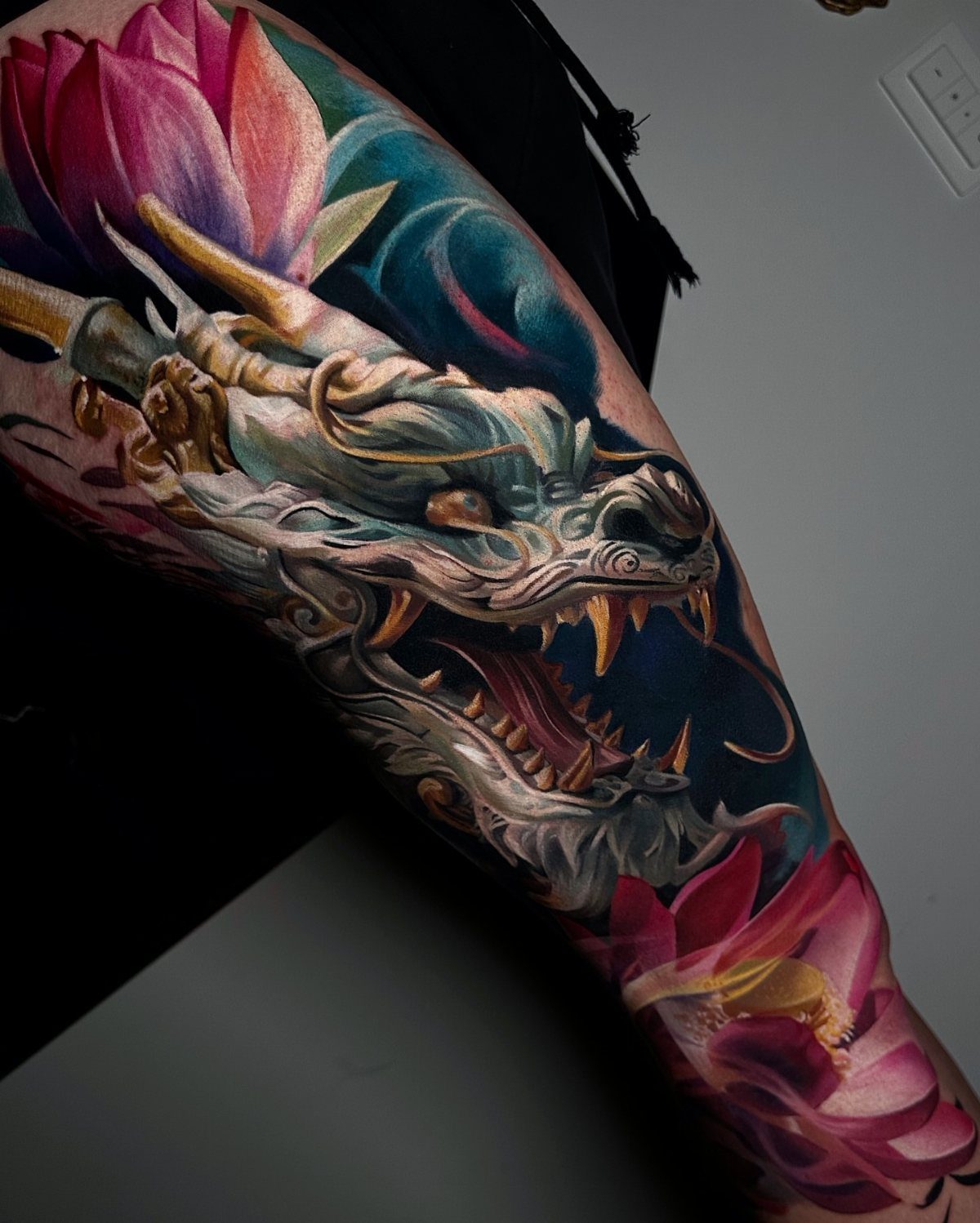
The lotus frames the dragon head here, pink blossoms against dark ground, and that pairing carries weight. Eastern traditions pair dragons with lotus to mean spiritual awakening through power, the flower rising clean from mud the dragon churns.
Leg placement gives the head prominence at thigh level, where the eye naturally rests, while the body can continue down the calf or stay contained.
Dark backgrounds like this one require heavy saturation; they also hurt more and heal slower than open skin.
The lotus color will soften faster than the dragon’s black. Budget for a refresh on the pink once the contrast starts to drop, which happens faster than the black lines.

Temporary Tattoo Sleeves: Aresvns temporary tattoo sleeves include a variety of styles, featuring designs such as Japanese dragons, koi fish, tribal, and warrior themes. Easily create a realistic tattoo look
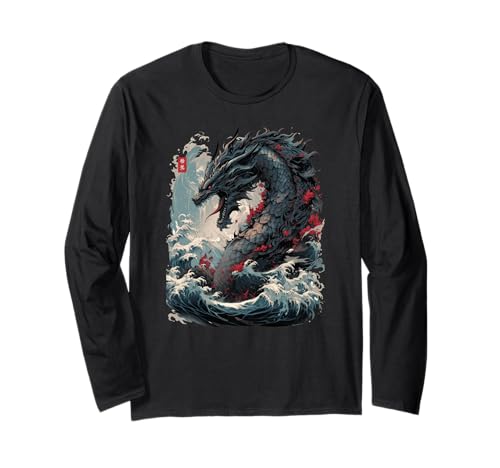
Embrace the power the dragon with our Japanese inspired design, featuring a fierce creature in the iconic style of Tokyo tattoos. The intricate kanji script , making this the perfect gift for anyone who loves Asian culture and mythology

9. Serpentine Dragon Line Art
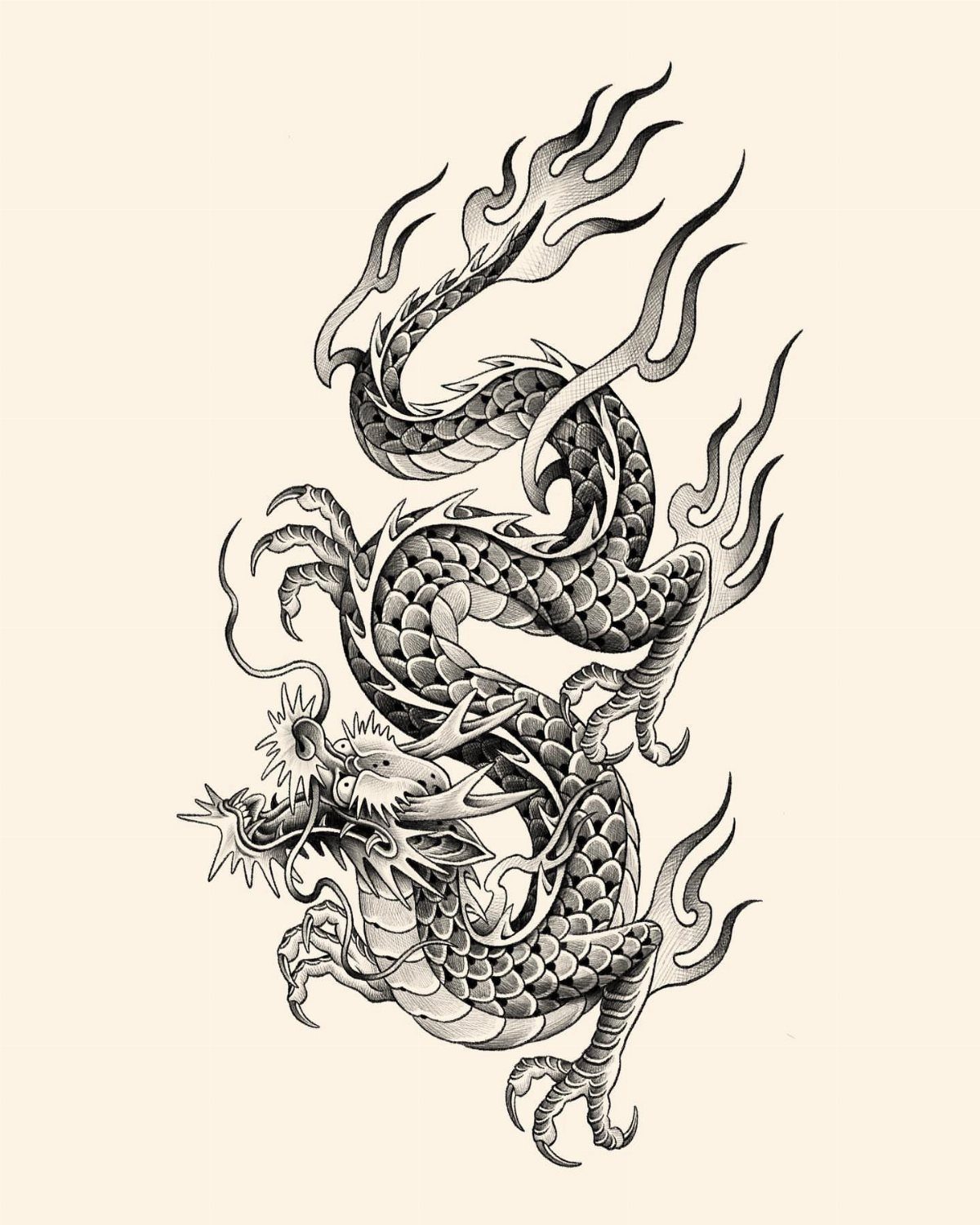
Line art strips the dragon to movement itself: no shading, no color, just the body coiling through space. The whiskers and claws stay because they read as silhouette, not detail.
This is the lightest-commitment dragon on the list. It heals fast, costs less in chair time, and leaves room to add color later if you want.
The risk is blowout: fine lines on serpentine curves tend to spread where the skin stretches most, especially along the forearm or ribs.
A single-needle or tight three-round liner does this best. Ask to see healed photos of the artist’s line work, not fresh; the fresh photo flatters every time.

A inkwell icon rendered with bold outlines, whip shading, brick red, and deep forest green.

#10 Bugpin 15RL, 20Pcs Per Box: Designed for extra bold outlines, large contour work, strong visual impact, and heavy line applications.

Bold purple ink body body markers for drawing tatoo desgins to human skin easy to use
Cultural Significance
Dragons showed up in myths all over the place without cultures copying each other, which is odd for a made-up beast.
That geographical spread means the symbolism you choose carries specific weight: a Japanese dragon signals wisdom and protection, while the Western stance marks confrontation and untamed strength.
Power runs through every tradition, but the flavor changes. Eastern associations lean toward transcendence and good fortune; medieval European ones toward guardianship and trial.
The tattoo works best when you know which grammar you are speaking. A Western dragon with Japanese cloud filler confuses the story rather than deepening it.
Personal meaning can layer on top: resilience, ambition, the particular adversity you survived.
The cultural background still matters because it gives your private symbol a language other people can read. Pick the tradition first, then let your own history color inside its lines.

Package: 50pcs mixed tattoo cartridge needles, includes 10pcs each of 1203RL, 1205RL, 1207RL, 1209RL, 1211RL.

Package: 50pcs mixed size tattoo cartridge needles set, includes 5pcs each of 1005RL, 1007RL, 1009RL, 1205RS, 1207RS, 1209RS, 1015M1, 1021M1, 1015RM, 1021RM; Those tattoo needles can be used for lining and shading, which can assist you to complete the entire tattoo work

Compatible with the most types cartridge machines, wireless tattoo pen and grips.
Choosing a Tattoo Artist
A traditional dragon tattoo needs balance between fine detail and bold readability; that balance is not universal, and a realism specialist may shade beautifully while still missing how the whip shading reads from across a room.
Clean lines matter, but so does design sense.
A good artist will push back, suggest bolder scales or a longer tail, and treat your dragon as a custom piece; that conversation is part of the job, and an artist who simply agrees to your printout is not doing it.
Aftercare keeps the lines sharp and the color from going muddy. The artist should walk you through their specific instructions before the needle starts, not hand you a generic sheet on the way out.
Aftercare for Tattoos
Plan your schedule accordingly; the chest piece or leg panel with solid black fill will need more recovery time between sessions than a line-only dragon.
Moisturize enough to prevent scabbing, not so much that you macerate the skin.
Most artists recommend a thin layer of fragrance-free lotion, applied when the surface feels tight rather than on a fixed hourly schedule. Wash gently with unscented soap; pat dry, never rub.
Color softens at different rates.
The pink lotus or blue botanical filler around your dragon will likely need a touchup pass before the black lines do. Budget for a touch-up when you first price the piece, not as a surprise down the road.
Sun is the enemy of saturation. Once healed, SPF on the tattoo whenever it sees daylight keeps the contrast readable for years.
Frequently Asked Questions
What does a traditional dragon tattoo mean?
A traditional dragon tattoo carries different weight depending on which tradition you draw from.
Japanese dragons signal wisdom, protection, and good fortune through their flowing, serpentine form, while Western dragons mark confrontation, untamed strength, and the fire of independence. Eastern dragons climb toward transcendence; European ones guard hoards and demand to be fought.
Your own reason for wearing it, resilience or ambition or a fight survived, sits on top of that shared language so other people still know what they are looking at.
What is the 1/3 rule tattoo?
The 1/3 rule is a design principle for large compositions like dragon back pieces, where the head placement determines everything else.
The eyes sit at a focal point roughly one-third into the overall length, and the body coils from that anchor rather than centering the creature.
Start with where the head lands; the tail, the clouds, the flames all flow from that first decision. On a back, that usually means head at one shoulder blade with the tail curling toward the opposite hip.
Are Yakuza tattoos illegal?
Yakuza tattoos are not illegal in the United States or in Japan, where tattooing itself is legal though full-body work carries historical association with organized crime.
The style’s grammar of clouds, wind bars, and three-clawed dragons belongs to art history, not criminal signaling, though in Japan some public baths still restrict visible ink.