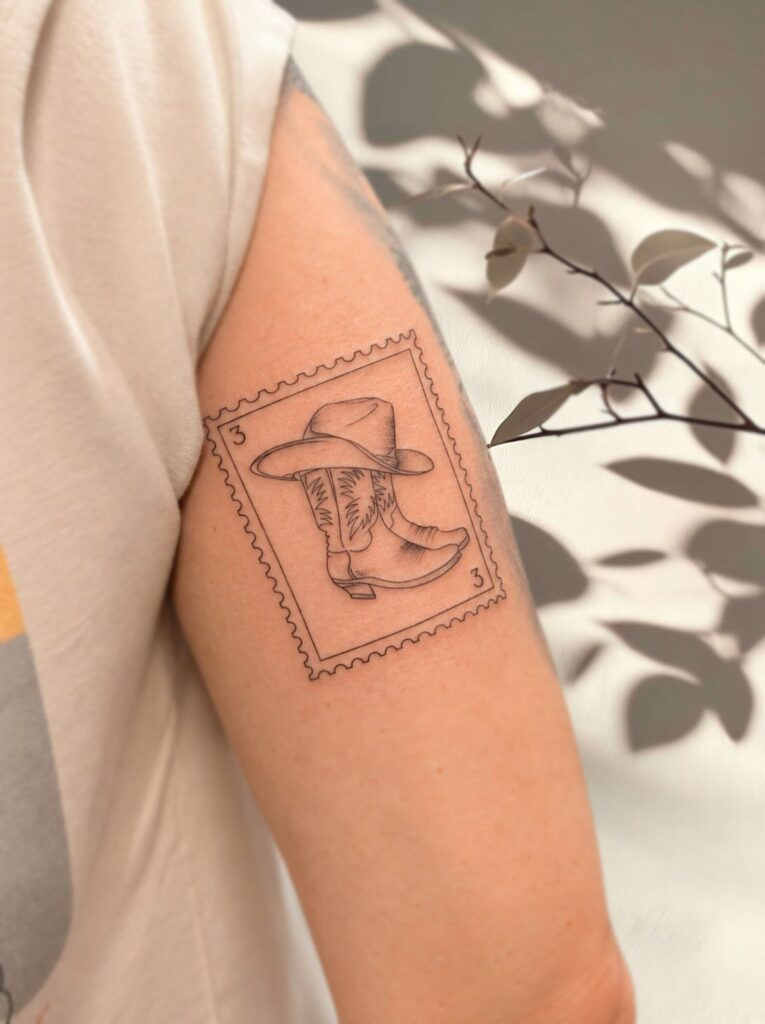
Western fine line tattoos run from a finger-sized cowboy hat to a full forearm scene of riders, with single-needle stippling and dotwork keeping the weight light across every scale.
Sun-exposed forearm pieces need SPF 30 or higher and sooner touch-ups, while rib or thigh work holds the line longer with less maintenance.
1. Galloping Horses
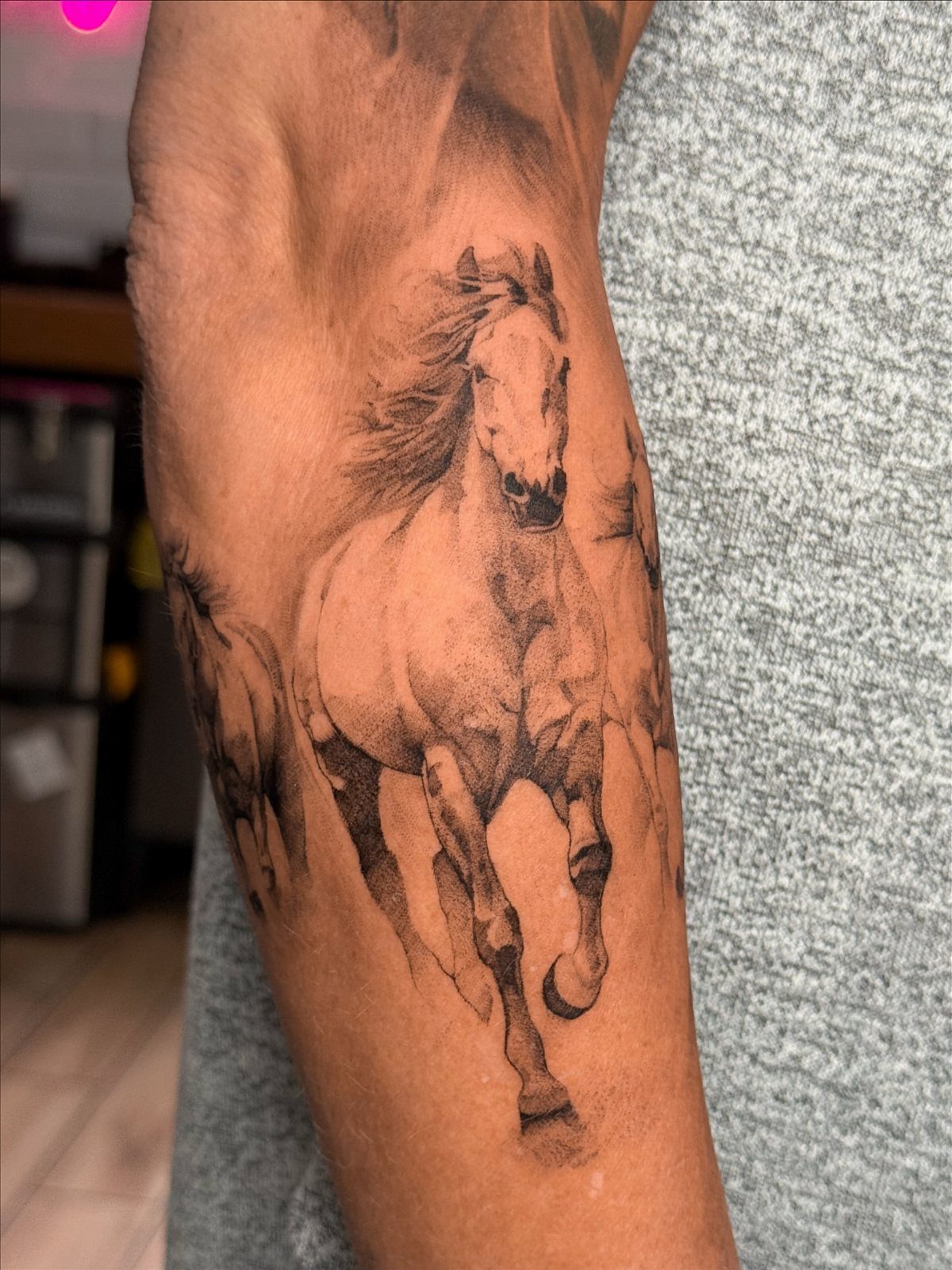
A line of galloping horses reads like a freeze-frame from a Western, all motion caught in single strokes.
The stippled shading keeps the weight light enough for a forearm or collarbone, where the horizontal flow follows the bone. Multiple horses work better than one; the overlap creates depth without heavy black fill.
Ask your artist to vary the mane direction so each animal reads distinct at a glance. This one needs a steady hand for the leg angles, since a wobble turns gallop into stumble fast.

Package: 50pcs mixed tattoo cartridge needles, includes 10pcs each of 1203RL, 1205RL, 1207RL, 1209RL, 1211RL.

Dragonhawk Tattoo Needles: High-quality tattoo needles, manufactured under the trusted Dragonhawk brand, are perfect for all-purpose work. With a polished, long taper design, these needles ensure reliable performance and excellent control.

【50PCS Mixed Tattoo Cartridge Needles Set】Includes 50 individually packaged tattoo cartridge needles in popular configurations: 1203RL, 1205RL, 1207RL tattoo cartridges, 1209RL, 1205RS, 1207RS, 1207M1, 1215M1, 1209RM, 1215RM (5pcs each). Suitable for both lining and shading needles for tattooing.
2. Steer Skull Tattoo
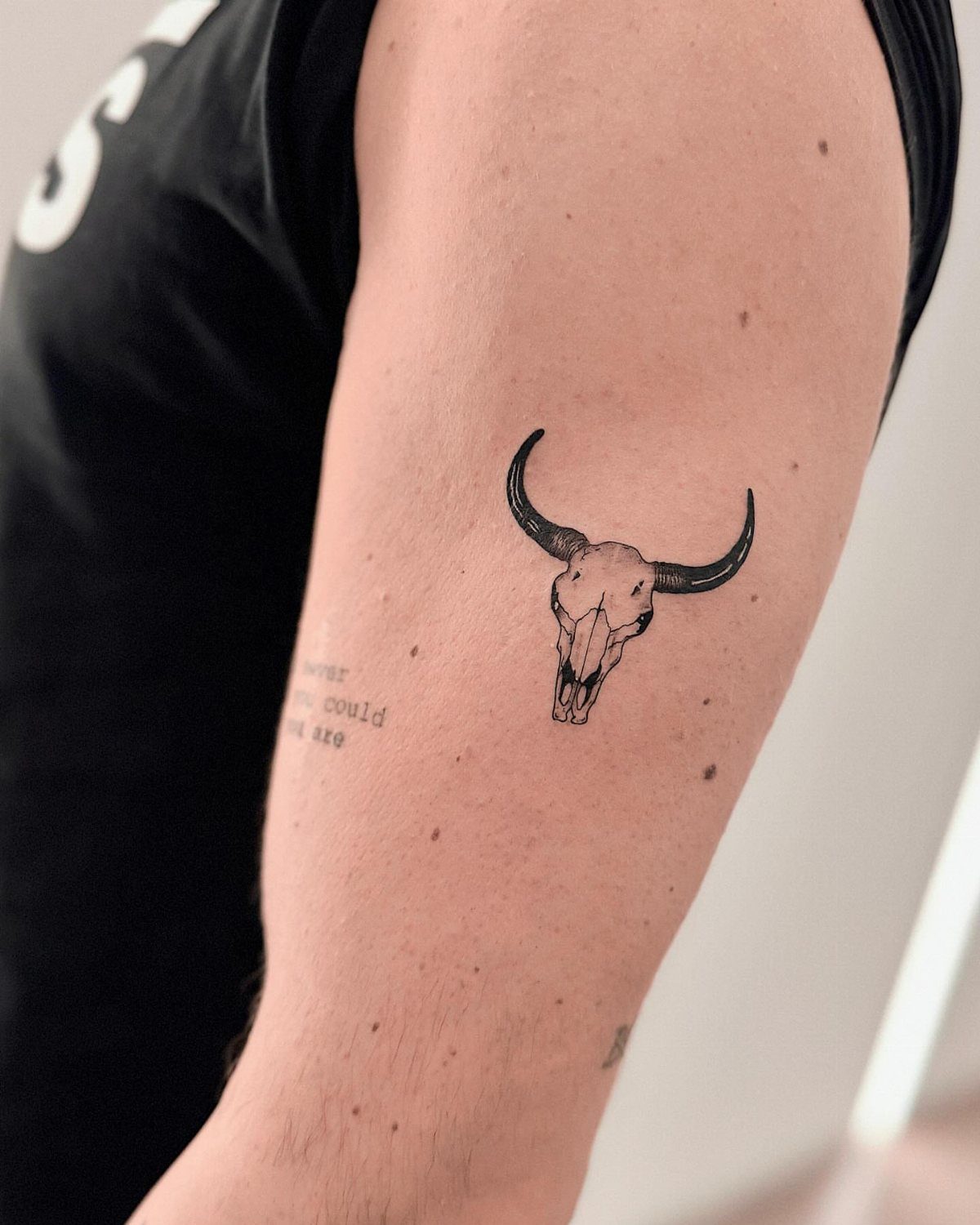
The steer skull sits at the center of Western iconography without needing much ink to announce itself.
Long, curved horns give the artist room to show fine line control through tapering weight, and the empty sockets keep the mood open to interpretation, from desert reverence to straight outlaw.
Stomach or upper arm both hold the shape well; the ribs or bicep curve can distort a symmetrical skull if the placement is off, so stencil it standing, then check it seated.
The shading in the horn cores is what separates a flash piece from something that holds up.

Noise and Vibration Reduction: Our tattoo cartridges are designed to minimize noise and shaking, providing a quieter and more stable tattooing experience.
30PCS ROUND LINER NEEDLES: 30 pieces of 1203RL #12 standard round liner tattoo cartridge needles — the fine 3RL configuration excels at ultra-fine lines, dotwork and intricate detail work. Individually blister packed, ready for single use.

Hawink 2 x 8 wrap and 2 x 10 wrap coils tattoo machine for liner and shader.runs faster to create fine and precise line work. has higher power to penetrate deep into the skin, creating vibrant and lasting color.
3. Playing Cards and Cowboy Hat
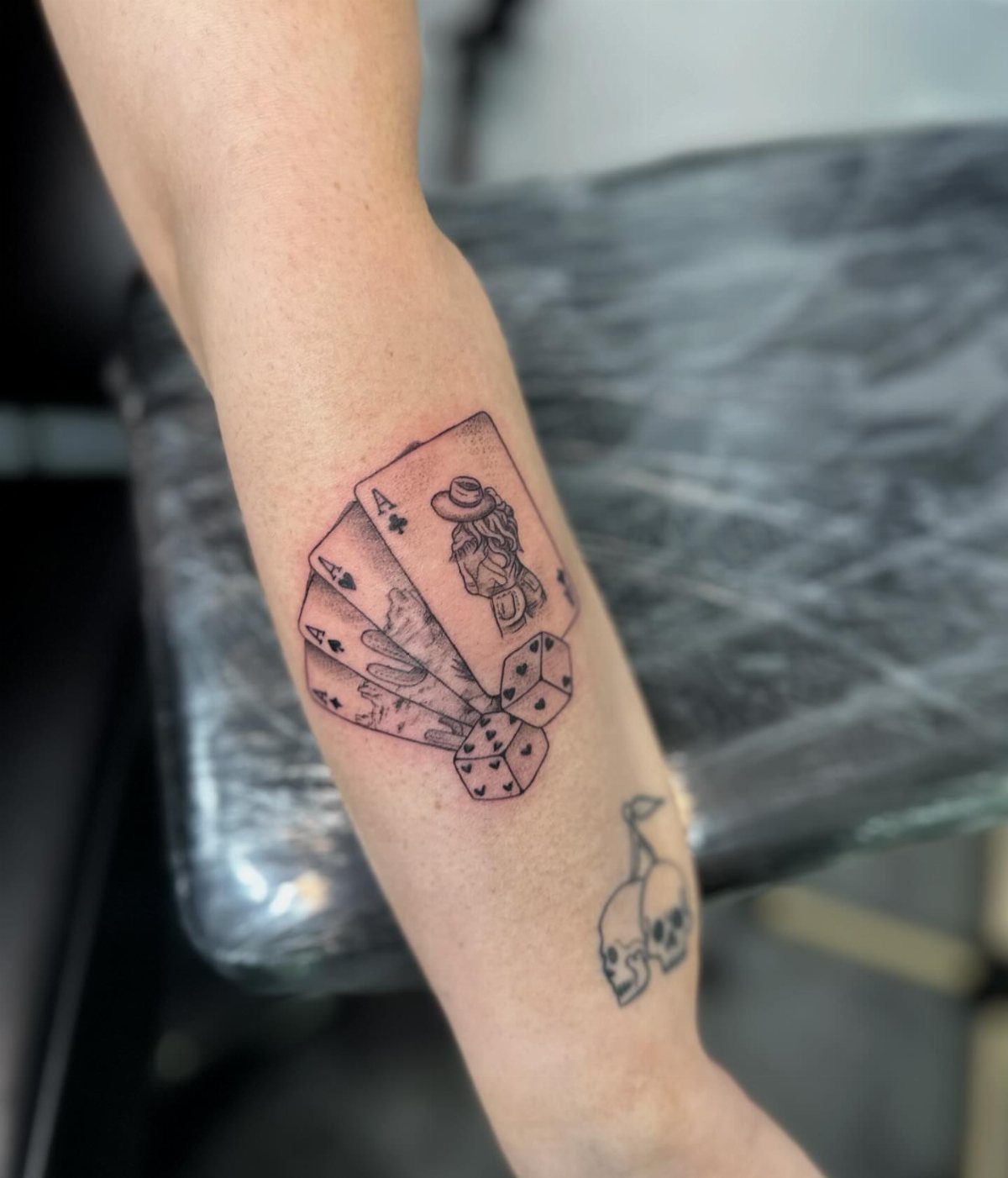
Playing cards stacked with a cowboy hat and cacti turn a gambling motif into something more specific: not Vegas, but a saloon table somewhere dry.
The vertical arrangement suits a forearm sleeve gap or a calf, where the cards can run tall and the hat crowns the stack without crowding.
Wildflowers and barbed wire fill the spaces between the main elements so the skin does not show through as empty patches.
Keep the card faces simple; too much pip detail and the fine line blurs inside a year. A single color accent on the flowers, if you want it, stays readable longer than tinting the whole design.

The dimensions shown are the overall stencil sheet size. The graphic fits inside the sheet and is slightly smaller than the overall sheet size

Charming & Fun Design:Add a delightful touch to your crafts and décor! This listing includes 1 reusable stencil featuring an adorable design—perfect for adding personality to any project.

Package Include: Each set includes 4pcs distinct PET templates, one of each design, totaling 4 pieces per set. Each template measures approximately 30cmx30cm (11.8x11.8inch) with uniform specifications. The package contains exactly 4 pieces, clearly specified in quantity, directly meeting diverse creative needs for both variety and quantity across multiple scenarios.
4. Horseshoe Tattoo
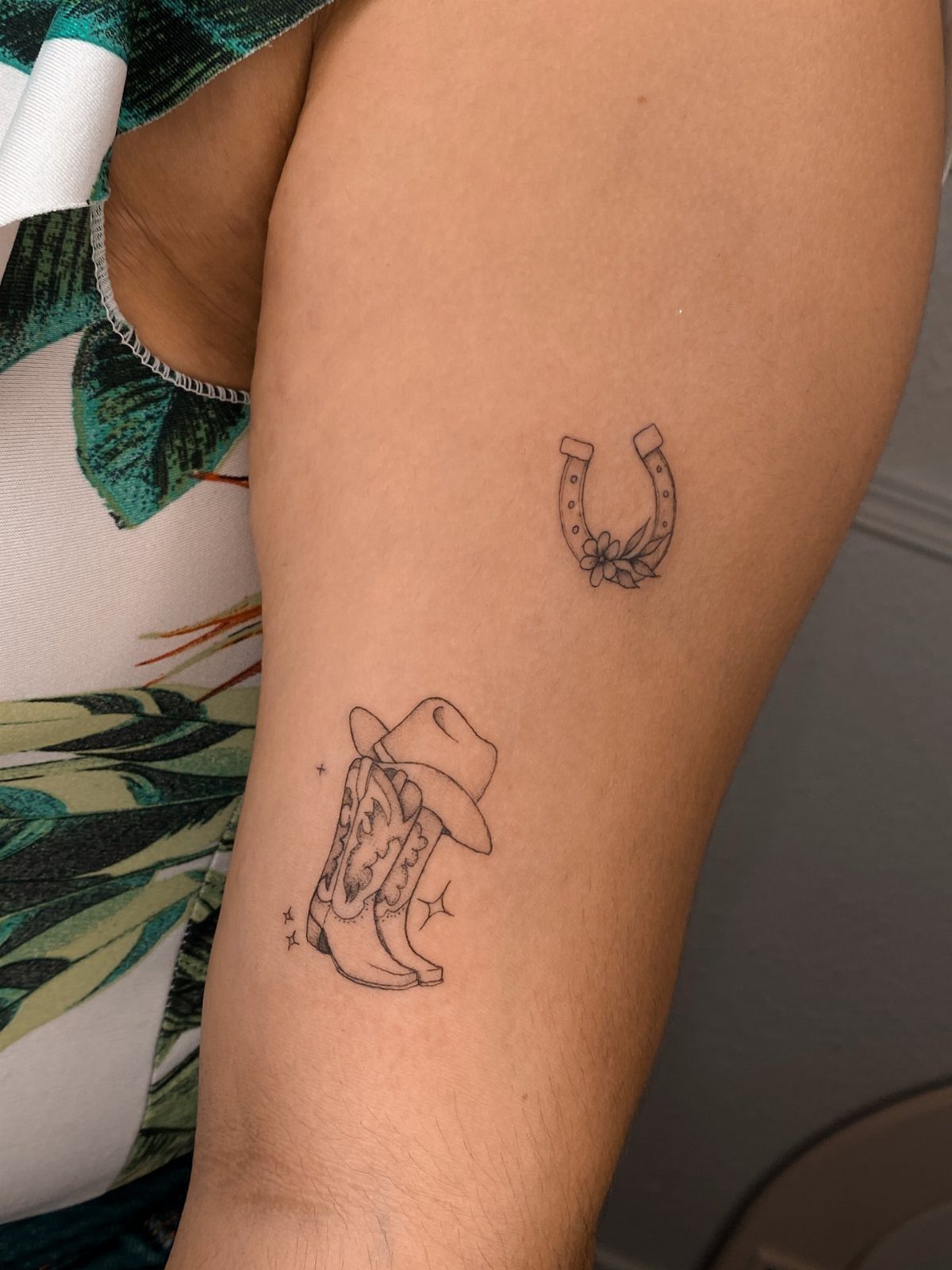
The horseshoe carries its own meaning, luck and protection both, which saves you from needing extra symbols to explain it.
Floral accents soften the metal without losing the shape; the result reads feminine to some, traditional to others, depending on the flower choice.
Upper arm or wrist both work, though the curve of a wrist horseshoe can look pinched if the artist scales down too far.
Points up is the old way for catching luck, points down for pouring it onto whoever stands below; most tattoo versions leave that choice to the wearer, but know the difference before someone asks.

[Professional grade material]Poker cards are made of 300 grams of blue core paper, combining professional grade thickness and extraordinary flexibility. The layered core can resist warping and maintain intact edges even after repeated shuffling.

Discover the meanings behind popular tattoos through time, from a sailor's sea creature to a spider woman.

Wild West Themed Playing Cards: you will receive two decks of hand-illustrated Wild West-style playing cards, available in red and blue; Each deck is individually packaged in an OPP bag, suitable for home play, gifting, or multiplayer games
5. Cross with Vines
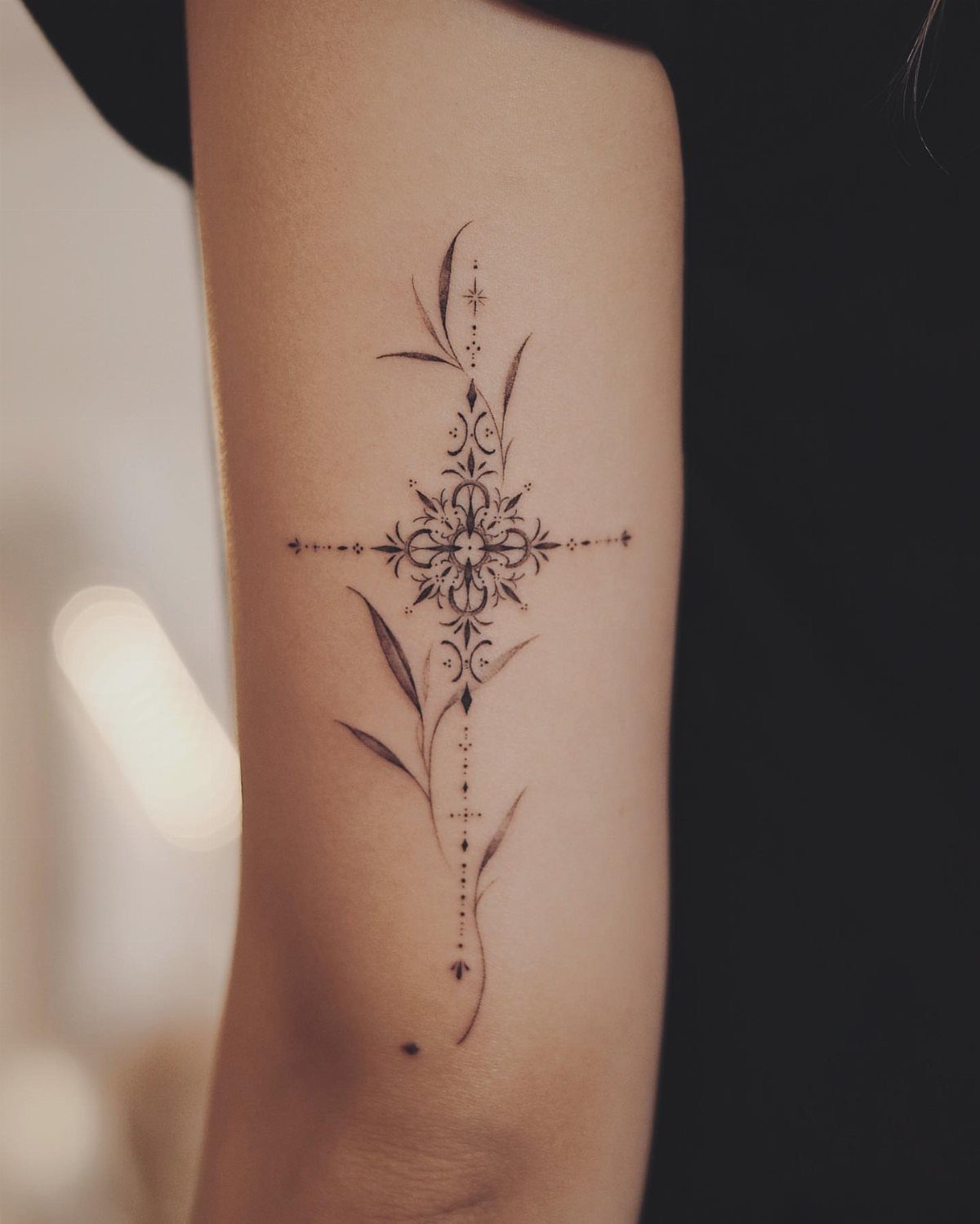
A cross wrapped in vines bridges 2 Western moods: the mission heritage and the raw scrubland growing over it.
The botanical keeps the religious symbol from reading too churchy, while the cross anchors the vine so it does not float as pure decoration.
Inner wrist placement demands small scale, which means the vine leaves stay simple, more suggestion than botany.
Dotwork in the background adds texture without weight; too dense and the fine line clogs, too sparse and it looks like a mistake. Ask to see healed photos of the artist’s dotwork before committing.

142+ Nature-Inspired Tattoos Stencil Designs in 12 Sheets: This temporay tattoo template set features over 142 unique, delicate designs centered on enchanting botanical and natural elements. Discover a vast collection of flowers (daisies, roses, sunflowers, lavender), intricate leaves, winding stems, complete bouquets, elegant wreaths, crowns, bees, and butterflies. Perfect for creating floral temporary tattoos, henna-inspired patterns, and nature-themed body art.

INCREDIBLE VALUE – 524 Unique Designs: This henna tattoo kit includes 20 stencil sheets with 524 patterns, featuring butterflies, florals, symbols, lettering, totems, and Egyptian-inspired designs. These henna stencils let you mix, match, and layer for custom henna temporary tattoos on hands, arms, and body. A refillable pen with a soft nylon tip is included for precise lines and varied strokes (pen does not include ink)

Easy Application: Made of durable 3-layer PVC material, these henna tattoo stencils are flexible, waterproof and easy to apply. The self-adhesive design helps keep patterns in place for clean and precise temporary tattoo designs. Does not includ ink
6. Minimalist Cowboy Hat Tattoo
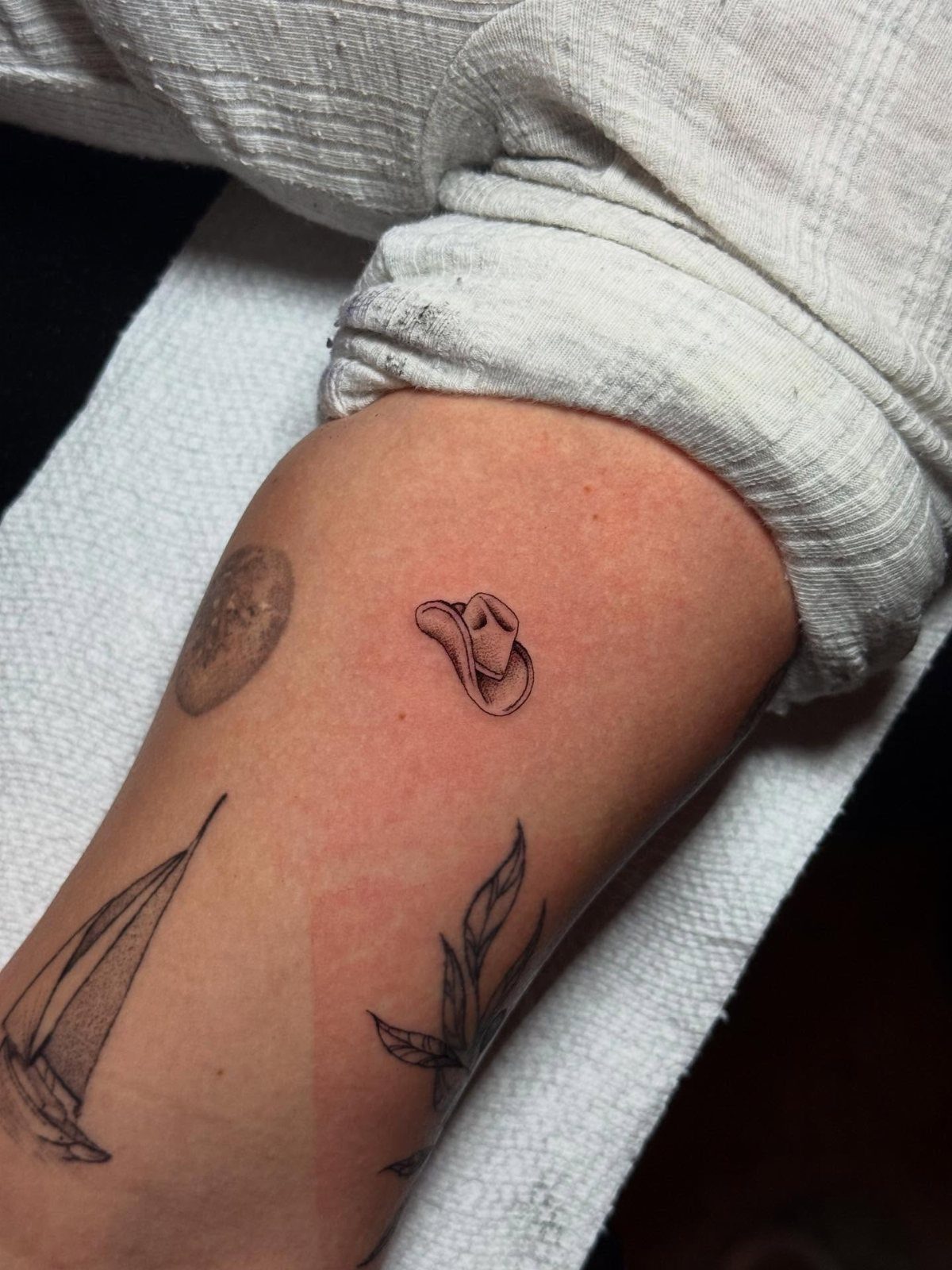
A cowboy hat alone is almost a signature, recognizable in a dozen strokes if the brim curve and crown dent are right.
The minimal version skips the face, the horse, the whole narrative setup, and still reads Western from across a room.
Small enough for a finger side or behind the ear, though at that scale the crown dent becomes a suggestion and the brim a single arc.
Wildflowers tucked into the band, as some versions add, turn it personal without adding much ink.
The risk here is generic; check that your artist’s sketch has enough character in the brim line to not look like a half-circle with a dent.
Package includes 10 pieces of each size: 3RL, 5RL, 7RL, 9RL, 3RS, 5RS, 7RS, 9RS, 5M1, 7M1

Poseidon cartridge adopt a one-time joint design hygienic standard The material is stainless steel and easy to color,and has better ink flow

1.PACKING:Tattoo needles are individually blister packaged,stamped with expiration date
7. Desert Landscape and Cactus Tattoo
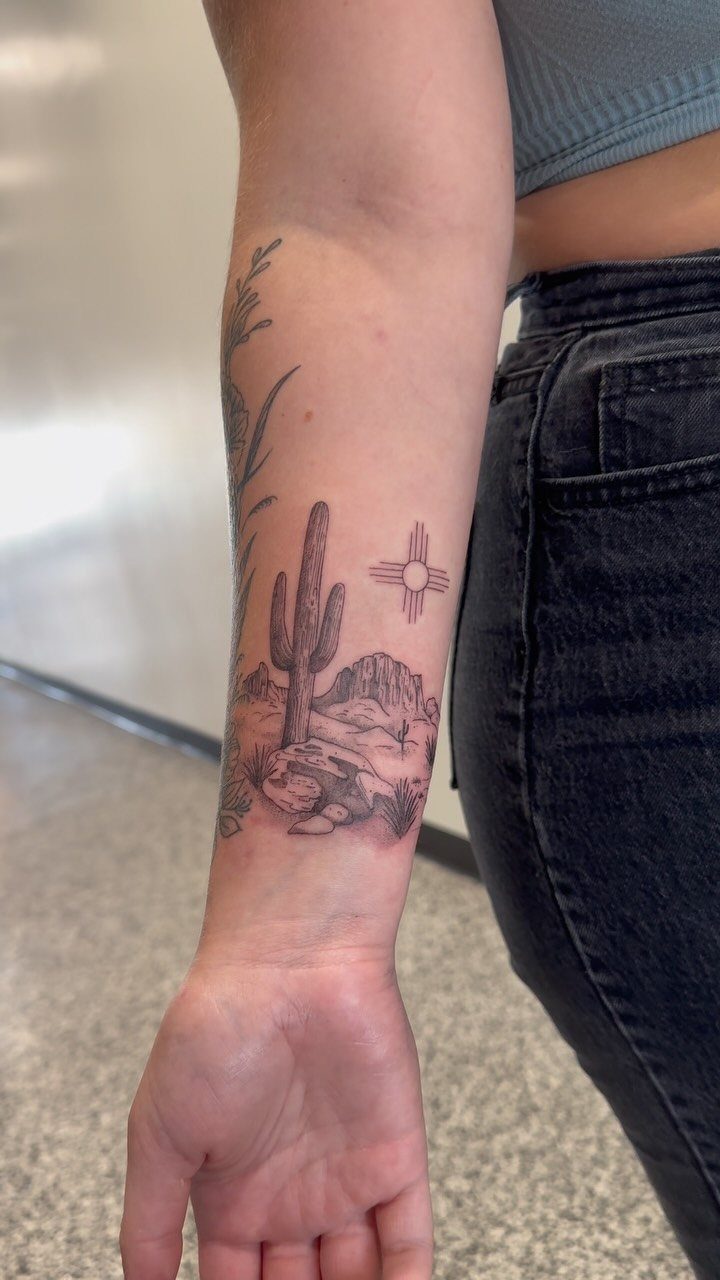
Saguaro ribs and mountain ridges layer naturally in fine line, the desert reading as distance without needing a horizon line.
The Zia sun, if you include it, sits best high on the composition where real light would hit; lower placement turns the symbol into a floating decoration.
3 elements is the practical limit at wrist-to-forearm scale.
More and the cactus becomes a stick figure among clutter. Mountains work as simple zigzag hatching; too much ridge detail competes with the saguaro’s vertical pull.
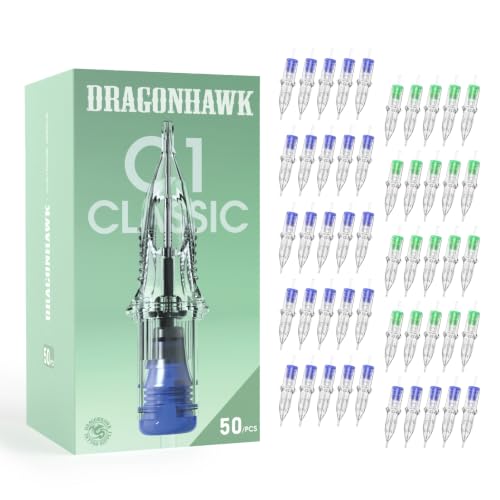
WHAT YOU GET: 50 tattoo needle cartridges, 10 of each configuration - 1003RL, 1005RL and 1007RL bugpin round liners at 0.30mm plus 1205RS and 1207RS round shaders at 0.35mm. One box covers the full small scale workflow, moving from crisp outlines to soft shading without ordering separate liner and shader boxes. A practical resupply for working artists and a focused set for artists building fine line skills.

Dual Purpose Design: Functions effectively as both a liner and shader tattoo machine.

This kit includes a tattoo machine, a tattoo power supply, 20 tattoo needles (1205RL/1207M1), 0.5 oz triple black ink, and essential accessories—everything you need for a seamless start to tattooing
8. Cowboy Hat and Boot Combination
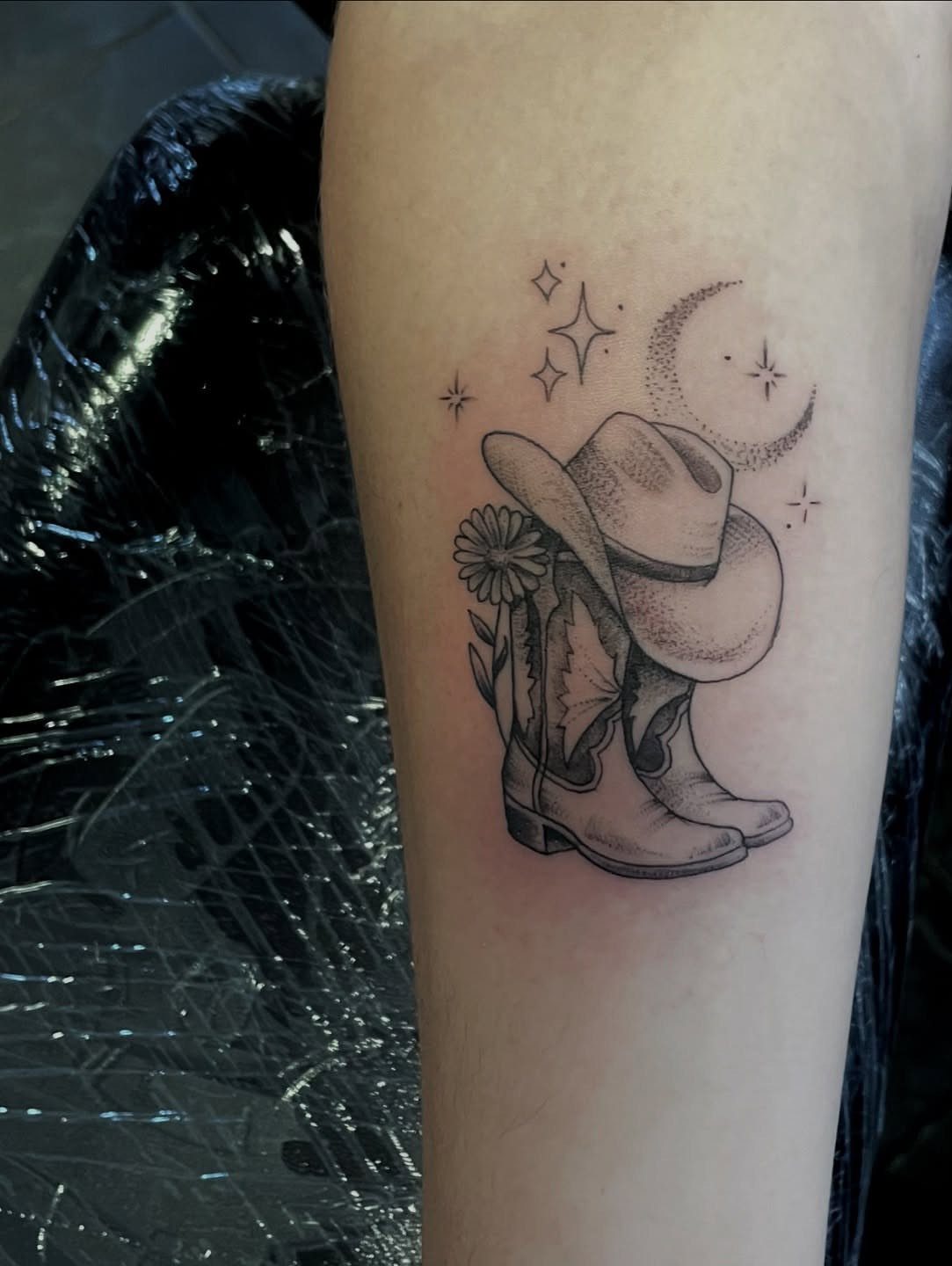
A boot standing upright with a hat resting on its crown gives you two Western signatures in one vertical stack, suited to a calf or outer forearm where the height has room.
The crescent and stars in some versions add night-sky mood without extra color; they sit clean in black ink where a sun would demand more fill.
The boot shaft and hat crown share a curve that needs to read as two separate objects, not one lumpy shape.
Ask your artist to keep a gap of skin between them, even a thin one. Celestial accents work best placed off to the side, not centered, so the main pair keeps its weight.

Authentic Western Designs: Includes Various creative patterns like cowboy hats, boots, cacti, skeletons, and guitars, bringing a rustic, country style to your projects and decor

39 WESTERN & OLD-SCHOOL DESIGNS, 4 SHEETS: A full collection of classic American-traditional tattoos — cowboy skulls in Stetson hats, gunslinger skeletons, snakes, eagles,fishing, scorpions and playing cards ("Dead Man's Hand" aces & eights) — for an instant hand-inked look.

Indian Totem Set: This set of painting stencils collects rich primitive Indian elements, Aztec geometric borders, sacred cow skulls, tribal women's sidelights, and feathered arrow designs, which can be freely combined into a shield totem, leather decoration, or mural tape to recreate the code of the wild aesthetics of the prairie.
9. Cowboys on Horseback Tattoo
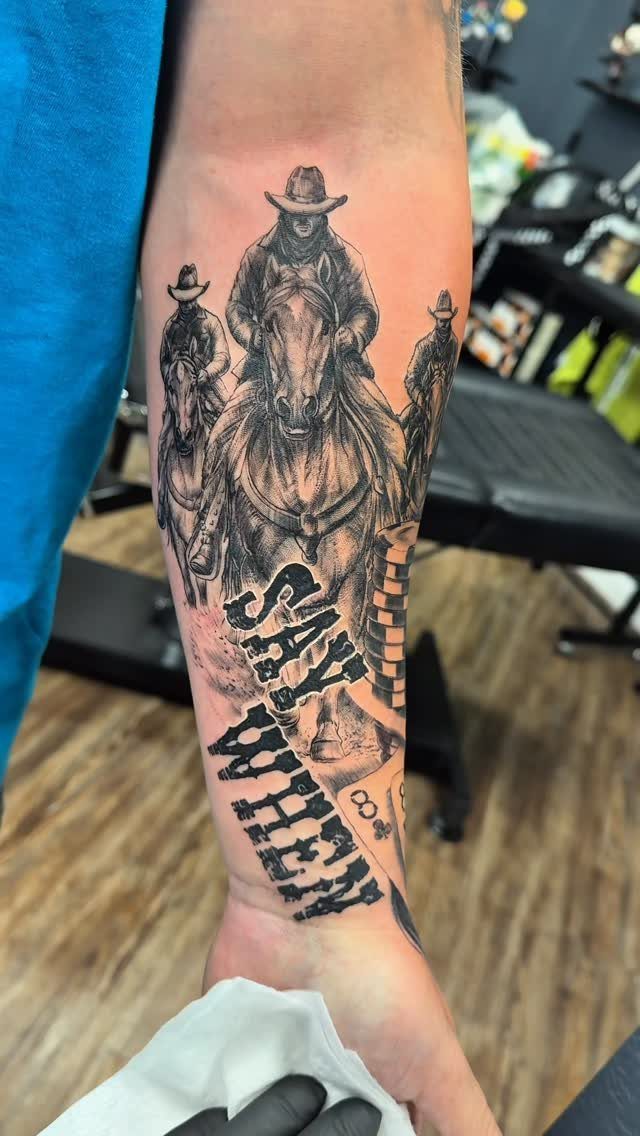
3 riders in a row turn a single cowboy into a posse, which changes the story from lone wanderer to something more cinematic.
The horizontal format suits a forearm naturally; the eye travels left to right the way English reads, and the horses’ motion follows.
"SAY WHEN" or another short phrase below the riders grounds the image in a specific moment, usually a standoff.
That text needs to be legible at the size your arm allows; too small and the serif details close up inside a year.
Poker chips and cards below the text, as some versions add, fill the lower forearm without breaking the horizontal flow.
The risk is busyness.
Three horses, three hats, plus text and props: at fine line weight, some elements will blur before others. Ask which part the artist wants to hold sharpest, and expect the background details to soften first.

UNIQUE DOUBLE-DECK WESTERN THEME: Dive into the Wild West with a double set of 55 playing cards, including three Jokers. This unique collection brings the notorious American Outlaws to your poker nights, featuring characters like Billy The Kid and Jesse James as the face cards. Perfect for enthusiasts of vintage and western playing cards seeking a twist on traditional decks.

🐮 Cowboy Party Favors: 12 Sheets Cowboy Boy Tattoo Stickers, Rodeo Party Favor Bag Fillers. First rodeo birthday party decorations for boys. Cowboy baby shower decorations for boy.
Fine Line Tattoo Durability
Fine line tattoos fade faster than heavier work because there is less pigment in the skin to begin with.
The needle groupings are smaller, often a single round liner, which deposits ink in a tighter column that the immune system breaks down more readily over time.
Sun exposure is the main accelerator. UV light scatters the ink particles and triggers the macrophages that carry them away.
A forearm piece, which sees more sun than a rib or thigh piece, will need touch-up sooner if you do not cover it or use SPF 30 or higher.
Healing care matters more for fine line than for bold traditional work. Scabbing pulls ink out with it; keeping the area lightly moisturized so it flakes instead of crusts preserves the line weight your artist set.

COMPLETE KIT: Set includes 18 sheets of self-adhesive henna stencils featuring traditional Indian Mehndi designs for hands and body art

The dimensions shown are the overall stencil sheet size. The graphic fits inside the sheet and is slightly smaller than the overall sheet size

▶ Henna Tattoo Kit: 16 sheets tattoo stencils. airbrush tattoo stencils suitable for tattoo lovers. Experience the effects of tattooing without the pain of tattooing.
Cost of Fine Line Tattoos
Fine line work costs less than heavy blackwork, though palm-sized detail or multiple elements that need stencil alignment still push the price up. The lower end covers single symbols: a horseshoe, a hat silhouette, a small cactus cluster.
Hourly rates for fine line specialists trend higher than general shop minimums because the work demands single-needle control and slower hand speed.
A piece that takes less time in bold lines might run longer in fine line, and the price reflects time, not just complexity.
Vertical compositions, like the cow skull and cactus arrangements common in Western fine line, need careful stencil placement so the elements read top-to-bottom without drifting on curved skin.
That setup time is built into the quote. Ask whether your artist charges by the piece or by the hour before the stencil goes on; it changes how you should think about adding or dropping details.
Western Tattoo Symbolism
Western tattoo vocabulary carries specific meanings that read differently inside and outside cowboy culture. Horseshoes mean luck, but orientation matters: points up collects it, points down pours it onto whoever stands below.
Wildflowers in Western designs signal freedom and resilience, the bloom that survives drought. They soften mechanical or masculine symbols without erasing them.
Country music flash sheets lean playful, cherries and boots mixed with typography, where rodeo and ranch imagery stays more solemn.
Frequently Asked Questions
How much should a fine line tattoo cost?
A single fine line symbol like a horseshoe or small cactus cluster starts around $100, while palm-sized detail or multiple elements runs closer to $300.
Single-needle work forces the hand to move slower, so specialists usually set hourly rates well above the general shop minimum.
Do fine line tattoos actually last?
Fine line tattoos fade faster than heavier work because smaller needle groupings deposit less pigment in a tighter column that the immune system breaks down more readily.
Sun exposure accelerates the process, so forearm pieces need touch-up sooner than rib or thigh work if you skip SPF 30 or higher.
What is a western style tattoo?
Western tattoos draw from cowboy culture and desert imagery: hats, boots, steer skulls, horseshoes, cacti, and riders on horseback.
The vocabulary carries specific meanings inside that culture, where horseshoe orientation signals luck collected or poured out, and wildflowers stand for resilience through drought.