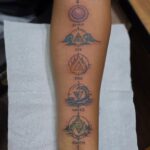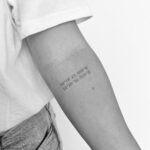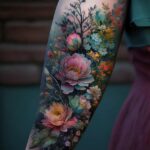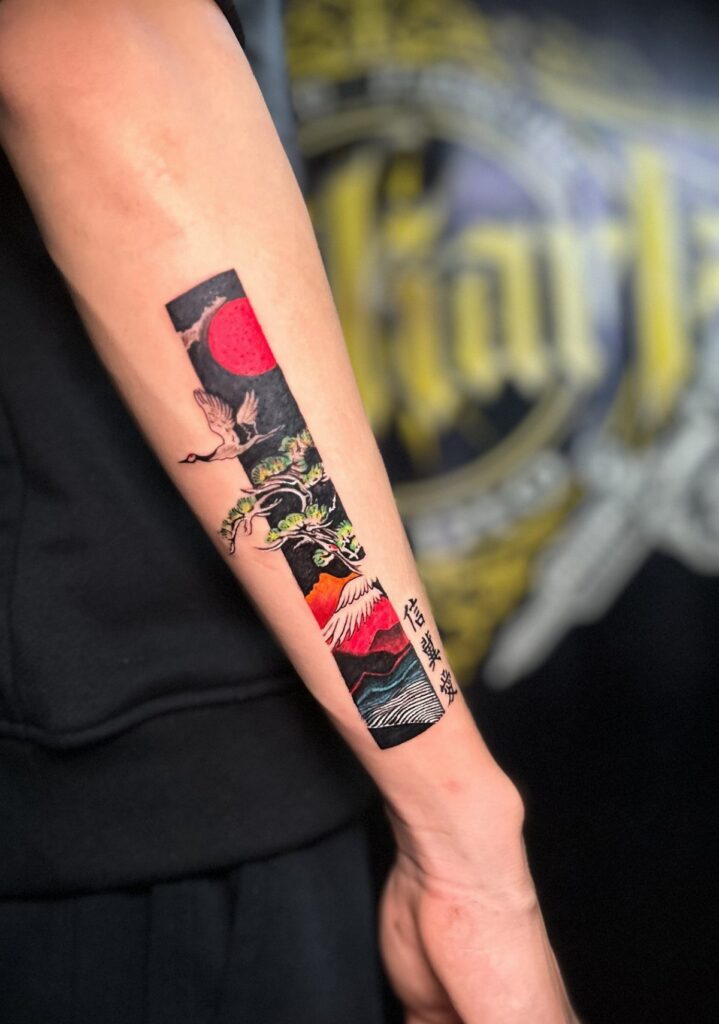
A color tattoo for men can run from a small geometric piece on the wrist to a full dragon sleeve that takes multiple sessions and a koi fish chest panel planned from day one.
What decides which idea fits is how much skin you are ready to commit and whether you want a subject to explain or a pattern that speaks for itself.
The black foundation underneath Japanese dragon scales, how watercolor ink sits in the skin compared to traditional color, the SPF 30 or higher you will need on any exposed work: these are the details that separate a piece that holds from one that turns to soup.
1. Colorful Comic Book Tattoos
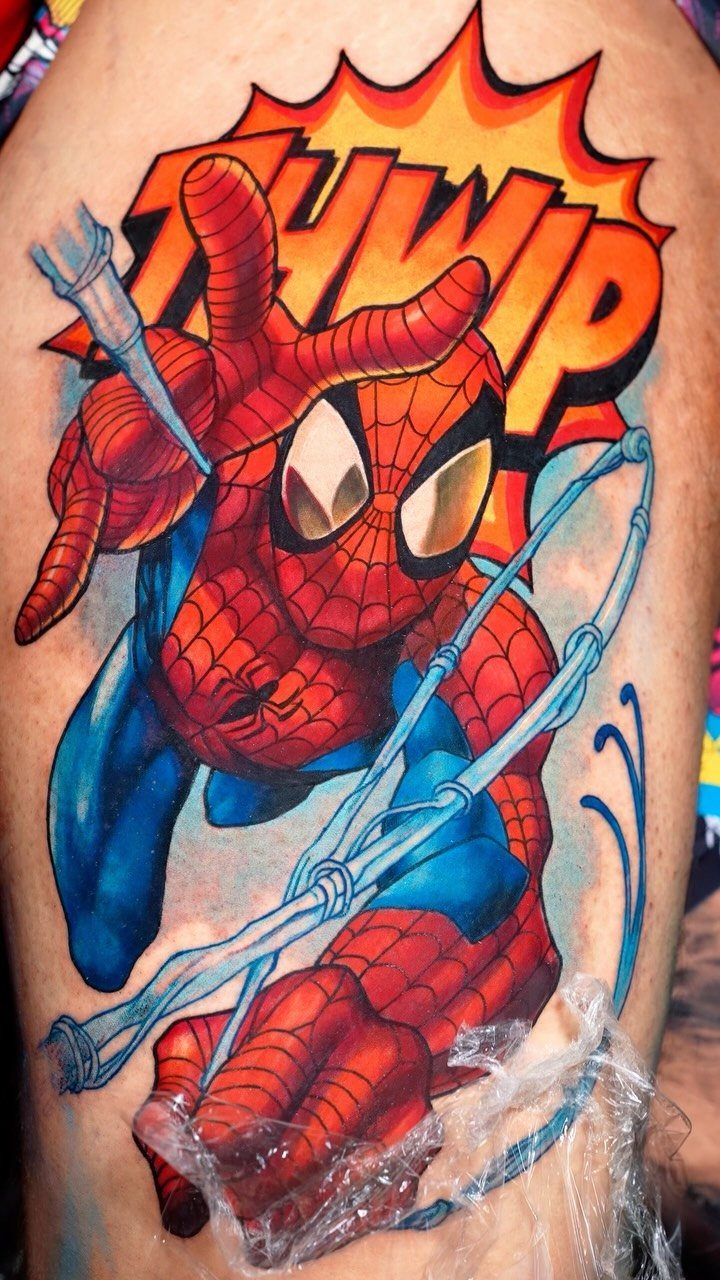
A comic book tattoo reads like a panel ripped straight from the page and pressed into skin.
Bold outlines hold the color in place, and those primary reds, blues, and yellows stay loud for years if the artist knows how to pack them.
Sound effects in block letters, explosion shapes behind the figure, the whole thing flat and graphic rather than shaded like a photograph.
This style suits guys who already have a character in mind, not guys fishing for something cool.
The Joker, Batman, Spider-Man, these work because the reader knows the pose and the color scheme by heart. An original character in this style looks like a mistake.
Line work makes or breaks this style.
Comic panels depend on crisp edges, and a shaky outline turns the whole thing soft and cheap. I would ask to see healed photos of similar work before committing, not fresh ones where the black still looks wet.

6 Japanese Style Design Sheets – Traditional dragon, koi fish, phoenix, and samurai artwork gives you an authentic full-arm sleeve look in one easy application.

Package Includes: 12 sheets sleeve tattoos measuring 19 x 6.7 inches (48 x 17cm), carefully selected styles each can be called a classic, allowing you to try a variety of different styles and make you the center of attention

PERFECT FIT FOR JAPANESE-SIZED CARDS: Designed specifically for trading cards measuring up to 59x86 mm, these sleeves are ideal for games like Yu-Gi-Oh! and Cardfight!! Vanguard.
2. Dragon Tattoos
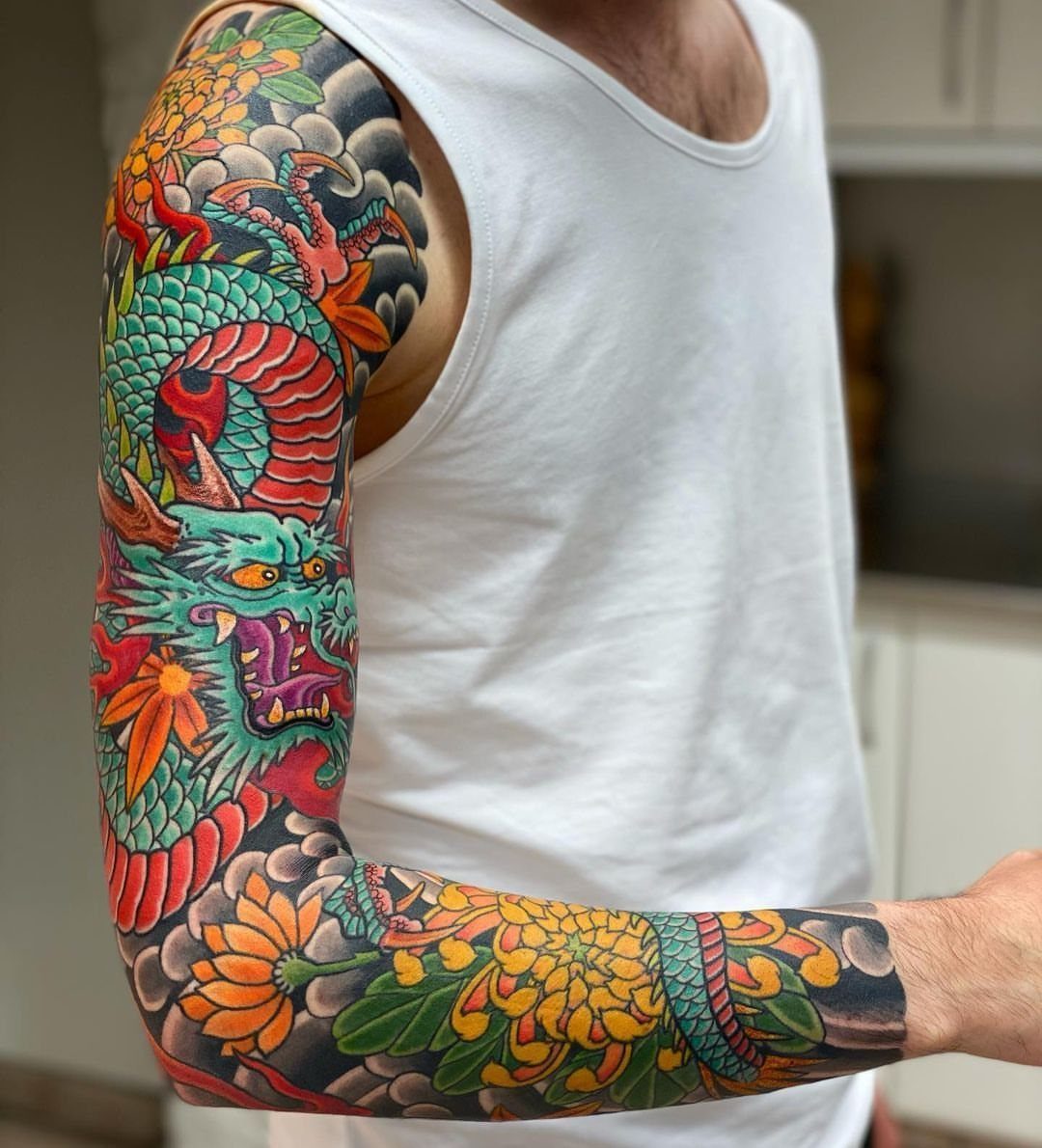
Japanese dragon sleeves carry the arm from shoulder to wrist with scales, claws, and wind bars that wrap the muscle.
The dragon coils through flowers, red and pink against green accents, the whole thing built to move when the arm moves. This is not a single image but a narrative that needs the full canvas.
The color choices run traditional: red for passion or danger, green for nature, black for the outline and shading that holds it together.
Without that black, the bright tones blur into soup. I have seen old dragon sleeves where the red stayed true and the green turned muddy; the difference was always the black foundation underneath.
A chest panel extending from the sleeve, like the Mitsakos piece, needs planning from the first session. Adding it later means matching faded ink, and nobody wants a two-tone dragon.

【 622+ Fun Assorted Tattoo Stencils 】-The ChurlChurl tattoo stencils collection includes 622+ high quality stencils with multiple themes. enjoy cute trendy tattoo stencil designs like butterflies, words, flowers, symbols, totem, Egypt style patterns and more.

Package Included: 20 sheets temporary tattoo stencil with different patterns. The tattoo stencil album unlimited creative combinations and options, like an art book, to meet your every need. Only has tattoo template, no tattoo ink

183PCS Different Styles Tattoos Stencil: Our temporary tattoo stencils forkids comes with 183 temporary tattoo stencils painting set design such as flowers, cats, hearts, skulls, dinosaurs, fruits, deer, scorpions, Hannah, unicorns, whales, cars, rainbows, telescopes, ships, too fast, astronauts, pirates, letters, stars and more Style in 12 sheets A5 size. Perfect for festivals, parties, or daily fashion.
3. Watercolor Tattoos
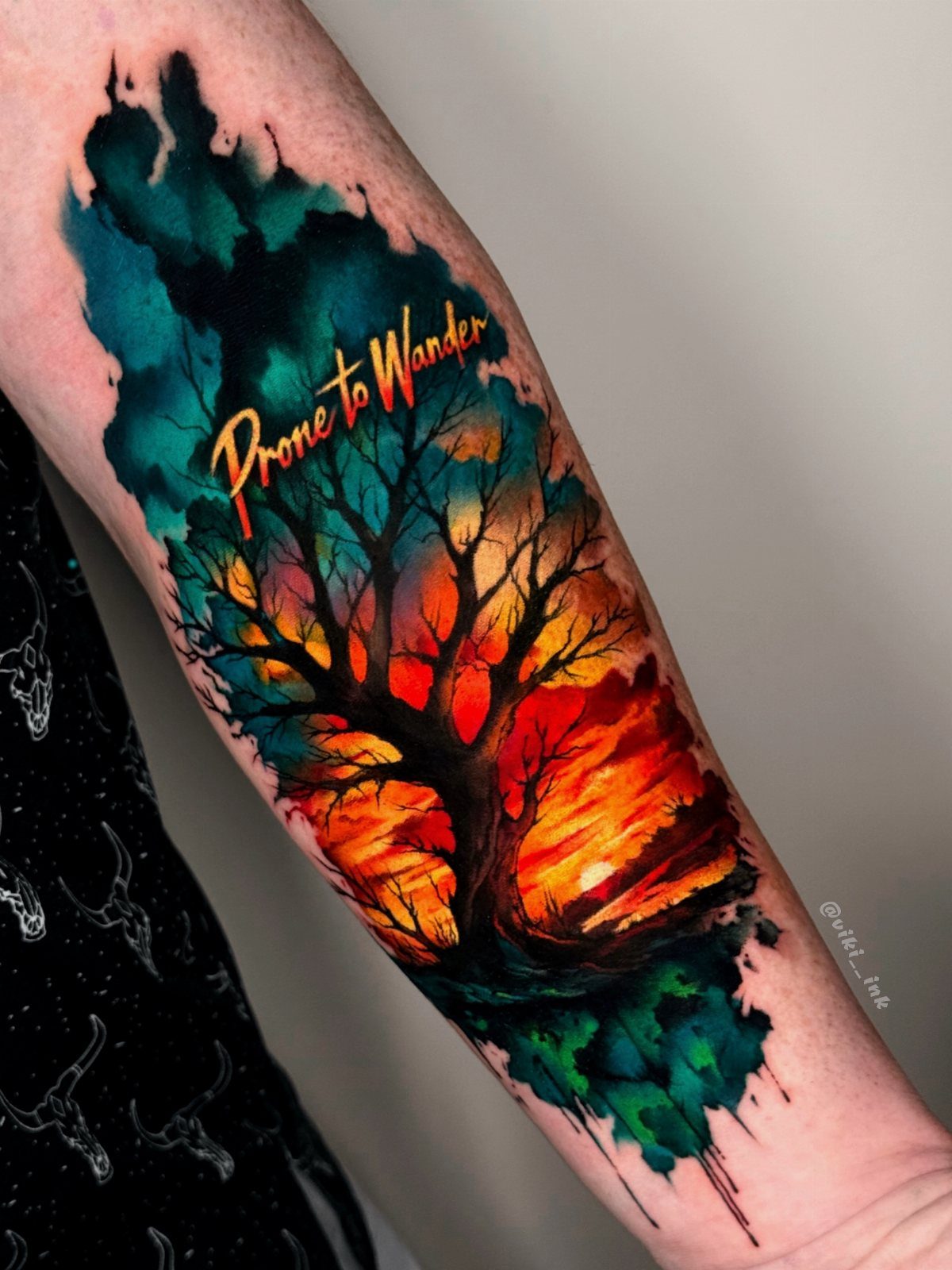
Watercolor tattoos skip the black outline entirely and let color bleed like actual paint on wet paper.
A sunset gradient, teal to orange, with the silhouette holding the shape while the color does the emotional work. Without that dark anchor, the whole thing would wash out into abstraction.
This technique works best for subjects that already have soft edges: flowers, skies, animals in motion. Rainbow gradients, those wavy lines shifting through the full spectrum, need skin that stays pale; on darker tones the lighter colors disappear.
I would place this where the sun hits least, since watercolor fades faster than lined work and UV accelerates it.
Touch-ups are not optional with this style. Plan for them.

Sumi ink is made of high-quality vegetable soot

Dragon kanji featuring bold calligraphy to help manifest power, strength and great fortune. Minimalist Japanese calligraphy artwork for anyone seeking dragon symbols, traditional kanji style and cultural meaning. Clean ink perfect for daily inspiration.

Intricate dragon tattoo design inspired by Japanese art, tattooed on an Emperor.
4. Koi Fish Tattoos
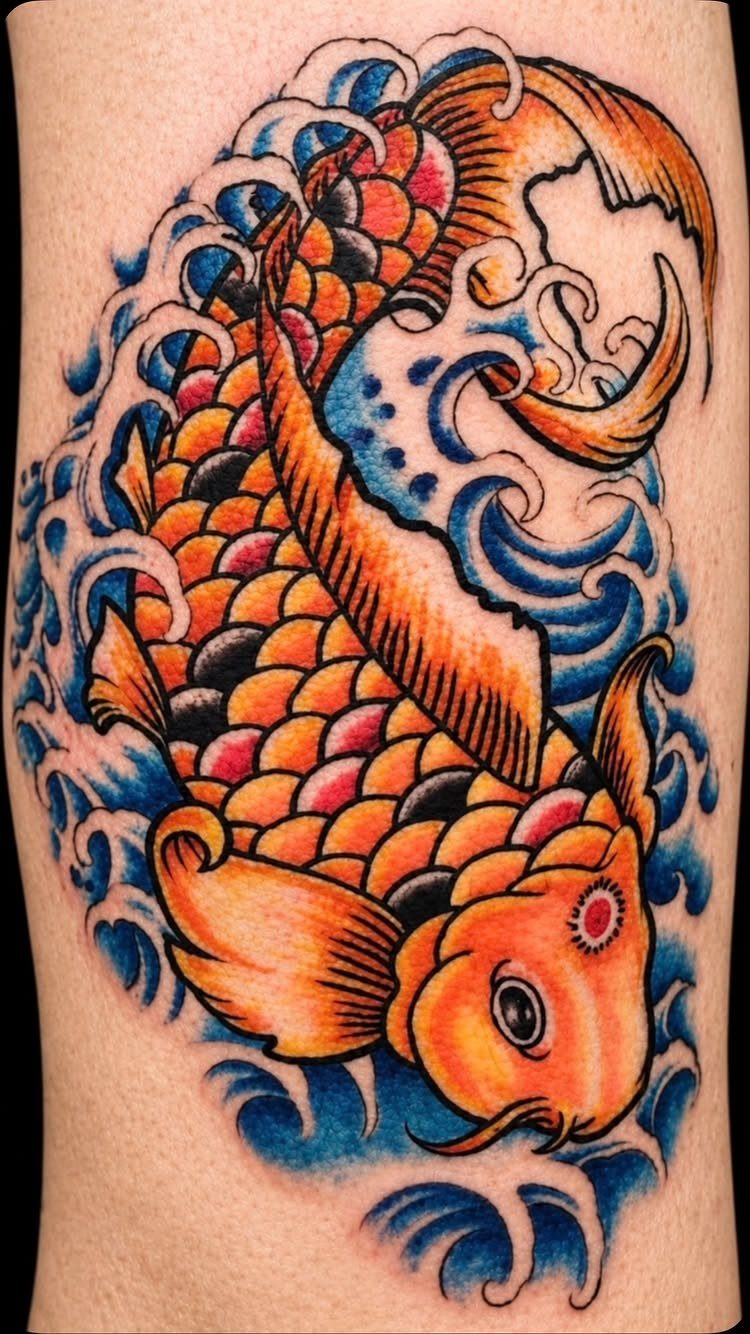
Koi fish swim upstream in Japanese tradition, and the tattoo keeps that motion: body curved, fins spread, water curling around the scales.
The orange and black fish sits in blue waves that frame it without competing. This is a design that needs room to turn; a koi stuck straight looks dead in the water.
The color symbolism runs deep. Red and orange koi represent courage, gold ones wealth, black ones overcoming adversity.
Most guys choose the color they like and let the meaning follow, which works fine. The water and floral elements fill the gaps around the fish and let the artist balance the composition across a sleeve or a leg.
Plan for 2 sessions on a half-sleeve this busy, color second. That order matters: line and shading first, then the bright tones once the skin has settled.

Premium Commitment to Craft: Each drop of our tattoo ink reflects our unwavering commitment to quality. Trusted by tattoo artists, our ink stands out for its premium craftsmanship.

RICH TEMPORARY TATTOO KIT - Contains tattoo templates (77 patterns),4 tattoo inks in 3 colors (black Maroon Cherry Red),4 disposable gloves 1 pack of cleaning supplies for a hassle-free temporary tattoo experience.

Complete Package Contents: There are 7 colors temporary tattoo ink, 103 patterns henna stencils and one pin included in this comprehensive kit
5. Nature-themed Tattoos
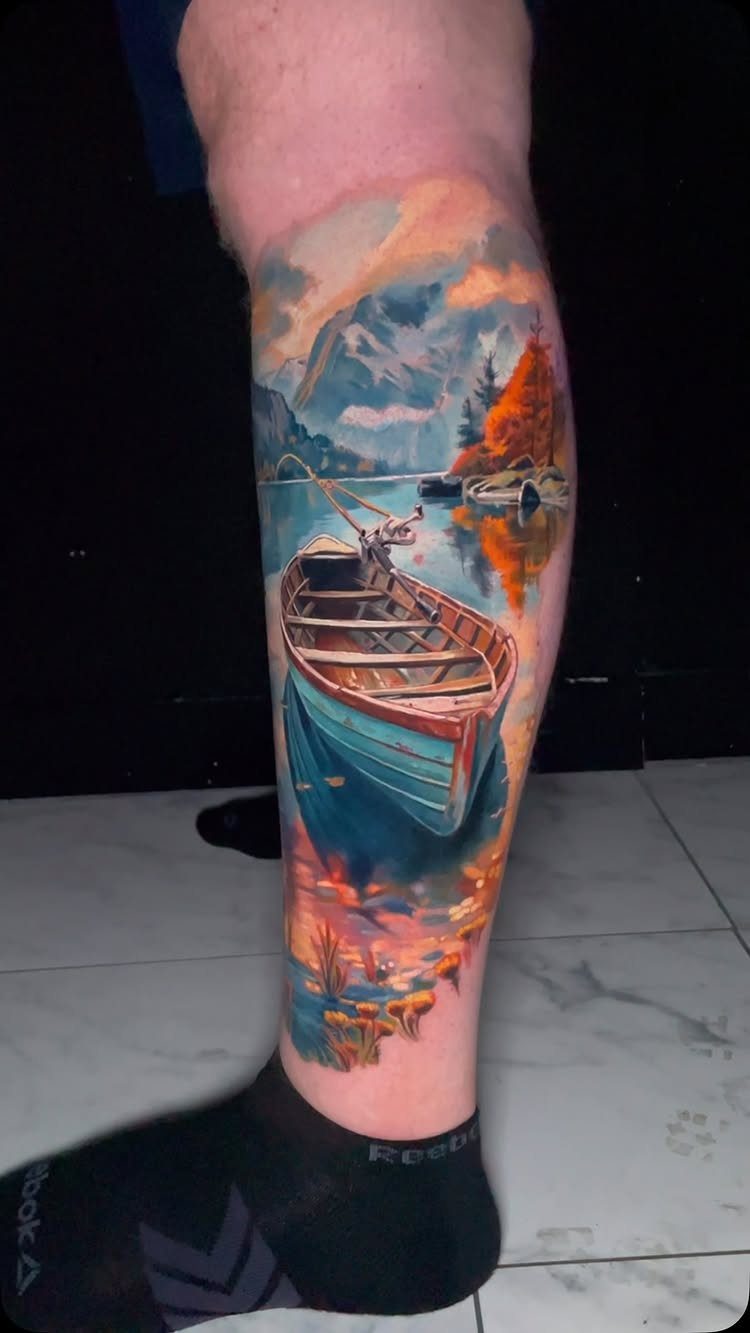
A nature tattoo turns the body into a landscape you carry. A mountain color tattoo reads like a window cut into the skin, and that depth comes from layering: distant peaks pale and simple, near details dark and sharp.
Watercolor splashes add a second language to the same subject. A wolf in black ink with red and blue bursts behind it hits differently than the realistic lake scene, more emotional, less documentary.
I prefer the controlled version for a first large piece; the splashed color takes an artist who understands restraint, and too much reads like an accident.
Either way, nature themes age well. Trees and mountains do not go out of style the way a trending symbol might.

FOR ALL SKIN TYPES, INKED OR NOT - This daily, 100% mineral sunscreen works hard to protect skin and tattoos from the damage caused by exposure to harmful UVA & UVB rays.
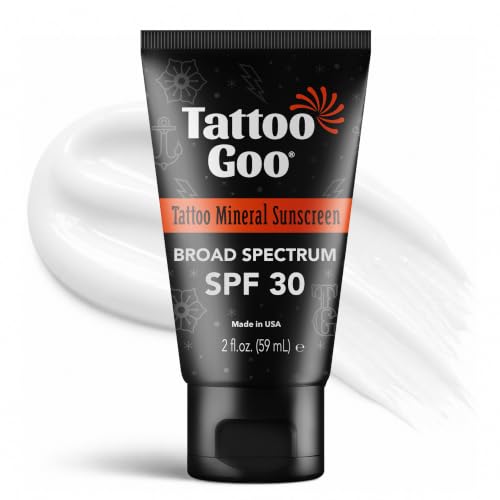
Tattoo-Fade Protection – Shields tattoos from UV damage to help preserve vibrancy and detail with a lightweight formula that doesn’t leave any white film residue.
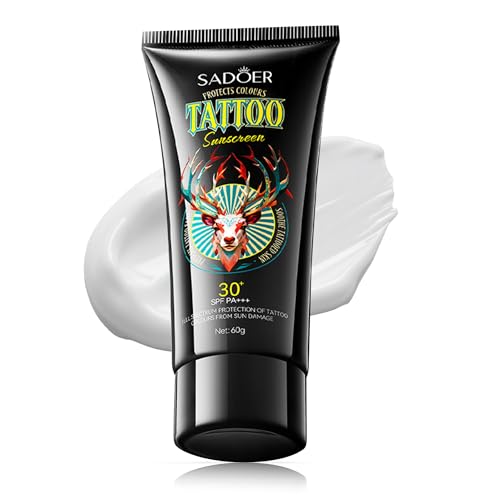
ULTIMATE SUN PROTECTION FOR TATTOOS & SKIN: Our advanced SPF 30+ formula delivers broad-spectrum UVA/UVB protection while locking in tattoo vibrancy. Suitable for all skin types – inked or uninked – its compact size fits your pocket easily, making it perfect for daily on-the-go protection.
6. Colorful Tiger Tattoo
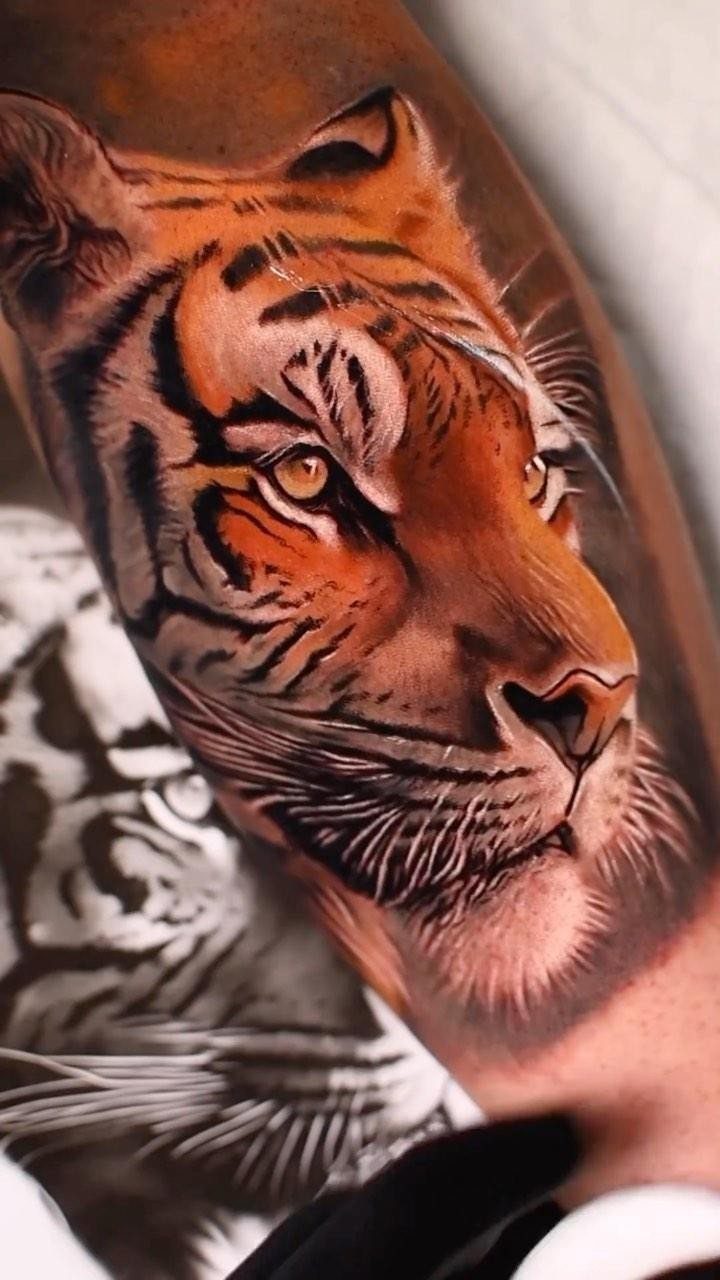
A tiger in color demands attention to the fur pattern, the way orange breaks into black stripes and white frames the face.
Yellow eyes keep the tiger alive, a pink nose, every whisker slot drawn in. Realistic animal portraits are a test of the artist’s patience; one shortcut in the stripe spacing and the whole cat looks wrong.
Stylized versions trade realism for graphic impact.
A comic-panel tiger, bold outlines and flat color, would sit next to the Batman sleeve in entry 1 without clashing. I would choose based on what else I wore: realistic for a single standout piece, stylized for building a themed arm.
White ink in the fur yellows over time.
That is not a flaw in the work; it is how skin works. Plan for cream rather than paper-white in the healed piece.


PERFECT FIT FOR JAPANESE-SIZED CARDS: Designed specifically for trading cards measuring up to 59x86 mm, these sleeves are ideal for games like Yu-Gi-Oh! and Cardfight!! Vanguard.

PERFECT FIT FOR JAPANESE-SIZED CARDS: Designed specifically for trading cards measuring up to 59x86 mm, these sleeves are ideal for games like Yu-Gi-Oh! and Cardfight!! Vanguard.
7. Small Color Tattoo
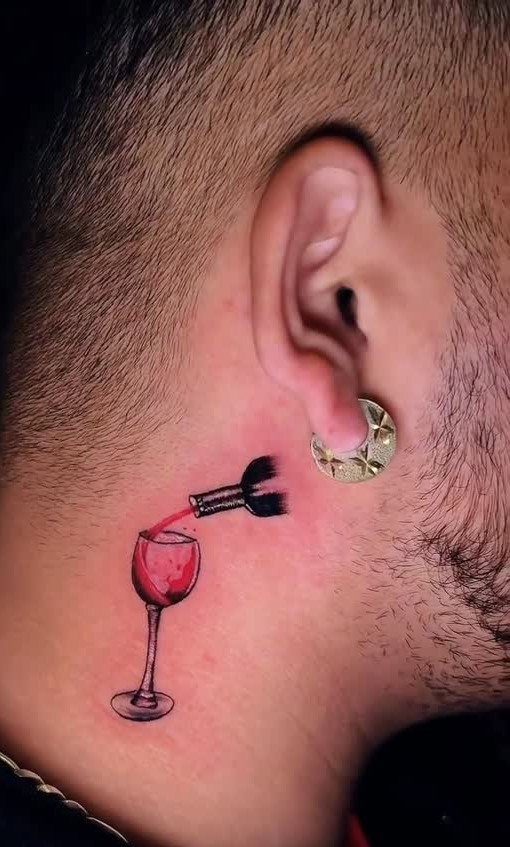
Small color tattoos live or die by simplicity.
A wine bottle pouring red into a glass, the whole thing the size of a quarter, works because the shapes read instantly and the color carries the detail you do not have room for.
Black branches with pink blossoms trailing down a forearm use the same trick: a few strokes, one accent color, done.
This suits guys adding a third or fourth piece, not a first-timer trying to make a statement.
The neck, the hand, behind the ear, these spots hurt more per square inch than a shoulder and the color sits where the sun finds it.
Plan for fading, plan for touch-ups, and pick an image that still works when the edges soften.

RICH TEMPORARY TATTOO KIT - Contains rich tattoos pattern templates ,4 tattoo inks in 4 colors (Maroon,Black,Cherry red,Green),4 disposable gloves 1 pack of cleaning supplies,allowing you to easily create unique personalized tattoos

📦 【ULTIMATE 245+ STENCILS & 10 CONES】 The premium all-in-one set! Includes 245+ diverse stencils (across 18 sheets), an exclusive detail brush, and 10 tattoo cones in 5 vibrant colors (4 Brown, 2 Black, 2 Red, 1 Purple, 1 Rose Pink). Comes with a full pro prep kit (2 pairs gloves, 2 underpads, scissors, 10 swabs, soft cloth).

Clean, Flawless Transfers: Your artwork will look so clean once transferred to the skin with the Stencil Stuff gel! Gentle on the skin, Stencil Stuff transfer solution helps you achieve clear and sharp tattoo stencil transfers every time!
8. Colorful Geometric Shapes and Patterns Tattoo
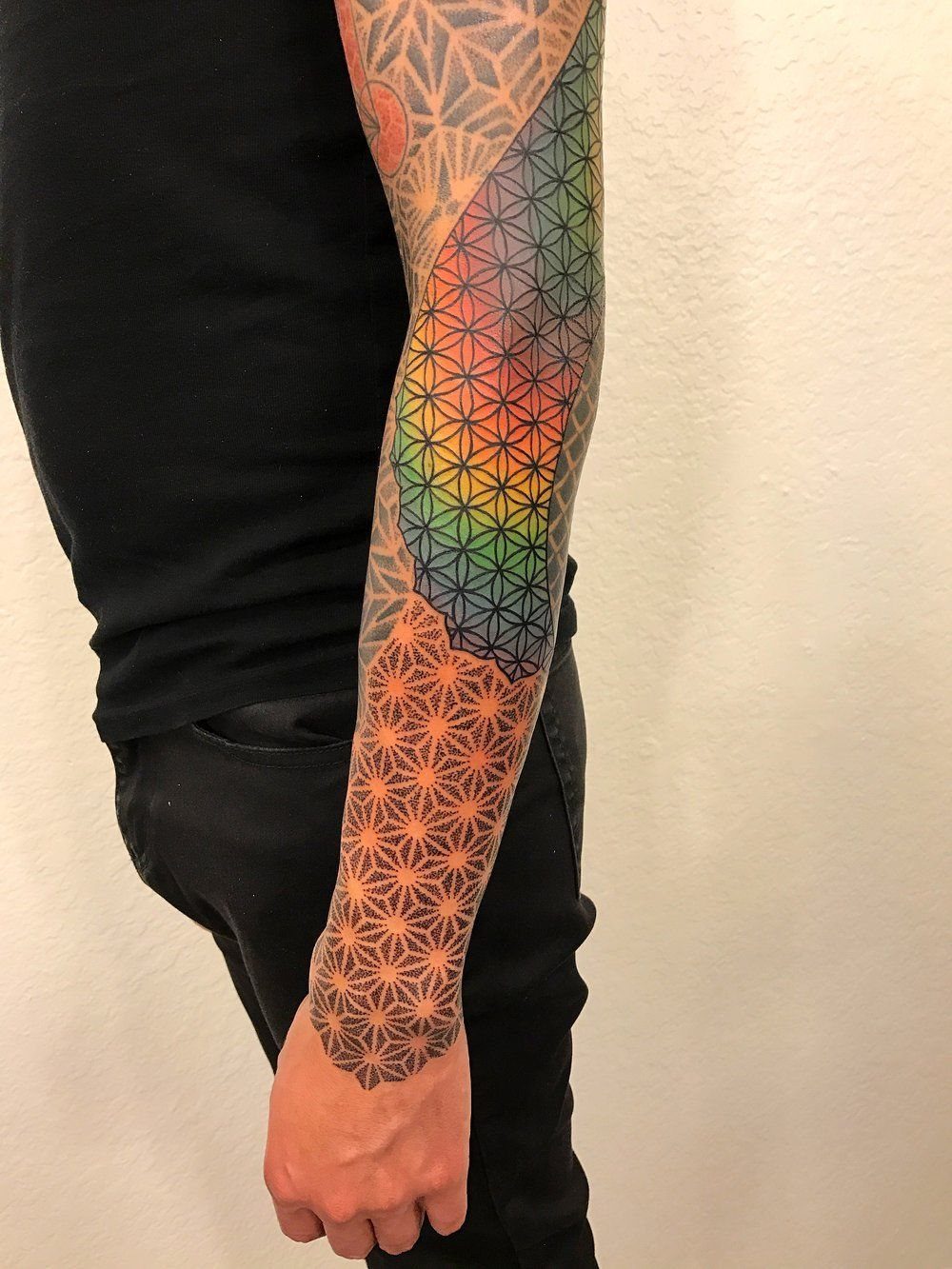
Sacred geometry builds a sleeve from repeating shapes: flower of life, platonic solids, lines that extend and intersect until the arm reads as architecture rather than image.
Rainbow gradients shift across the pattern, color following the math instead of describing a real thing. The effect is hypnotic, almost mechanical, until you notice the hand of the person who laid it out.
This style needs an artist who understands spacing at scale. A single hexagon off its grid throws the whole arm into chaos, and the color must shift evenly or the gradient bands like a cheap print.
I would ask to see a healed geometric piece before booking, since blowout in fine lines turns precision into mush.
Abstract patterning suits guys who want color without committing to a subject: no wolf, no wave, nothing to explain.
The trade is recognition; nobody asks about a flower of life the way they ask about a koi. Wear this if the pattern itself means something to you, not if you want conversation.

【Fits Table Size】This table runner is 13x36 inch, inches with a size deviation of 1 to 2 inch, this long table runner fits most dinging tables, coffee tables, or picnic setups, better match your table and give you a delightful dining experience.

Fuse the fantastical worlds of anime and manga with the timeless elegance of Eastern dragons. This vintage-inspired design brings traditional Japanese, Chinese, and Korean dragon artistry into the realm of modern streetwear and anime culture.

A fierce Japanese dragon bursts from a crashing wave to seize its pearl, painted in bold sumi-e ink strokes with splatter, a red seal and kanji calligraphy. Dramatic Japanese art in the spirit of traditional brushwork.
Tattoo Longevity
Colored tattoos can last several years, but fading may occur due to sun exposure and skin type.
A fresh piece looks nothing like the same ink at year five.
The reds dull first, then the blues, while black holds longest because the carbon particle size resists breakdown. Oily skin accelerates the process; the excess sebum works pigment toward the surface faster than dry skin does.
Sunscreen is not optional maintenance.
SPF 30 or higher on any exposed color work, reapplied on schedule if you are outside. A hat or long sleeve beats lotion for large back pieces you cannot reach to reapply.
Scheduled touch-ups keep the original saturation, not the washed-out version your eye has slowly accepted as normal. Budget for them upfront; they cost less than the original work but still run hourly.

Our Product Includes:12 bottles of temporary tattoo ink (3 Black、2 Red、1 Dark、1 Red、1 Brown、1 Blue、1 Navy Blue、 1 Purple1、1 Green、1 Orange) ,1 pack of cotton swabs, 6 packs of disposable gloves,130 adhesive tattoo stencil sheets.These will help you create delicate small tattoos.

1. Safe and Healthy: Meet rigid safety and non-toxic materials standard, no irritation to the skin. Plus, It also has Clean Dry Protection Skin antiperspirant and deodorant functions.

Product Kits: You will receive 12 A4 sheets featuring 142 unique henna tattoo stencils patterns including butterflies, flowers, words, symbols, totems and egyptian designs. Our versatile temporary tattoos adult with stencils collection offers something for every taste with its wide variety of artistic models.
Tattoo Placement
Common placements for colorful tattoos include arms, legs, and backs, allowing for larger designs.
A chest piece lets the wings spread across the pecs, where muscle movement gives them life without warping the lines.
The back offers the only true flat canvas for pieces that need to read as a single image. Shoulder blades shift with arm position; the center back stays stable for landscapes or sacred geometry that depends on precise alignment.
Arms get the most sun of any large placement.
A sleeve heals faster than a back piece because you can reach it to moisturize, but that same accessibility means you see it, wash it, and expose it daily. Plan the color saturation knowing this.

FITS ALL SKIN TYPES, - TATTOO SUNSCREEN, 100% NATURAL sunscreen works hard to protect skin and tattoos from the damage caused by exposure to harmful UVA & UVB rays.

Tattoo-Safe Mineral Formula: Our tattoo sunscreen lotion uses non-nano zinc oxide, a physical barrier that sits on the skin to block UVA/UVB rays without penetrating or irritating tattoos. This helps prevent fading, discoloration, or damage to tattoo ink caused by sun exposure.

Broad Spectrum Protection: SPF 33 mineral sunscreen with non-nano zinc oxide sits on top of the skin to create a shield against sun exposue at the source - defending tattoos from sun exposure and fading, and keeping your ink brighter and more vibrant over time.
Tattoo Care
Proper aftercare is essential to maintain color vibrancy, including moisturizing and avoiding sun exposure.
Those first days after the session set the color retention for the life of the tattoo.
Wash with unscented soap, pat dry with paper towels, not fabric that carries bacteria. Apply a thin layer of recommended ointment; too thick suffocates the skin and pulls pigment.
Moisturizing continues until the skin settles, switching from ointment to unscented lotion once the surface seals. The color sits in a layer still healing beneath what looks closed; disturbing this with scratching or picking costs saturation in patches.
Sun exposure during healing causes immediate and permanent dulling.
Keep new color work covered for the full month, not just until the scabbing stops. After healing, the sunscreen habit from Section 1 applies for the duration.
Frequently Asked Questions
How long does a colored tattoo last?
Colored tattoos can last several years, though fading is inevitable.
Carbon black outlasts every pigment in the bottle; red and blue are the first to go muddy. Oily skin speeds up fading, and sun exposure without SPF 30 or higher will dull colors faster than anything else.
Which color tattoo is best?
The best color depends on your skin tone and the style you want. Pale washes and watercolor fades only work on light skin; melanin swallows those soft tones whole.
Traditional Japanese work relies on black outlines to keep reds and greens from blurring into soup, so the "best" color is often the one supported by enough black foundation.