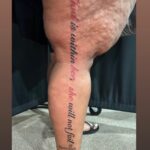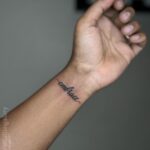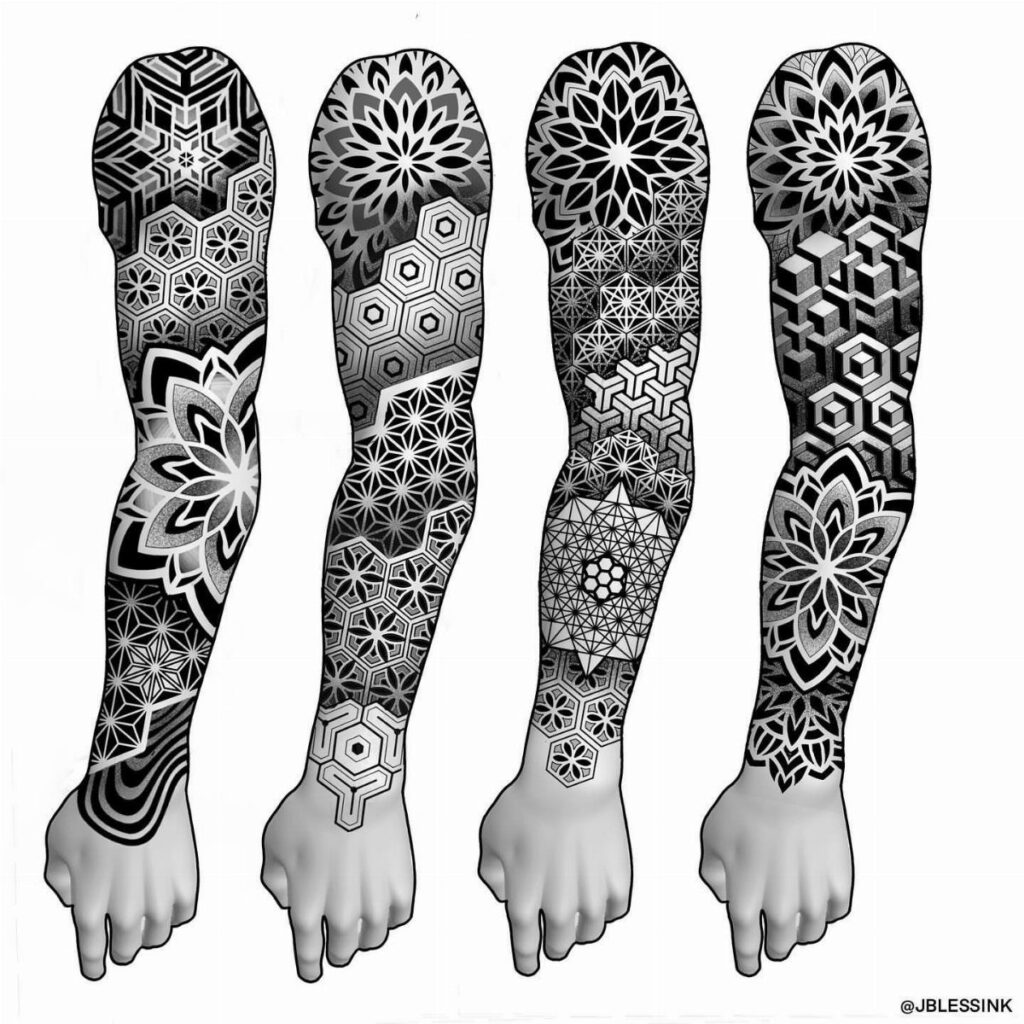
Pattern tattoo designs run from a single hexagon behind the ear to full sleeves of interlocking Japanese waves, and the deciding factor is how much time and money you will actually put in.
Black and grey mandalas heal cleaner than most color work, and the simpler linework means fewer trips back to the chair over the years.
1. Mandala Pattern Tattoo Design
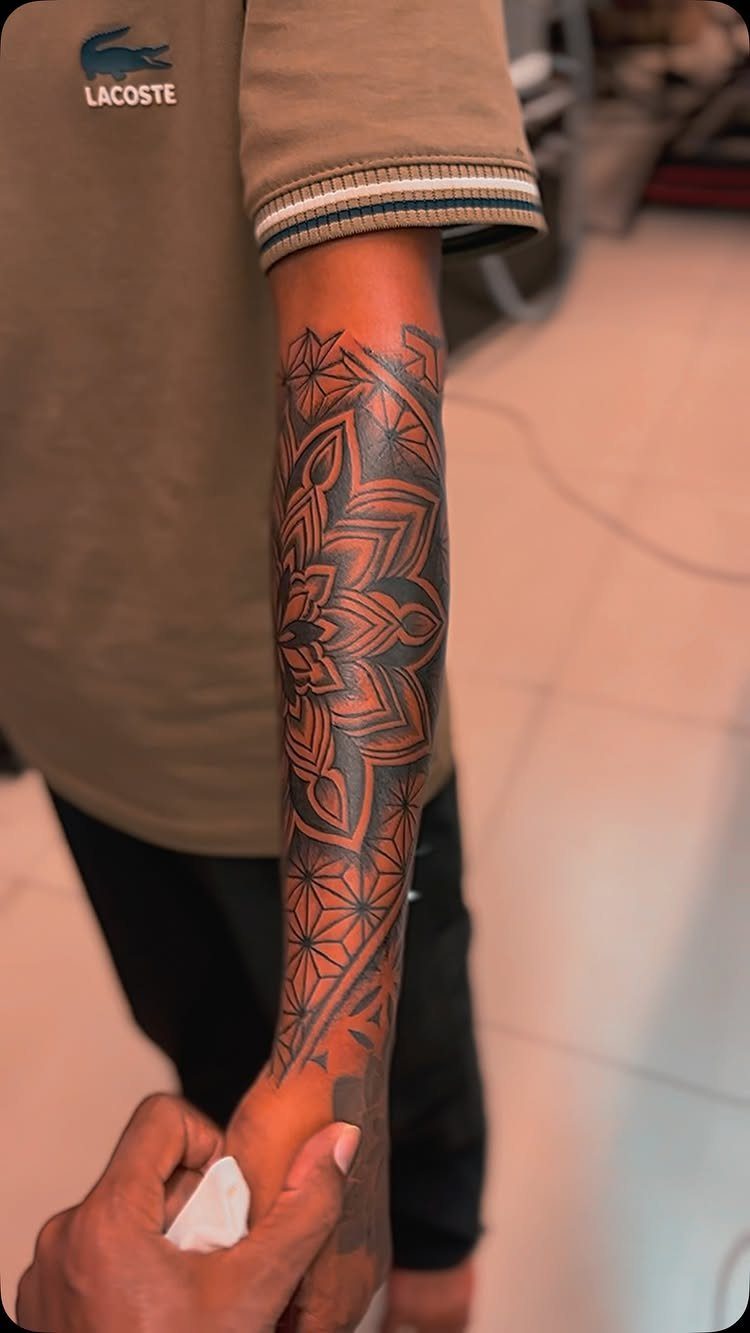
A mandala pattern starts at a center point and builds outward in repeating layers, each ring adding detail that draws the eye back to the middle.
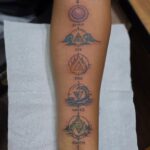
A forearm mandala mixes petal shapes with a geometric star grid, which keeps the design from going soft or purely decorative.
Black and grey heal cleaner than color on this much detail, though teal and purple builds are common if you want the ink to read from across a room.
Dotwork in the outer rings adds texture without extra weight; too heavy and the layers blur together after a few years.
Placement matters for symmetry.
The forearm gives a flat plane, which is why so many mandalas land there. A chest or back piece can go larger, but the curve of the body distorts the center unless the artist maps it standing up.

What's included: 1 Set = 9 sheets henna tattoo stencils, template size: 21 cm x 12 cm/8.2" x 4.7" (Only Templates,No Tattoo Ink); Paste location: hand, finger, forearm, legs and other parts of the body

18 Sheets with high-quality 3 layers PVC henna hand stencils; Safe,Washable and Non-Toxic.Beautiful, Stylish, Easy to Use, Size: 21cm x 12cm/8.2" x 4.7"

Versatile 10-Sheet Design Collection – Includes Mandalas, florals, butterflies, and feathers, offering both large-scale arm art and dainty wrist/finger accents.
2. Floral Pattern Tattoo Design
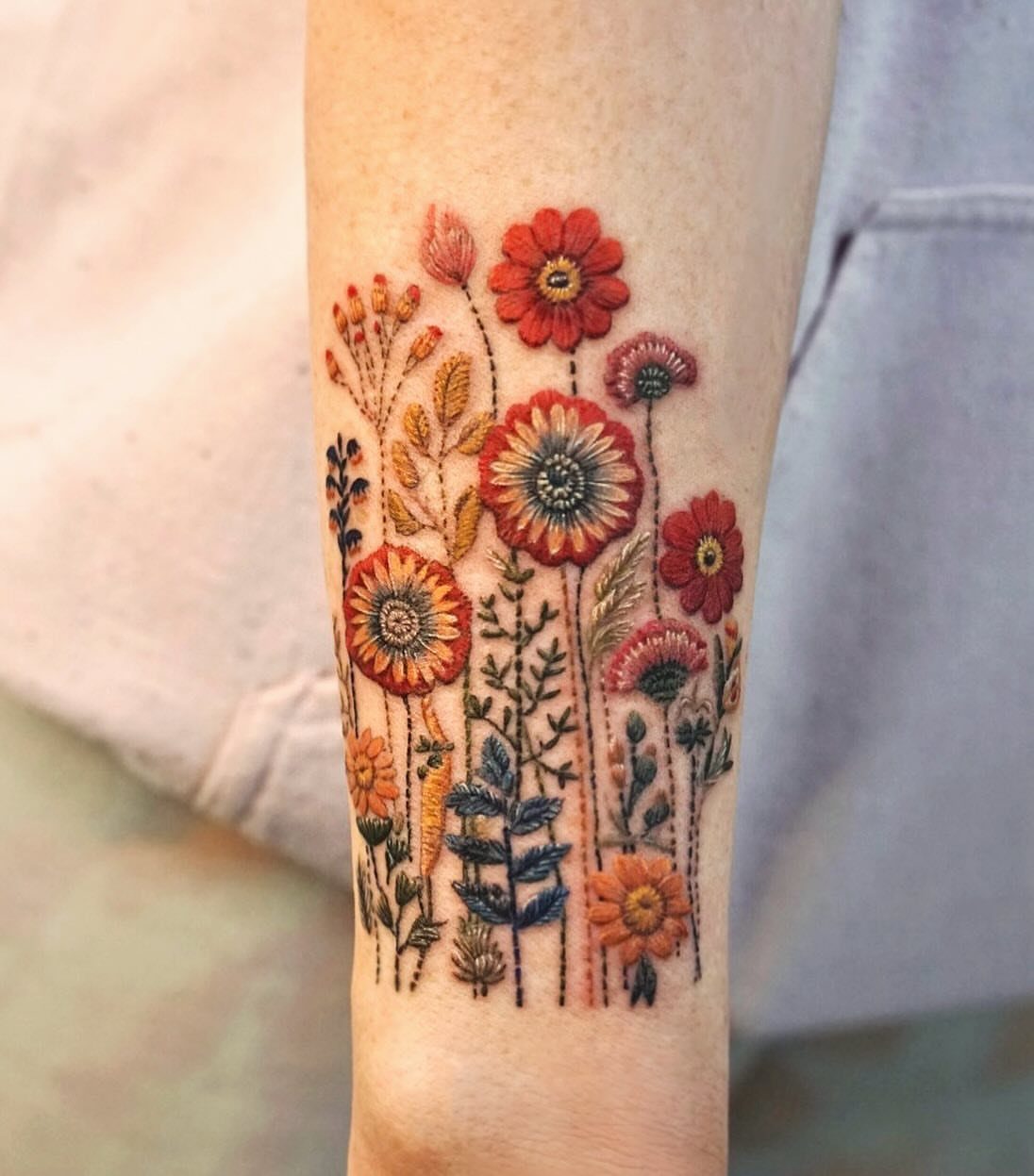
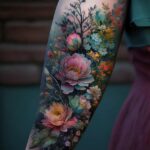
Embroidered-style florals borrow the look of cross-stitch or needlepoint: short color blocks, visible "stitches," and a slightly raised texture.
The effect reads as craft rather than botanical illustration, which suits someone who wants the tattoo to feel made rather than grown.
The style needs space.
Each flower is built from dozens of tiny color changes, and compressing them turns the pattern muddy. A forearm or calf works; fingers and ears do not.
Color saturation fades fastest in the palest petals, so yellows and whites soften toward skin tone faster than deeper reds or blues. Plan the design with enough contrast that it holds even when the brightest notes drop out.

RICH TEMPORARY TATTOO KIT - Contains rich tattoos pattern templates (126 designs),6 tattoo inks in 2 colors (black and brown),4 disposable gloves 1 pack of cleaning supplies,allowing you to easily create unique personalized tattoos

✿【Exquisite Traditional Henna Style Design】: Our brown henna temporary tattoo stickers adopt classic Indian and Arabian henna aesthetics, featuring delicate mandala, floral, lace, totem and vintage henna pattern combinations. The natural brown henna tone creates a mysterious, gentle and exotic visual effect, perfectly simulating real henna body art. Suitable for women and teens, these boho-style tattoos beautifully decorate hands, fingers, wrists, arms and ankles for daily and holiday styling.

What's Kit Included: Complete tattoo machine kit comes with everything you need to get started and then some, from the stencil printer to tattoo cartridges and practice skin. 1 tattoo stencil printer, 1 adjustable stroke tattoo machine, 10 tattoo needles, 10 transfer papers, 2 practice skins, 40 ink cups, 2*15 ml black tattoo ink, 2 dental bibs, 3 tattoo stickers, a pair of gloves and a easy to carry case.
3. Hexagonal Patterns
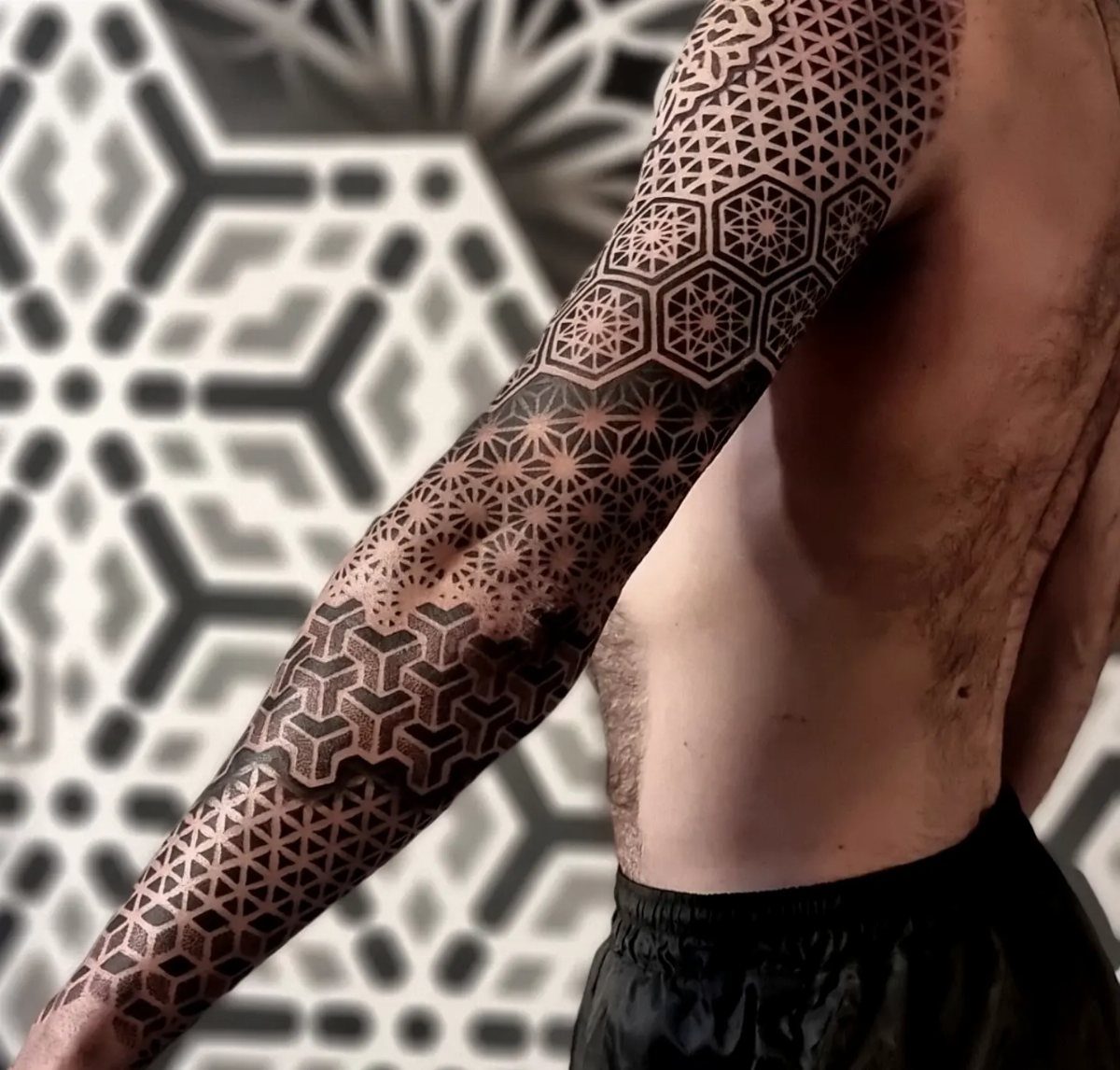
Hexagons tile without gaps, which makes them natural for filling large areas like a full sleeve.
Scattering hexagons at different scales across an arm, some solid black, some empty, some holding smaller geometry inside, keeps the eye moving. That variation keeps the eye moving so the pattern does not flatten into wallpaper.
The fills are where the artist shows range.
One hexagon might hold a flower, another a gradient of dots, a third pure black. The cluster reads as one piece because the line weight stays consistent across every border.
A sleeve this dense sits at the upper limit of what skin takes well. Dense geometric work usually needs multiple sessions with healing time between, so budget the calendar, not just the wallet.
The asymmetrical layout means the artist is working freehand on placement, so bring reference but trust the flow they map on your arm.

1 Set = 12 Sheets Henna Tattoo Stencils, 6 Pairs Right and Left hands stencils. Pasting position: Hand, Finger,Forearm, etc. Suitable for Henna tattoo, Airbrush Painting, Glitter tattoo, and so on;

Clean, Flawless Transfers: Your artwork will look so clean once transferred to the skin with the Stencil Stuff gel! Gentle on the skin, Stencil Stuff transfer solution helps you achieve clear and sharp tattoo stencil transfers every time!

[AUTHENTIC INDIAN & ARABIAN DESIGNS]: Features 6 pairs (12 sheets total) of premium henna stencils with matching left-right hand floral patterns, featuring vine tendrils, scrollwork, stars, mandalas, and geometric motifs. Specifically designed for hand back applications, perfect for bridal henna, blending traditional Indian mehndi and Arabian arabesque styles.
4. Star Pattern Tattoo Design
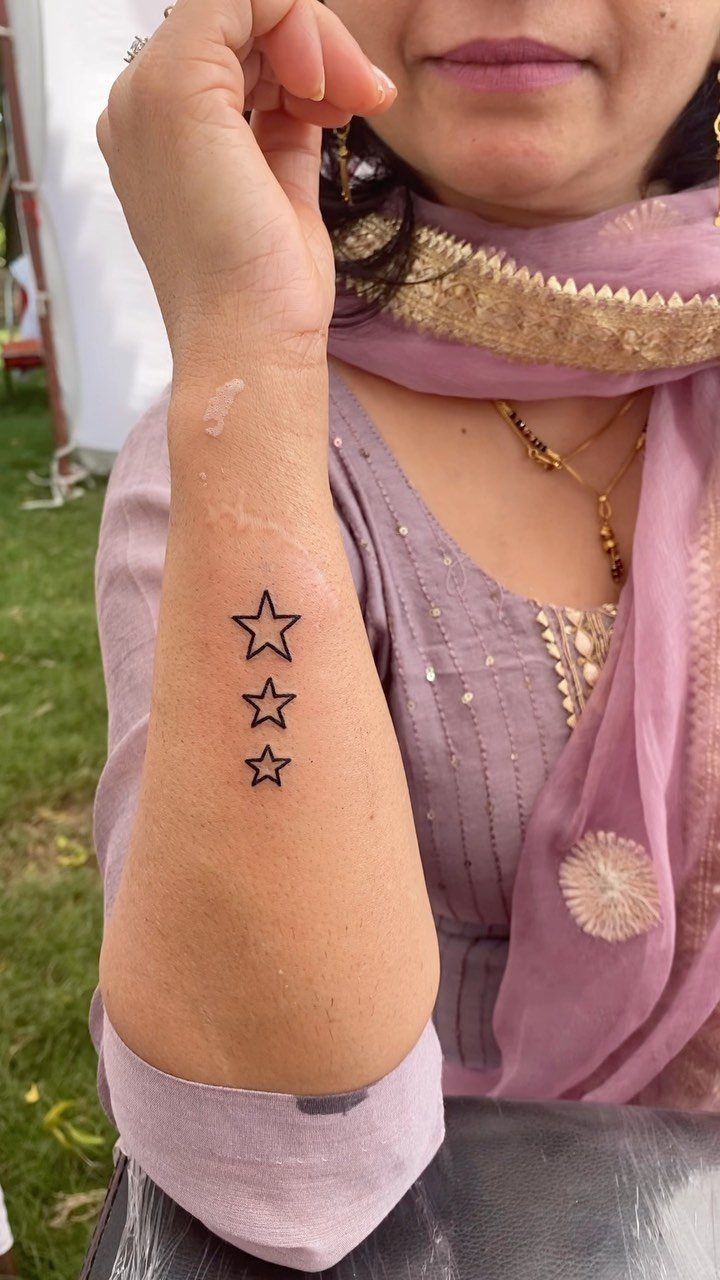
Star patterns range from simple outlines to tessellated grids where the points interlock and repeat.
Three small stars make the minimal version; a six-pointed tessellation is the other end, a field of stars and diamonds that covers a flat area with no center and no edge.
The grid suits a shoulder cap, a chest panel, or any space that needs filling without a focal point. It also scales well: the same unit repeated at half-size for a wrist band, doubled for a back piece.
Sacred geometry references are common in this territory, though the pattern works without them. If you do want meaning, the six-pointed star predates most modern uses and carries enough history that you should know which layer you are invoking.

Warm Tips: The tattoo transfer paper need to work with transfer medias.You will need to purchase the stencil ointment separately. Apply the design made on the master paper. Please pay attention to press the back side of the pattern to the skin for at least 3 seconds

High-quality material: These honeycomb spray painting templates are made of high-quality PET material, which is strong and reliable, not easy to break and tear, comfortable and soft, with a smooth surface, not easy to fade, reusable and waterproof, easy to clean, suitable for your long-term use.

24PCS Unique Henna Stencil Pack – This complete henna tattoo kit accessory set includes 24 sheets of reusable mehndi stencils (6.89" x 3.34"). Featuring exclusive designs like long arm bands, moon motifs, vine flowers, and large floral templates, it is ideal for creating DIY temporary skin art on wrists, arms, back, and full body.
5. Japanese Pattern Tattoo Design
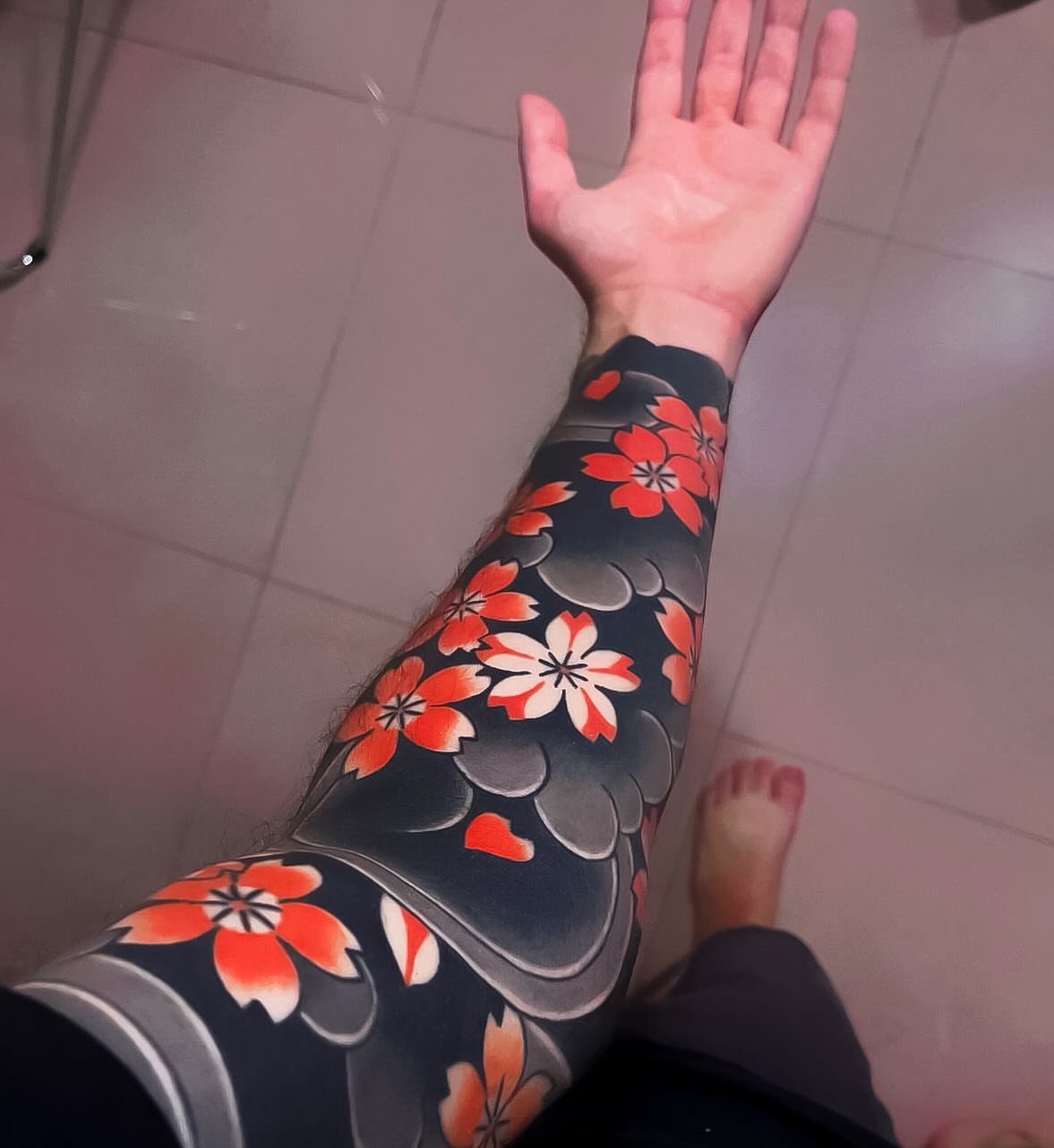
Irezumi sleeves pair wind bars, cherry blossoms, and background patterns in a set vocabulary where each element carries specific meaning. The red and grey palette is traditional; color choices are not arbitrary in this style.
This is not a design you drop onto any arm. The composition follows the body’s musculature, and a proper sleeve is planned as a whole, not assembled from separate pieces.
Finding an artist who works in Japanese method matters more than finding a design you like; the form dictates the image, not the reverse.
Expect years.
A full sleeve in this density means monthly sessions with strict healing rules that limit sun, swimming, and gym time between appointments. The commitment is to the process as much as the result.


【Standard #10 0.30mm Round Liner】 Features the industry-standard #10 (0.30mm) 1001RL configuration. The ideal sweet spot for artists who require distinct, crisp, and high-visibility lines, making it perfect for traditional, illustrative, and geometric linework.

6. Optical Illusion Pattern Tattoo Design
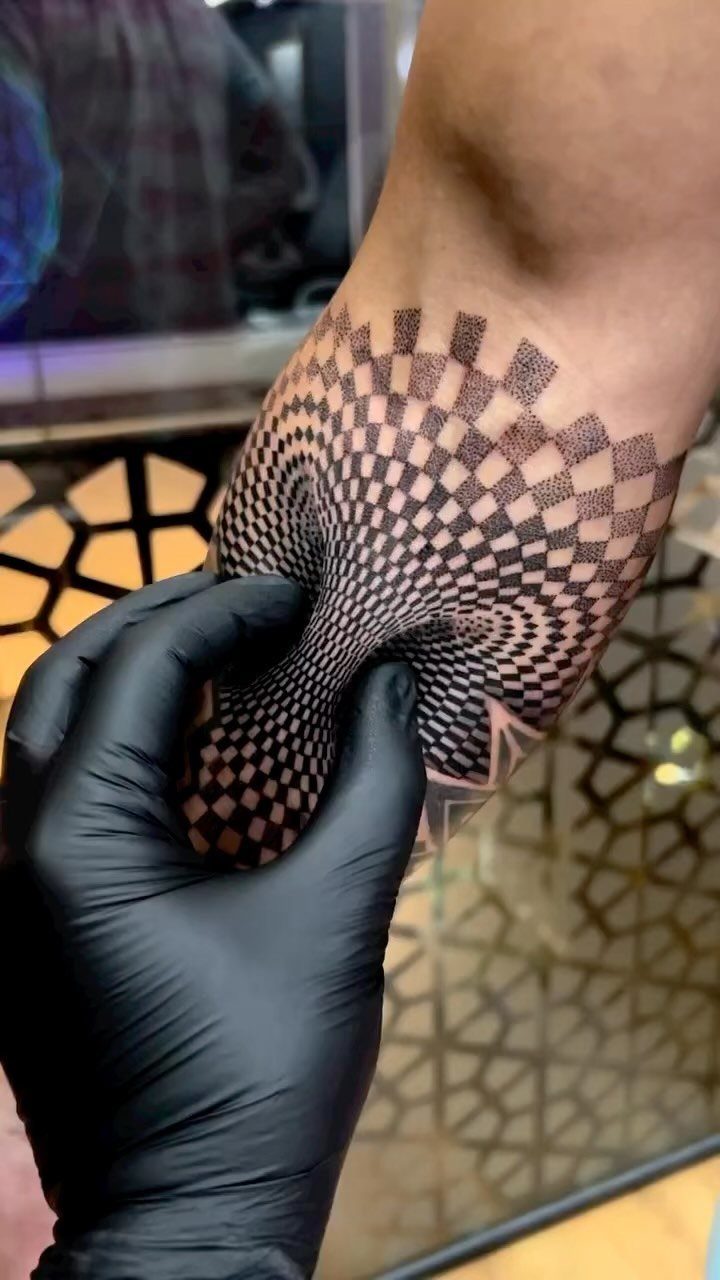
An optical illusion tattoo uses converging lines to trick the eye into seeing depth on flat skin.
A checkerboard pattern can seem to fold inward, a pocket of three-dimensional space carved into the forearm. The effect works from one angle and breaks from others, which is part of the point.
Fine lines are mandatory and unforgiving.
A wobble destroys the geometry, and the contrast between black and healed skin tone does the actual work of the illusion. The artist needs steady hand speed and a stencil that does not shift during the session.
This pattern ages faster than solid blackwork. The thin lines spread slightly over time, and the precision that makes the effect possible is the first thing to soften.
Optical illusion pieces need periodic touch-ups to keep the depth intact; without maintenance, the piece flattens to a busy checkerboard.

COMPLETE KIT: Set includes 18 sheets of self-adhesive henna stencils featuring traditional Indian Mehndi designs for hands and body art

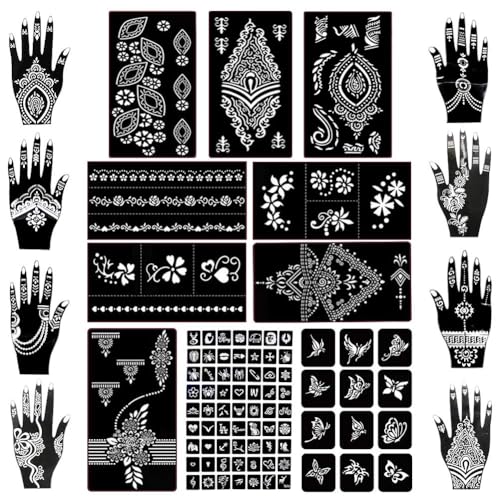
97 HENNA TATTOO DESIGNS IN 18 SHEETS:Includes 8 hand stencils, 8 rectangle flower pattern sheets, and 2 small pattern sheets. Features butterflies, flowers, roses, mandalas, paisley, and traditional Indian/Arabian mehndi designs. Perfect for creating stunning body art for weddings, festivals, and summer celebrations.
7. Animal Pattern Tattoo Design
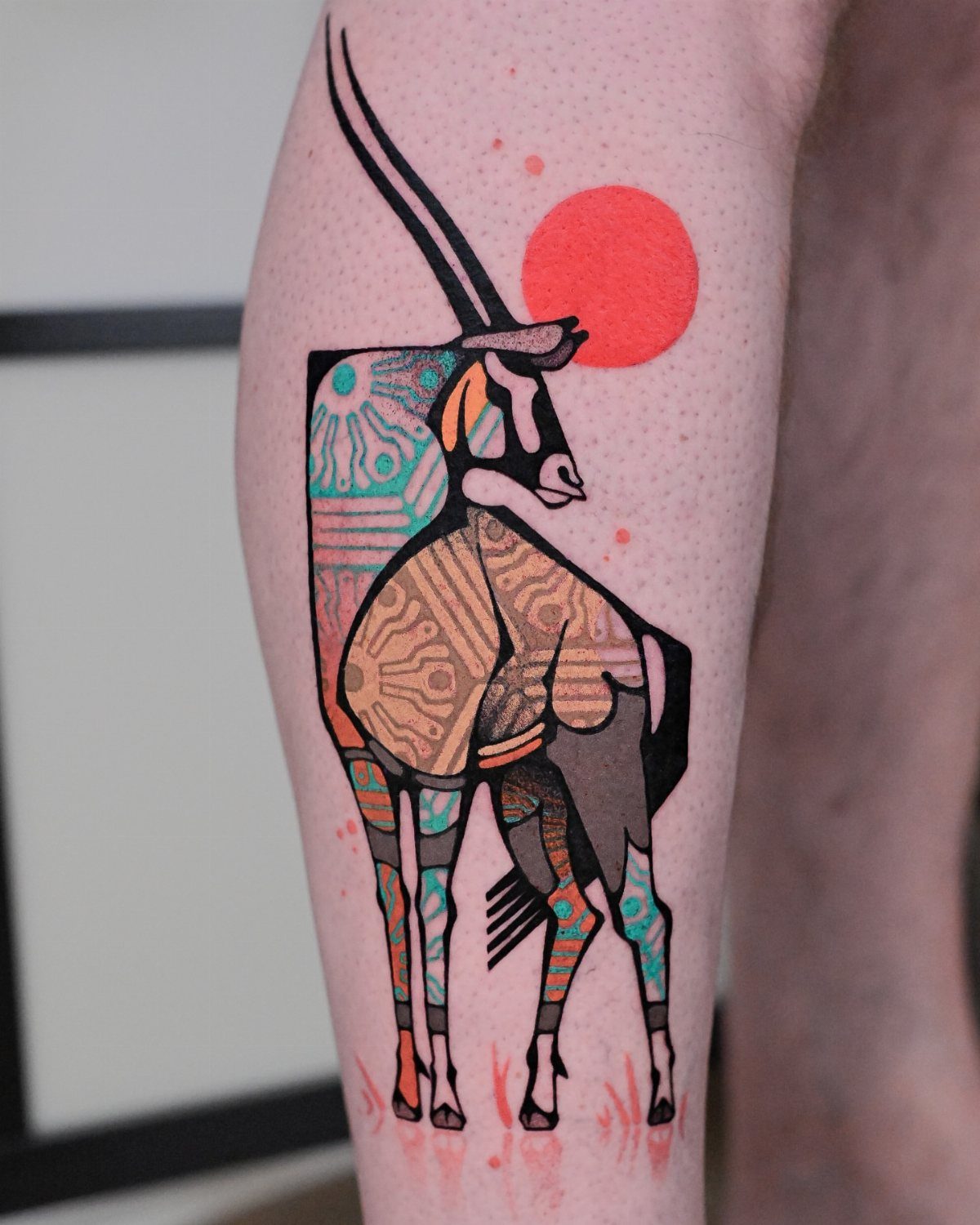
An animal built from geometric fill turns the creature into a diagram of itself. Hexagons and diamonds across the flank read as hide pattern pushed toward abstraction.
The eye is the anchor.
Orange or red ink there pulls focus and gives the animal presence; without it, the geometry swallows the subject. Feather or fur texture at the edges keeps the shape recognizable even as the interior goes abstract.
Black and grey geometry with one warm accent ages better than full color inside the pattern. The fill needs to follow the body’s musculature, not fight it, so the artist maps the animal’s stance to your placement.

Deluxe All-in-One Tattoo Kit:Includes 20 reusable tattoo stencils, 14 tattoo paste cones in 10 vibrant colors, tattoo paste mixing bottles, cotton swabs, and disposable gloves—everything needed for advanced DIY body art and color creativity.

Hawink 2 x 8 wrap and 2 x 10 wrap coils tattoo machine for liner and shader.runs faster to create fine and precise line work. has higher power to penetrate deep into the skin, creating vibrant and lasting color.

🎃[4 Sheets Groovy Long Lasting India Tribal Black Tattoos Temporary] There Are 4 Sheets Mandala Flower Temporary Tattoos For Women Girls Teens, You Can See Geometry Round Lace Flower Floral Wedding Bridals Bride Lotus Fake Jewelrys Stencils Template Designs In It.
8. Ocean Wave Pattern Tattoo
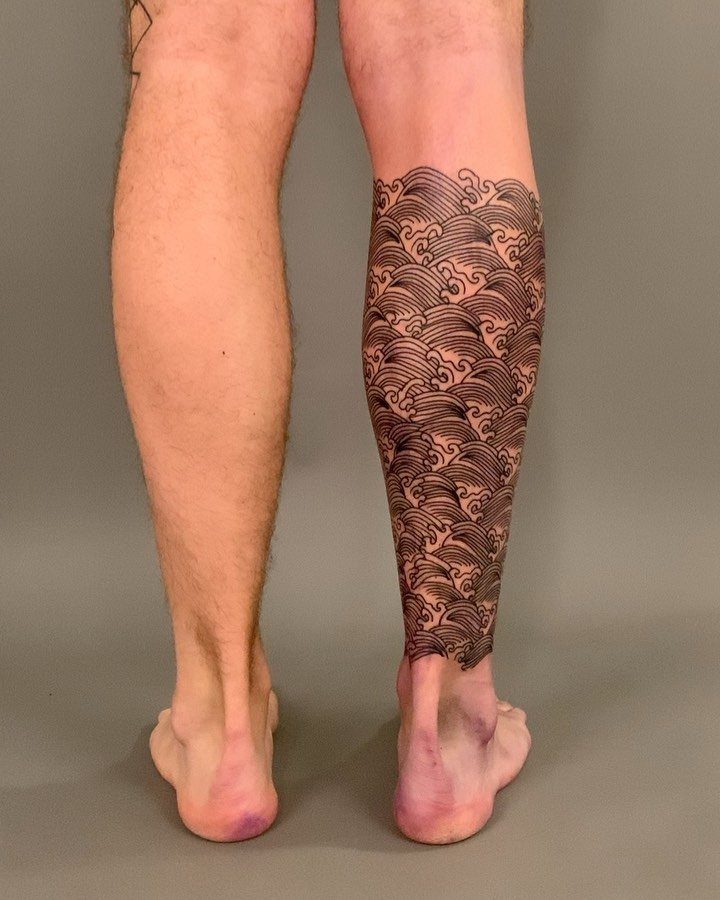
Japanese wave patterns repeat the same curling form at different scales, which lets them wrap a calf or forearm without a fixed top or bottom.
Black ink reads as water in motion when the lines vary in weight, thicker at the crest and hairline in the foam.
A single wave unit is simple; the skill is in the spacing so the repeats flow into each other. Too tight and the leg looks wrapped in rope; too loose and the pattern breaks apart.
This pattern suits someone who wants coverage without a central image.
The calf is ideal because the muscle gives the waves a natural curve. Healing means staying out of the pool until the skin seals, which matters more for ocean imagery than most designs.

Safe and Healthy: Our tattoo transfer gel meets strict safety and non-toxic material standards, non-irritating to the skin and vegan-friendly. Maintains client comfort while achieving clear tattoo stencil transfers.

Package: Only 14 Sheets 3 layers PVC henna hand stencils, Washable and Non-Toxic. Ink is not included

Package Includes: You will receive 20 sheets reusable tattoo stencils, enough quantity to meet your daily requirements. The mehndi stencils are suitable for airbrush painting, glitter tattoo, and so on.
9. Geometric Compass Pattern Tattoo
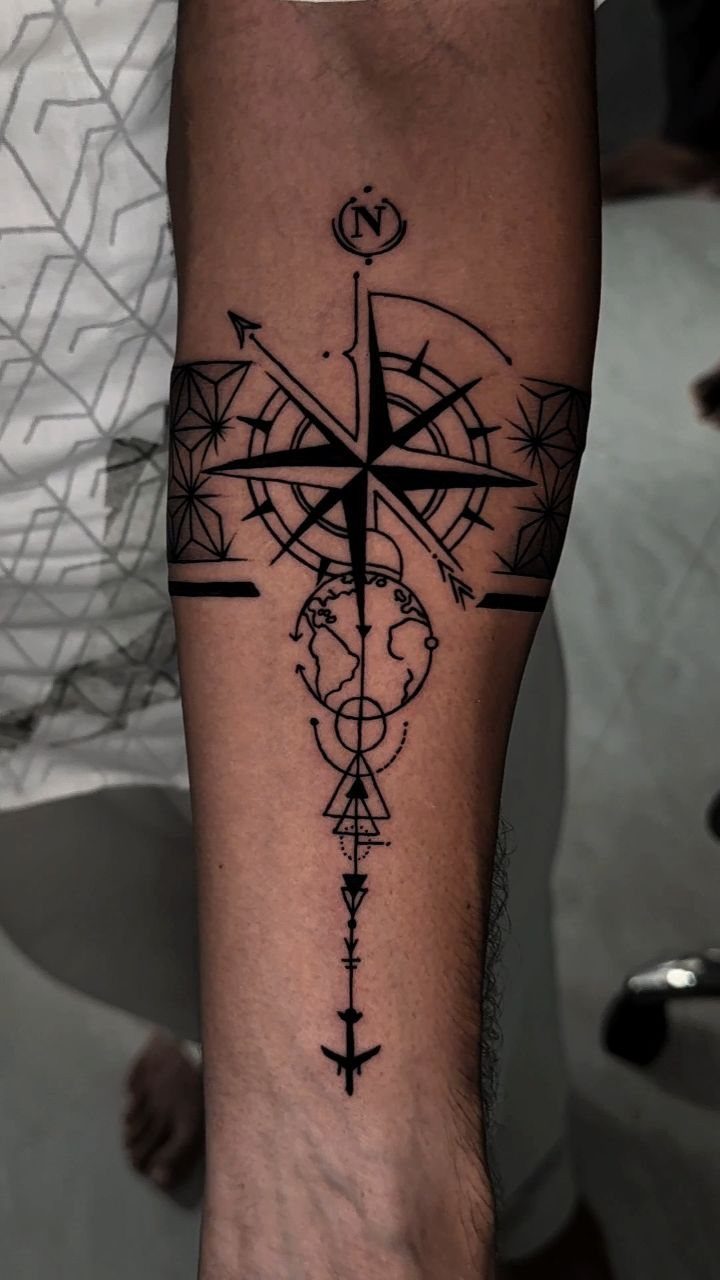
A compass rose tied to a globe with fine lines gives the travel tattoo a structure it often lacks. Forearm placement keeps the compass vertical when the arm hangs, which is how most people see it.
Fine geometric bands frame the main images and hold the composition together. Line weight matters: the compass and globe need heavier outlines than the connecting geometry, or the whole piece flattens to the same visual priority.
This design collects elements over time. Many start with the compass and add the globe or airplane in later sessions, which works if the first artist leaves logical connection points.
Plan for that expansion or commit to the full composition upfront; a half-finished travel sleeve looks accidental rather than intentional.

Package: 6 Sheets tattoo stencils. 3 layers PVC Henna tattoo stencils, Washable and Non-Toxic.,Design shown in the picture. Ink is not included

COMPLETE KIT: Set includes 18 sheets of self-adhesive henna stencils featuring traditional Indian Mehndi designs for hands and body art

Honeycomb Stencil Set: You will get 8pcs reusable bee honeycomb stencils, and each painting bee stencil measures about 8.3"x11.7"(21 x 29.7 cm).
Tattoo Trends for 2026
Geometric mandalas in black ink are climbing fast on Pinterest boards right now. The vertical arrangements that stack symmetrical florals with diamond shapes and dotwork shading suit narrow placements like the outer forearm or the side of the calf.
The central eye motif variation adds a focal point that keeps the design from reading as pure ornament.
Fine line work with ornamental lace detail is showing up more in current flash sheets than the heavier dotwork builds that dominated before. The shift is toward lighter saturation that ages closer to a graphite sketch than a stamped graphic.
If you are saving reference images, check the date on the pin; the older heavy black mandalas sit differently on skin after healing than these newer open versions.

Striking geometric stag skull illustration featuring angular linework and sweeping gold antlers on a deep black background — a bold fusion of nature, symbolism, and modern graphic art.

Safety: Xtreme Tattoo Inks prioritizes safety without sacrificing quality; Our vegan, and cruelty-free formula ensures a worry-free tattooing experience

Striking geometric stag skull illustration featuring angular linework and sweeping gold antlers on a deep black background — a bold fusion of nature, symbolism, and modern graphic art.
Tattoo Placement Advice
Visibility cuts both ways. A forearm piece is there in every job interview and family dinner, which is the point for some people and a liability for others.
The inner bicep hides under a short sleeve but shows in a tank top; that middle ground suits a lot of first placements.
Thigh work stays private unless you choose otherwise. The skin there takes ink well and the muscle padding reduces bone pain, though the inner thigh has its own nerve map that surprises some people.
A calf mandala or wave pattern moves with the muscle, which can distort the geometry when you flex; stand and sit during the stencil phase to check.
Symmetry demands a flat plane. The forearm wins for mandalas and compass roses.
Tattoo Design Considerations
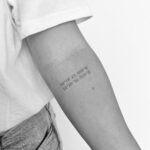
Size and complexity need to match your existing collection, not just the blank space left.
A dense geometric sleeve next to a single small script piece throws both out of balance. The eye reads the gap as unfinished rather than minimal.
Complexity also sets your maintenance schedule. Plan which camp you are in before you commit to a style that demands studio visits you will not make.
Existing tattoos set the palette.
A warm black and grey sleeve does not welcome a sudden full-color floral insert without looking like a patchwork of mismatched decisions. Match the black density or commit to a deliberate contrast that reads as intentional, not accidental.
Frequently Asked Questions
What is the 1/3 rule tattoo?
There is no single "1/3 rule" tattoo artists agree on; some use it for spacing a design within a body section, others for balancing negative space, but most shops never mention it at all.
This term does not appear in the design considerations, placement advice, or any pattern descriptions provided.
What are the different types of pattern tattoos?
The main types covered are mandala, floral, hexagonal geometric, star, Japanese, optical illusion, animal, ocean wave, and compass patterns.
Mandalas build outward from a center point; florals borrow embroidery or needlepoint texture; hexagons tile for large fills like sleeves; stars range from minimal outlines to tessellated grids; Japanese patterns follow strict compositional rules; optical illusions use converging lines for depth; animals turn creatures into geometric diagrams; waves repeat curling forms at different scales; and compass roses tie to travel imagery with fine framing bands.
Each type suits different placements and carries different aging and session requirements.
How big is a $2000 tattoo?
Price tracks time more than inches; a palm-sized piece from a booked artist can run more than a larger but simpler design from someone newer, so asking about hourly rate and expected sessions gets you closer to a real number than guessing from size alone.
Size depends on artist rate, location, detail density, and number of sessions rather than a fixed formula.
What are the top tattoo trends for 2026?
Geometric mandalas in black ink are climbing fast, especially vertical arrangements that stack symmetrical florals with diamond shapes and dotwork shading for narrow placements like the outer forearm or calf side.
Some of these mandalas drop a single eye or small symbol at the center, which breaks the repetition and gives the eye a place to rest.
Heavy black mandalas from five or ten years back tend to blur and thicken as they age; the newer open builds with thinner line weights and more skin showing through are partly a response to seeing how those older ones healed.